Are Essential Oils Safe for Cats?
Essential oil diffusers, scented candles, and natural cleaning products are everywhere — but many oils are toxic to cats. Cats lack certain liver enzymes to process these compounds, making inhalation, skin contact, and ingestion all risky.
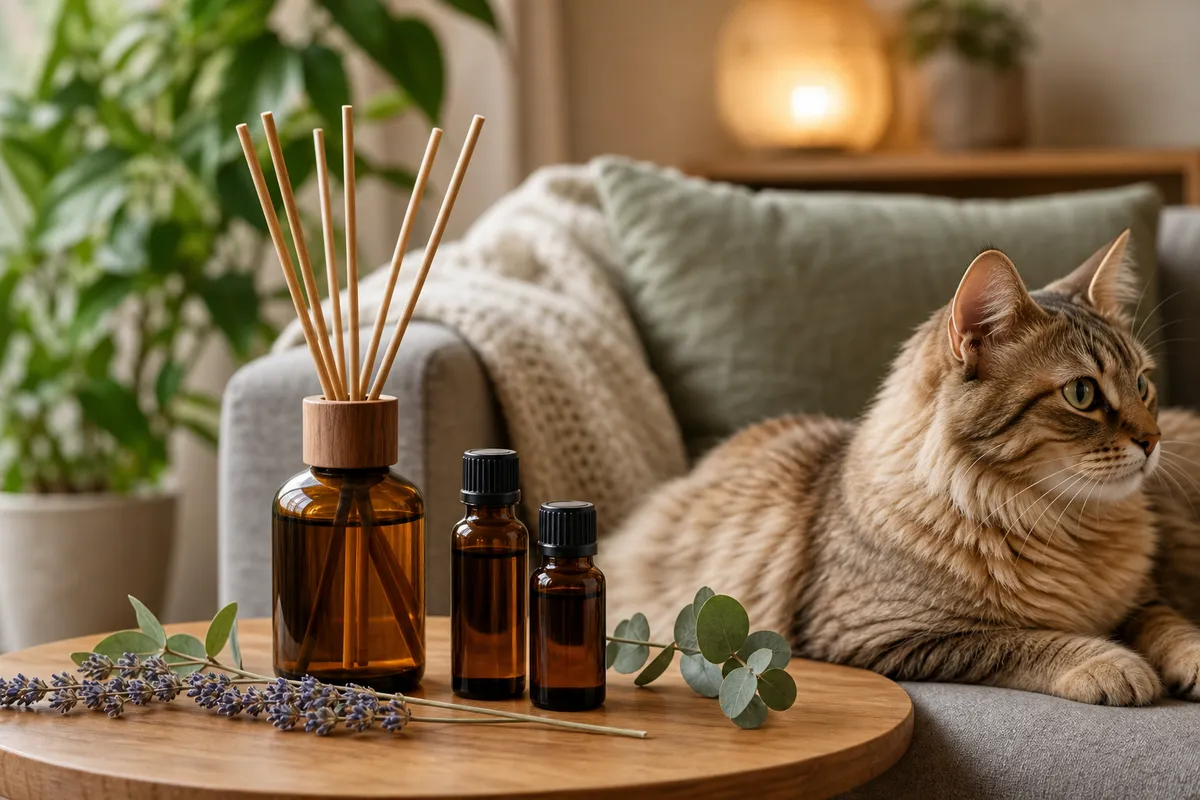
Why essential oils harm cats
Cats absorb oils through their skin and lungs, and ingest them while grooming. Concentrated oils can cause liver damage, breathing difficulty, drooling, tremors, and low body temperature. Kittens and cats with liver disease are especially vulnerable.
High-risk essential oils
- Tea tree (melaleuca)
- Peppermint and wintergreen
- Citrus oils (limonene)
- Eucalyptus
- Cinnamon and clove
- Pennyroyal
- Pine and ylang-ylang
Diffusers, sprays, and skin contact
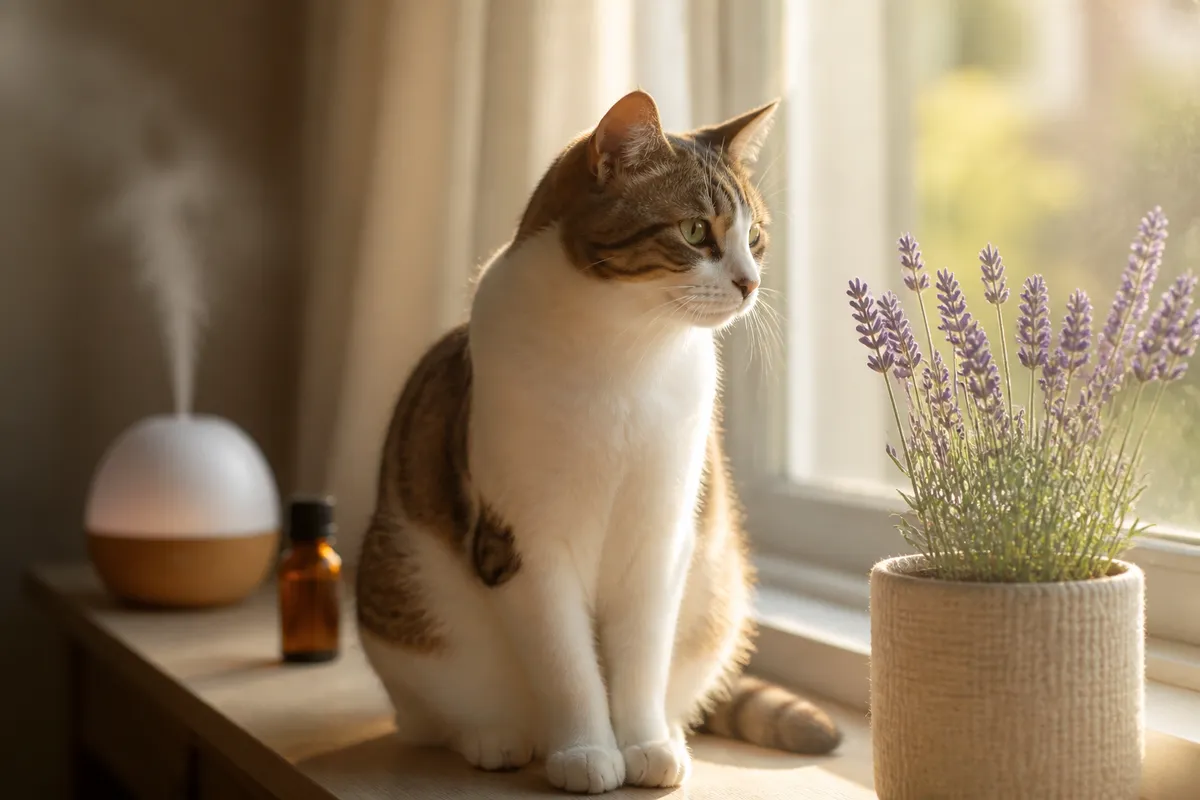
Passive diffusers in enclosed rooms can overwhelm a cat's respiratory system. Active diffusers create micro-droplets that coat fur. Never apply essential oils directly to a cat's skin — including so-called 'natural' flea remedies.
Safer home fragrance options
Ventilate well, use oils sparingly in cat-free rooms, and keep bottles sealed and stored away. For a room-by-room look at hazards, see common cat toxins by room.