Is Avocado Toxic to Cats?
Avocado toast culture means more stones, skins, and guacamole in UK kitchens than ever. If you are asking is avocado toxic to cats, the short version is that persin and physical hazards matter — and the dips you serve with avocado are often more dangerous than the fruit alone.
Guacamole is a special risk
Restaurant-style guacamole often contains onion, garlic, chives, or seasoning mixes from the allium family. Those ingredients can damage red blood cells in cats. If your cat ate guacamole, tell your vet about every ingredient you know — not just “avocado”.
Persin: the plant toxin in avocado
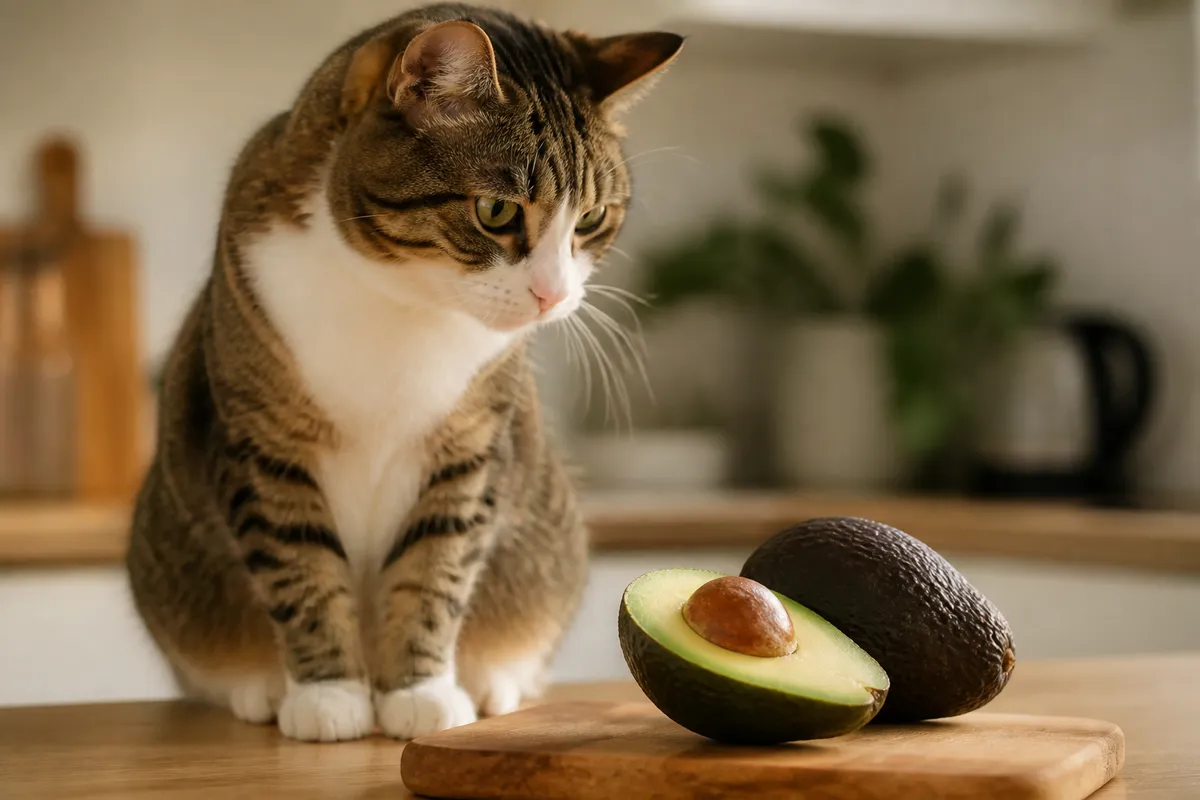
Avocado leaves, bark, skin, and stone contain persin, a fungicidal toxin that can cause problems in several animal species. Cats are not the species with the most dramatic avocado case literature — birds and large animals are often discussed more — but that does not make avocado a recommended snack. Flesh contains less persin than leaves or skin, yet it is still fatty, calorie-dense, and unnecessary in a cat’s diet. Stones and large skin pieces also create choking and blockage risks if chewed or swallowed.
Flesh versus skin and stone
A tiny lick of plain ripe flesh is different from a cat gnawing the bitter skin or batting a slippery stone under the sofa and later chewing it. Stones are hard, smooth, and tempting as toys; if swallowed they can obstruct the gut. Skins are tough and may carry higher persin levels plus pesticide residues if the fruit was not washed. Practical advice: compost skins and stones promptly in a sealed bin, and do not leave half avocados on low counters.
Why guacamole multiplies the danger
Onion and garlic — fresh, powdered, or in salsa mixes — are well-established toxins for cats. They can cause oxidative damage to red blood cells, leading to anaemia that may not be obvious for days. Lime juice, salt, jalapeños, and rich mayonnaise add stomach upset on top. So the party bowl is rarely “just avocado”. Read our deep dive on onions and garlic toxic to cats if your cat shared Mexican-style leftovers.
Symptoms to monitor
- Vomiting or diarrhoea after scavenging
- Drooling or lip-smacking from skin or leaf irritation
- Lethargy or reduced appetite
- Abdominal discomfort if a stone or large piece was swallowed
- Pale gums, weakness, or rapid breathing days later if alliums were involved
Not every cat who tastes avocado becomes severely ill, but delayed allium effects mean “they seem fine tonight” is not the whole story when onion or garlic were present. When unsure what was in the dip, err on the side of a vet call.
What to do after avocado scavenging
Remove remaining food. Note whether skin, stone, plain flesh, or mixed guacamole was involved. Call your vet with timing and portion estimate. Do not induce vomiting unless told to. If a stone may have been swallowed, mention that specifically — imaging or monitoring advice may differ from a soft-flesh lick. For broader guidance on sharing the human plate, see can cats eat human food.
Stone safety
Avocado stones roll like toys. Bin them immediately. A blockage surgery costs far more than the toast you were making — often well into three figures in £ terms at emergency clinics.
Prevention in avocado-heavy households
Prep fruit on a high surface, clear peelings as you go, and never leave guacamole out overnight. Train household members not to offer “just a bit of avocado” as a healthy-sounding treat — cats do not need plant fats the way marketing suggests humans might. Keep houseplants that are avocado seedlings (grown from stones) away from chewers; leaves are not snacks. Pair kitchen discipline with the habits in our human foods cats should never eat list so avocado is one item among many you already manage.
Putting avocado in context with other human foods
Avocado sits in a grey zone that confuses owners: it is not in the same emergency category as lilies or antifreeze, yet it is also not a recommended feline food. Persin risk, fat load, stone obstruction, and allium-laced dips each pull in different directions. The safest household rule is simple — avocados are for people, not for cats — while still recognising that a confirmed tiny lick of plain flesh is handled differently on a vet call than a kitten who swallowed a stone or polished off onion-heavy guacamole.
Restaurant takeaways and meal-kit recipes increasingly include avocado as a default garnish. Teach everyone in the home that “healthy for me” does not transfer to obligate carnivores. If you meal-prep on Sundays, clear peelings before cats are allowed back into the kitchen, the same way you would for grape stems or chocolate wrappers.
Frequently asked questions
Is a tiny piece of plain avocado flesh poisonous?
Plain flesh is lower risk than skin, leaves, or onion-laced dips, but it is still not recommended. Fat content can upset digestion, and offering human fruit encourages scavenging habits. When accidental tiny amounts happen, contact your vet for case-specific advice rather than assuming zero risk.
Are avocado-based dog treats okay for cats?
Do not share dog treats unless a vet confirms the formula is appropriate for cats. Ingredients, calorie density, and additives differ between species.
What about avocado oil on food?
Cooking oils are calorie-dense and unnecessary for cats. Spills can also coat fur, leading to grooming and ingestion. Wipe spills and stick to a complete cat diet.