Human Vitamins and Supplements That Can Poison Cats
Part of: Household toxins for cats
A dropped multivitamin or a chewable "gummy" from your handbag can look like a sweet to a cat. Human vitamins and supplements can poison cats — especially vitamin D, iron, alpha-lipoic acid, and 5-HTP. Treat the supplement shelf with the same respect as the medicine cabinet.
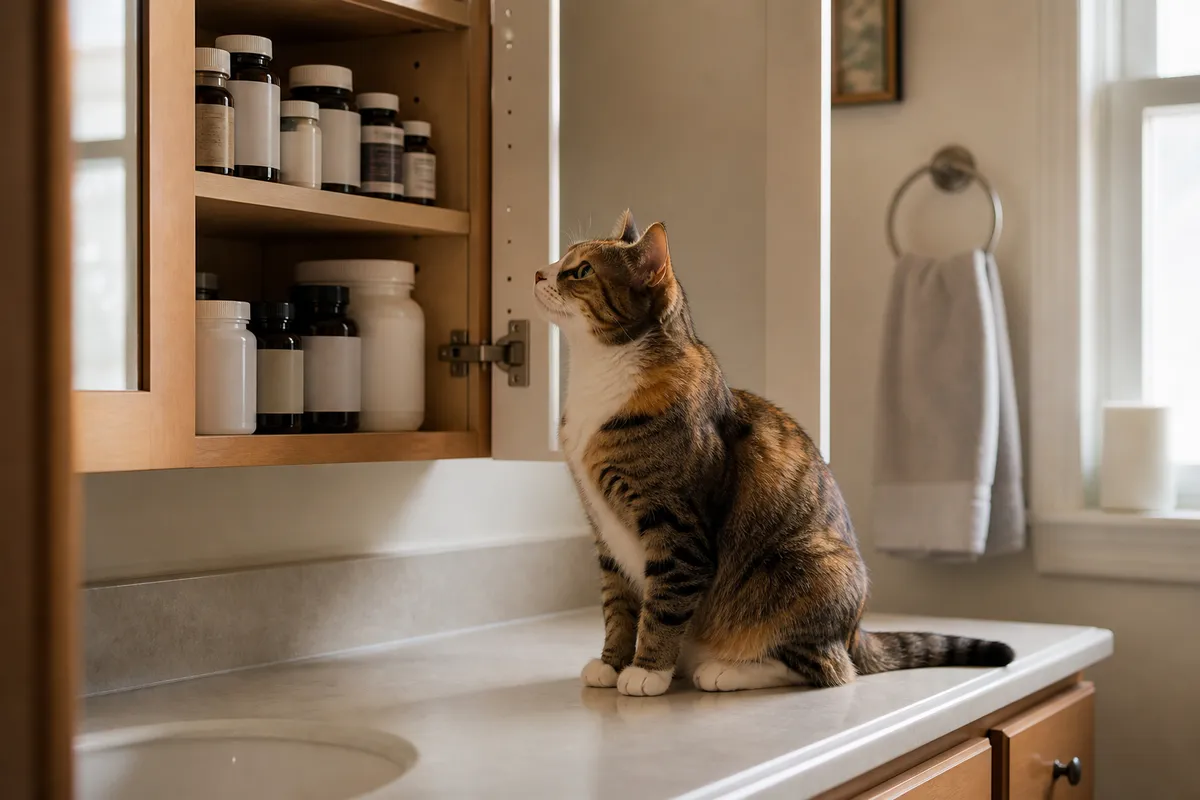
Vitamin D and iron overdoses need urgent advice
If your cat chewed a vitamin D bottle, an iron tablet, or a handful of gummies, call your vet or emergency clinic immediately. Bring the blister pack or bottle so strengths can be calculated.
Why "natural" supplements are still risky
Supplements are biologically active. Human doses are sized for adult people, not a 3–5 kg cat. Attractive coatings, fruity flavours, and gummy formats increase the chance of a scavenged overdose. Pair this page with our guides on human medicines toxic to cats and paracetamol toxicity — many households store pills and vitamins in the same drawer, and cats do not distinguish "medicine" from "supplement".
Weekly pill organisers left on nightstands are a common failure point: one curious leap and several days of tablets spill across the carpet. Handbags on the floor are another — travel vitamins and pregnancy iron sit next to keys and lip balm at perfect paw height.
Vitamin D (cholecalciferol)
Vitamin D helps humans regulate calcium — in overdose it can push calcium dangerously high and damage kidneys. Softgels and high-strength tablets are particularly concerning if chewed in number. Some rodent baits also use vitamin D-type compounds, which is a reminder of how potent this pathway is. Delayed kidney injury means "seeming fine tonight" is not reassurance after a known vitamin D binge. Increased thirst, reduced appetite, or lethargy in the following days still warrant a call, even if the spill seemed small.
Iron tablets
Iron supplements can cause severe gastrointestinal injury and systemic poisoning when cats access blister packs. Signs may include vomiting, diarrhoea (sometimes with blood), lethargy, and later metabolic complications. Keep pregnancy vitamins and iron tablets in locked storage. Even one or two high-strength tablets can matter for a small cat — call with the exact mg strength listed on the pack. Do not wait for bloody vomit before seeking advice if tablets are missing.
Alpha-lipoic acid
Alpha-lipoic acid appears in some antioxidant and "nerve support" supplements. Cats are reported to be highly sensitive; even modest amounts relative to body weight can be serious. If the label lists ALA or alpha-lipoic acid and your cat had access, phone for advice without delay rather than waiting for clear symptoms to appear.
5-HTP and mood supplements
5-HTP is sold as a sleep or mood aid for people. In pets it can contribute to serotonin-type syndromes — agitation, tremors, elevated temperature, and gastrointestinal signs. Never share human sleep stacks, "calm" gummies, or herbal blends with cats unless a vet prescribed a veterinary product. "Natural sleep" marketing does not make a kitchen experiment safe for your cat.
Gummies, chewables, and xylitol coatings
Gummy vitamins are candy-like. Cats may eat several before anyone notices. Watch for xylitol in sugar-free adult gummies and for chocolate-covered supplements. Our xylitol guide is worth reading if the packet is sugar-free. Count remaining gummies so the clinic can estimate intake.
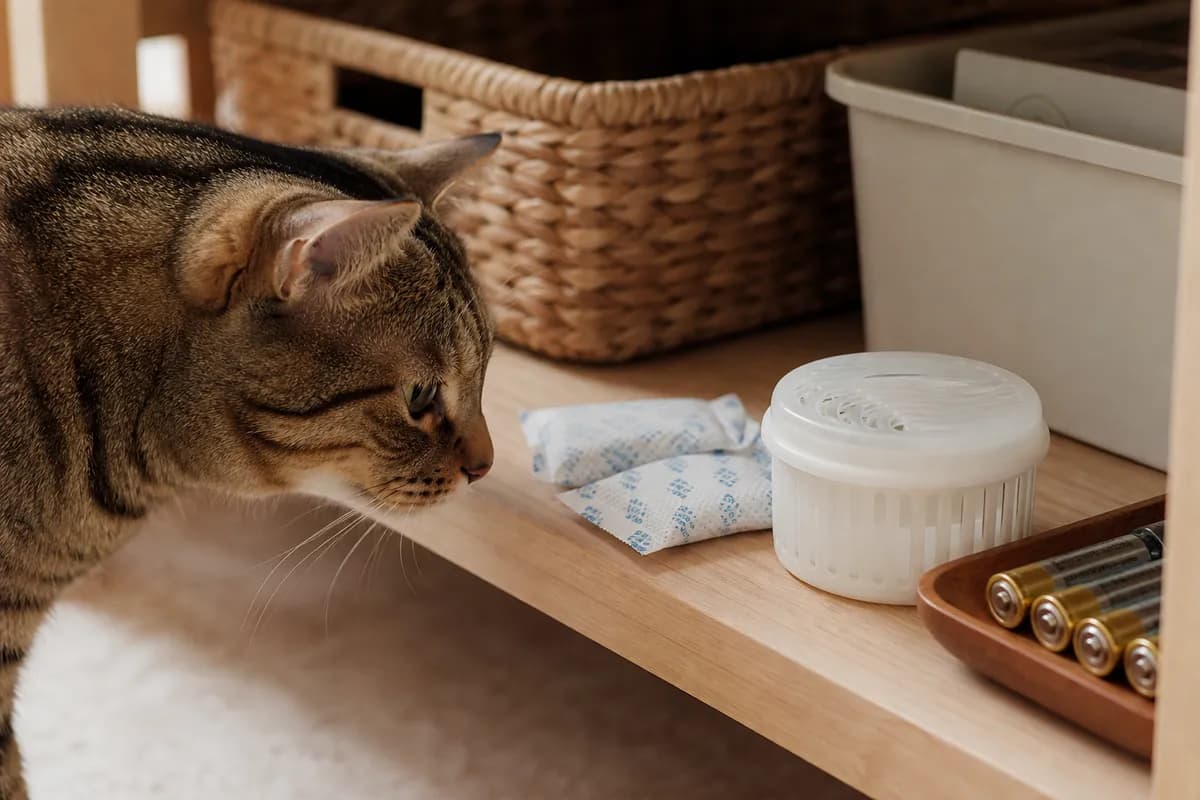
- Store bottles in high, closed cupboards — not open baskets.
- Pick up dropped tablets immediately; vacuum under beds if a pack spilled.
- Do not leave weekly pill organisers on nightstands.
- Use cat-only supplements only when your vet recommends a specific product and dose.
Cat vitamins are not human vitamins
Veterinary diets already balance nutrients for most healthy adult cats. Extra human multivitamins are not a kindness — they are simply an unnecessary overdose risk.
What to tell the clinic
Name of product, strength per tablet, how many are missing, your cat's weight, and the time window. Follow what to do if your cat ate poison and do not induce vomiting unless instructed. If multiple supplement types spilled together, list every bottle involved.
Some exposures look quiet at first and then worsen as calcium rises or gut injury develops. That is why clinics may recommend monitoring or blood tests even when your cat still seems bright. Early phone advice beats guessing whether "one tablet" is trivial.
Frequently asked questions
- Are children's vitamins safer because they are weaker?
- Not safely so. Children's products may still contain iron or vitamin D at levels that matter for a small cat, and the sweet taste encourages eating more.
- My cat ate one multivitamin, is that an emergency?
- It depends on the formula and your cat's size. Call your vet with the exact product rather than assuming one tablet is harmless.
- Can I give my cat a bit of my joint supplement?
- No. Human joint products may contain inappropriate doses or extras such as xylitol, flavourings, or herbal blends. Ask your vet about veterinary options if needed.
- What should I do if my cat was just exposed?
- Call your vet or an emergency clinic with the product or plant name, an amount guess, and the time. Do not induce vomiting unless a veterinary professional tells you to, and take the packaging with you if you travel in.
Sources
Authoritative organisations that cover this topic. These links open their public poison-control or toxicology pages, not a specific diagnosis for your cat.