Mothballs, Silica Gel, Batteries and Glow Sticks: Small Items That Poison Cats
Part of: Household toxins for cats
Not every poison looks like a bottle of bleach. Mothballs, silica gel, batteries and glow sticks are small household items that cause outsized panic — and sometimes real harm — when cats chew them. Here is how to rank the risk and kitten-proof the clutter.
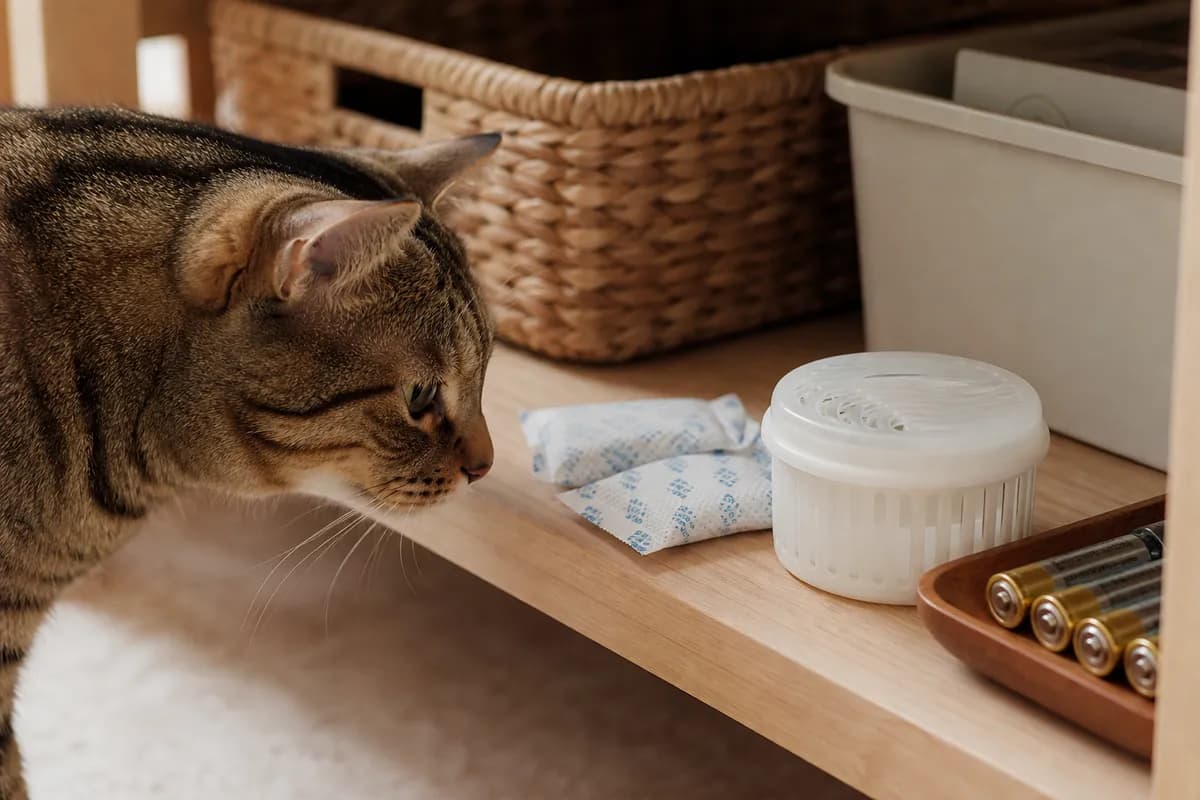
Button batteries and mothballs are emergencies
If you suspect a button battery was swallowed or a mothball was chewed, seek veterinary care immediately. Do not wait for symptoms. Bring packaging or a photo of the product.
Mothballs and naphthalene
Traditional mothballs may contain naphthalene or similar compounds that are toxic when chewed or ingested. The strong smell can attract or repel depending on the cat, but storage in open wardrobes puts pellets within paw reach. Symptoms can include vomiting, lethargy, and more serious blood or organ effects depending on the chemical and dose.
Prefer sealed garment bags and modern moth control methods that stay inaccessible. Map wardrobe and cupboard hazards alongside our common cat toxins by room checklist. If you inherit a relative's old wardrobe stash, identify the product before assuming "just camphor".
Button and coin batteries
Button batteries power remotes, car keys, scales, hearing-aid drawers, and musical greetings cards. If swallowed, they can burn the oesophagus quickly through electrical discharge and leakage. Cats may bat and mouth them like toys. Keep battery compartments screwed shut, bin spent batteries in sealed containers, and never leave replacements loose on coffee tables.
- Know which gadgets in your home use coin cells.
- Tape both sides of spent batteries before binning.
- Seek care urgently if even one battery is missing and your cat had access.
Do not wait for vomiting or drooling after a known battery ingestion — tissue damage can begin before dramatic signs. Clinics may need imaging and prompt removal. Time matters more than home observation.
Silica gel packets
Those "do not eat" sachets in shoe boxes are usually a choking or mild stomach-upset risk rather than a classic chemical poison — the beads are designed to absorb moisture. Still, large packets or sachets with added fragrance or indicating beads deserve a vet call if chewed, and any packet that causes gagging needs prompt attention. Do not ignore packaging that lists toxic additives. When in doubt, treat the sachet as worth a phone call rather than a shrug.
Glow sticks — dramatic taste, different risk profile
Glow sticks and glow jewellery often cause sudden drooling, foaming, and a bitter taste reaction when bitten. The liquid is typically irritating rather than a classic systemic poison at party-bracelet volumes — but the experience is distressing, and eye contamination or large ingestions still warrant advice. Rinse the mouth gently only if your vet recommends it while you travel, and prevent further grooming of glowing fur.
Festival season, Halloween, and New Year parties are peak glow-stick times. Keep unbroken sticks out of reach and bin chewed ones carefully so other pets cannot investigate the sticky residue.
Kitten-proofing the small-stuff zone
Kittens investigate with teeth. Combine this list with our new kitten safety checklist before the first night home: cable ties or screws on remote battery covers, moth products removed from low shelves, silica sachets cleared from deliveries, and party accessories stored after guests leave.
Delivery boxes are treasure chests
New parcels often contain silica gel, plastic, and twist ties. Unpack into a closed room, bin the extras, then let cats explore the empty box.
What to do after a chew incident
Identify the item, estimate how much is missing, and call your vet. For batteries and mothballs, leave promptly for assessment. For glow-stick taste reactions, still phone — clinics triage based on product and signs. Use our emergency checklist so you arrive with the right information rather than a vague "they chewed something small".
While you wait for advice, keep your cat from grooming glowing liquid or battery residue off their coat. A gentle wipe with a damp cloth can help if your vet agrees, but do not delay travel for a full bath when a battery or mothball may have been swallowed. Prioritise getting professional care over perfect clean-up.
Frequently asked questions
- Are all moth products the same?
- No. Formulations differ. If chewing occurred, take the packet or a clear photo so the clinic can identify the active ingredient.
- My cat bit a glow stick and is drooling, is that normal?
- Drooling is common after the bitter liquid hits the mouth. Call your vet for advice, keep your cat calm, and watch for ongoing distress or eye rubbing.
- Is silica gel poisonous?
- Plain silica gel is often more of a mechanical or mild irritant concern than a classic toxin, but you should still call your vet if a sachet was chewed, especially if beads were swallowed or the packet lists other chemicals.
- What should I do if my cat was just exposed?
- Call your vet or an emergency clinic with the product or plant name, an amount guess, and the time. Do not induce vomiting unless a veterinary professional tells you to, and take the packaging with you if you travel in.
Sources
Authoritative organisations that cover this topic. These links open their public poison-control or toxicology pages, not a specific diagnosis for your cat.