Halloween Decorations That Poison or Injure Cats
Fake cobwebs, candles, face paint, dry ice in a punch bowl, battery tea lights, and plastic spiders are designed to be touched. Cats treat that as an invitation. Most Halloween decorations are mechanical hazards — string, flame, batteries — more than named poisons, but the mix on one mantelpiece can still send you to an out-of-hours clinic. For glow sticks and button batteries specifically, keep small household items that poison cats open in another tab.

Batteries and open flames first
A chewed button battery is an emergency. So is a cat whose fur caught a tea light. Everything else — cobweb strands, non-toxic face paint — is still worth a call if you are unsure, but those two do not wait.
Cobwebs, string and linear foreign bodies
Stretchy fake cobweb is a linear foreign body: it can bunch in the gut while a strand stays anchored, sawing at the intestine. Tinsel at Christmas is the same physics. If you see a string under the tongue or hanging from the rear, do not pull it. Go to a vet. Cotton “mummy wrap” and decorative ribbon belong in the same bucket.
Candles, wax melts and “spooky” scent
Open flames burn whiskers and tails. Wax is a gut irritant if eaten. Scented melts and essential-oil candles overlap the diffuser problem we already cover in essential oils and air fresheners and candles. Unscented LED lights are the boring, cat-safer choice. If you insist on real flame, never leave it with a jumping cat in the room.
Makeup, fake blood and dry ice
Face paint licked off a child’s cheek is usually a gut upset if it was labelled cosmetic, but “theatrical” kits and fake blood can include ingredients you would not put in a mouth. Dry ice in drinks can burn tissue; the bigger household risk is a poorly ventilated fog machine or a bowl of dry ice a cat investigates with a wet nose. Keep effects outdoors or in rooms cats cannot enter.
Light-up toys and batteries
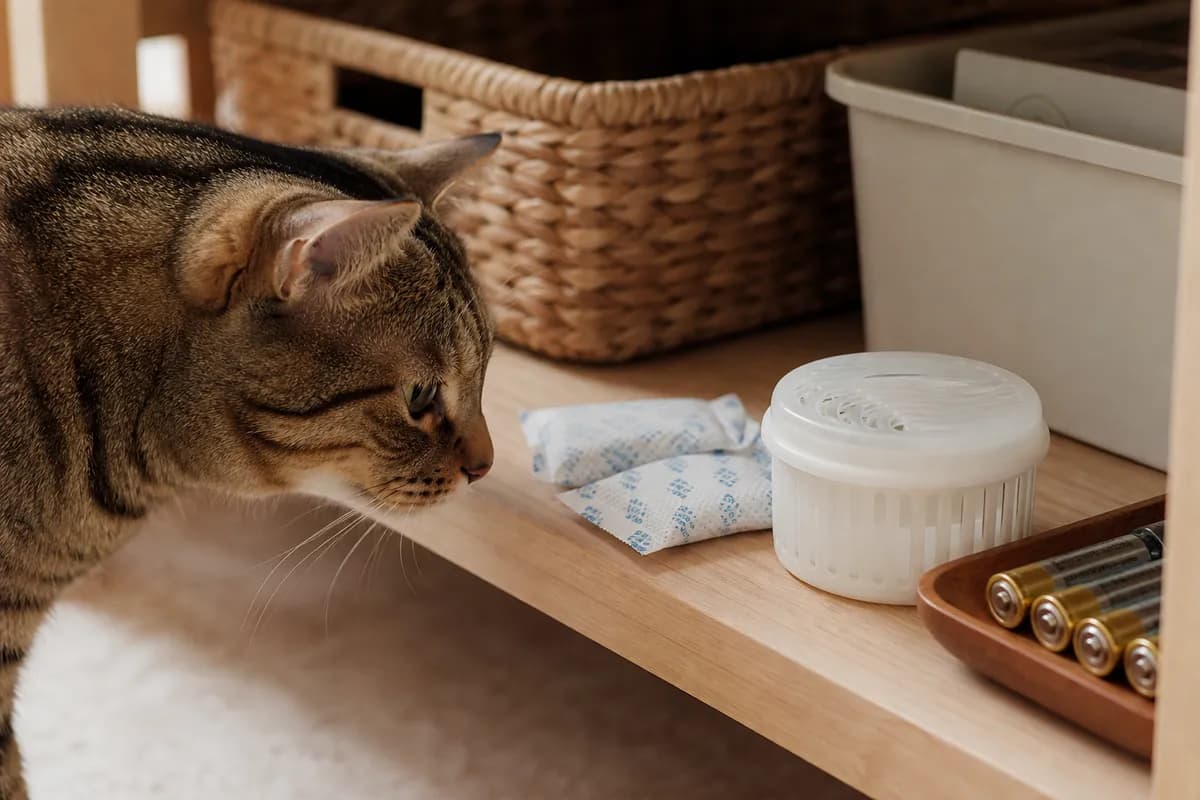
Plastic pumpkins with coin cells, flashing badges, and “motion” spiders hide button batteries. A puncture leaks alkaline material that burns the oesophagus in minutes. If you hear a rattle and the toy is wet with chew marks, treat it as battery ingestion until proven otherwise.
What to do
Remove the item. Do not pull string. For batteries or burns, go now. For a chewed plastic spider with no battery, monitor and call if vomiting starts. Write the product name down. Use the emergency checklist and what to do after a toxic exposure.
Are fake pumpkins safer than real ones?
Plastic avoids mould and candle-in-a-lantern fires, but only if there is no accessible battery pack and no dangling string. Real pumpkins bring rotting flesh and candles. Neither is “cat proof” on the floor.
Party houses and hired decorations
If you host, put cats in a quiet bedroom with litter, water, and a notice on the door. Guests will not remember the cobweb rule. Hired “horror” kits often include low-quality plastic with a strong chemical smell; a chew still counts as an unknown ingestion. Dry ice in drinks belongs outside or in a cat-free kitchen.
After the party, walk the house at cat height: floor, sofa gaps, fireplace. Button batteries hide under cushions. String hides under rugs. The 20-minute tidy is cheaper than surgery. If you find a chewed battery compartment, do not wait for symptoms — oesophageal burns from coin cells move faster than you think.
Outdoor decorations and other cats
Light-up figures on the lawn attract your cat and the neighbour’s. Trailing mains cables are a chew and a trip hazard. Battery packs left in the rain leak. Bring them in overnight or cable-tie packs inside a box your cat cannot open.