Why Lilies Are So Dangerous for Cats
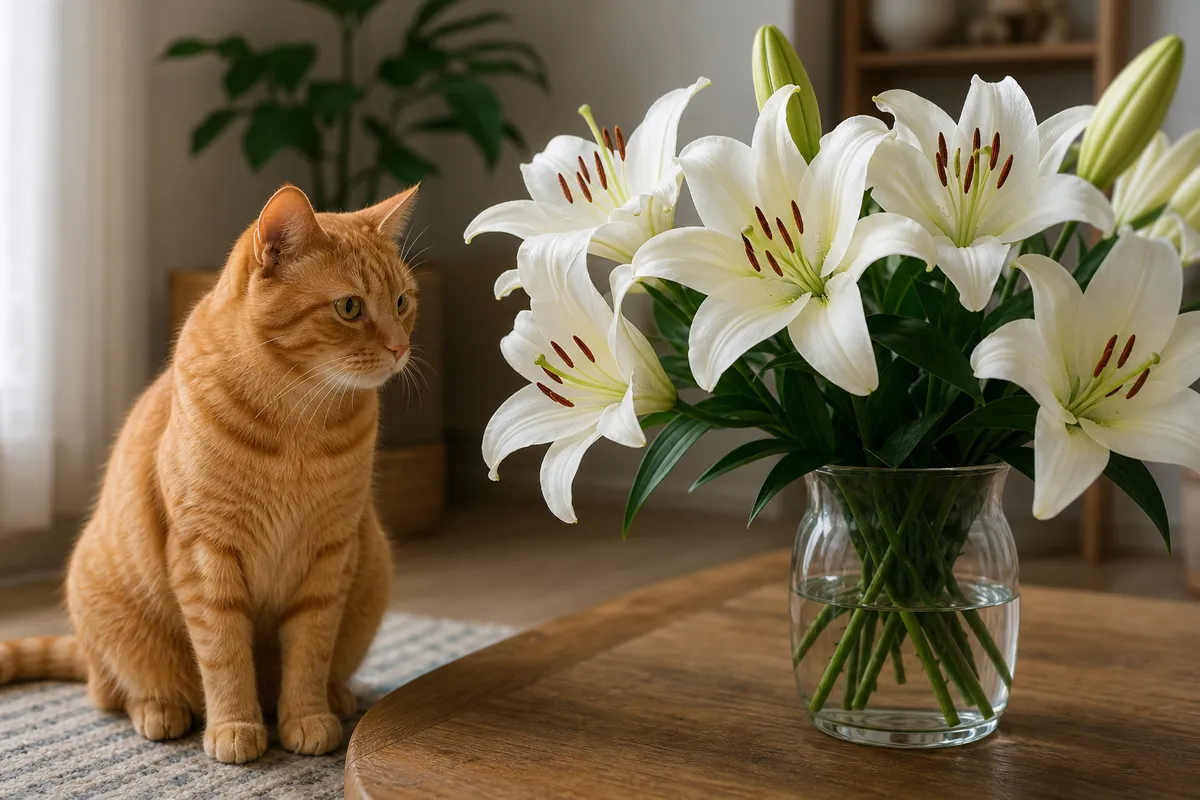
Lilies are beautiful, fragrant, and deadly to cats. Every part of the plant — petals, leaves, stems, pollen, and even vase water — can cause acute kidney failure. Here is why lilies are so toxic to cats and what to do if your cat is exposed.

There is no safe part of a true lily
A cat that brushes against a lily and grooms pollen from its fur can develop kidney failure within 12–24 hours. Treat every lily exposure as an emergency.
Which lilies are dangerous?
True lilies include Easter lilies, tiger lilies, stargazer lilies, Asiatic and Oriental lilies, and daylilies. Peace lilies and calla lilies are not true lilies but still cause irritation — see our full lily toxicity guide for details.
How exposure happens
- Chewing petals, leaves, or stems
- Drinking water from a lily vase
- Grooming pollen from fur or paws
- Outdoor lilies in gardens and borders
Kidney failure: the deadly consequence
Lily toxins damage kidney tubules rapidly. Early signs may be mild — vomiting, lethargy, reduced appetite — but irreversible kidney damage can follow within hours. Aggressive IV fluids and hospitalisation give the best chance of recovery if started early.
Watch for these symptoms
Vomiting, drooling, lethargy, and not urinating are red flags after lily exposure. See our complete cat poisoning symptoms guide for a full checklist.