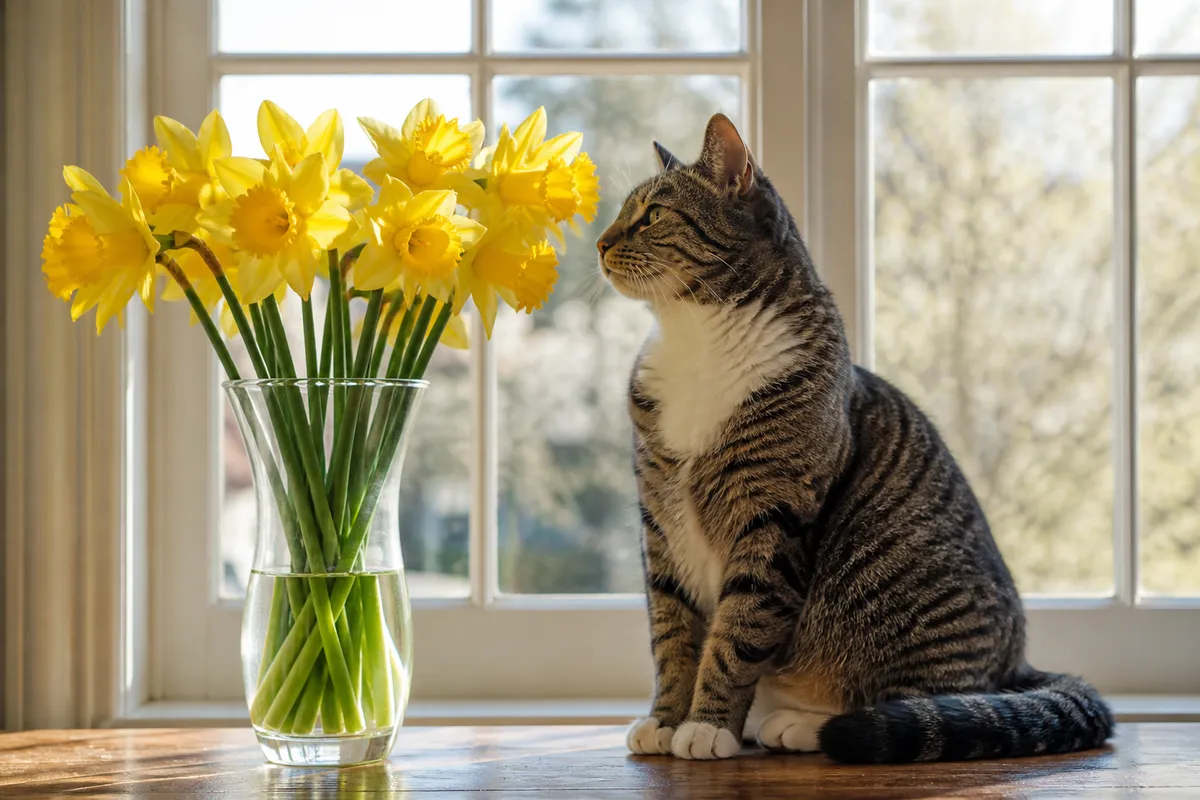
Are Daffodils Toxic to Cats?
Daffodils are among the UK’s most familiar spring bulbs — and a regular reason for plant-related vet calls. Are daffodils toxic to cats? Yes. Lycorine and related alkaloids concentrate especially in bulbs, while vase water and chewed stems can still make a curious cat thoroughly miserable.
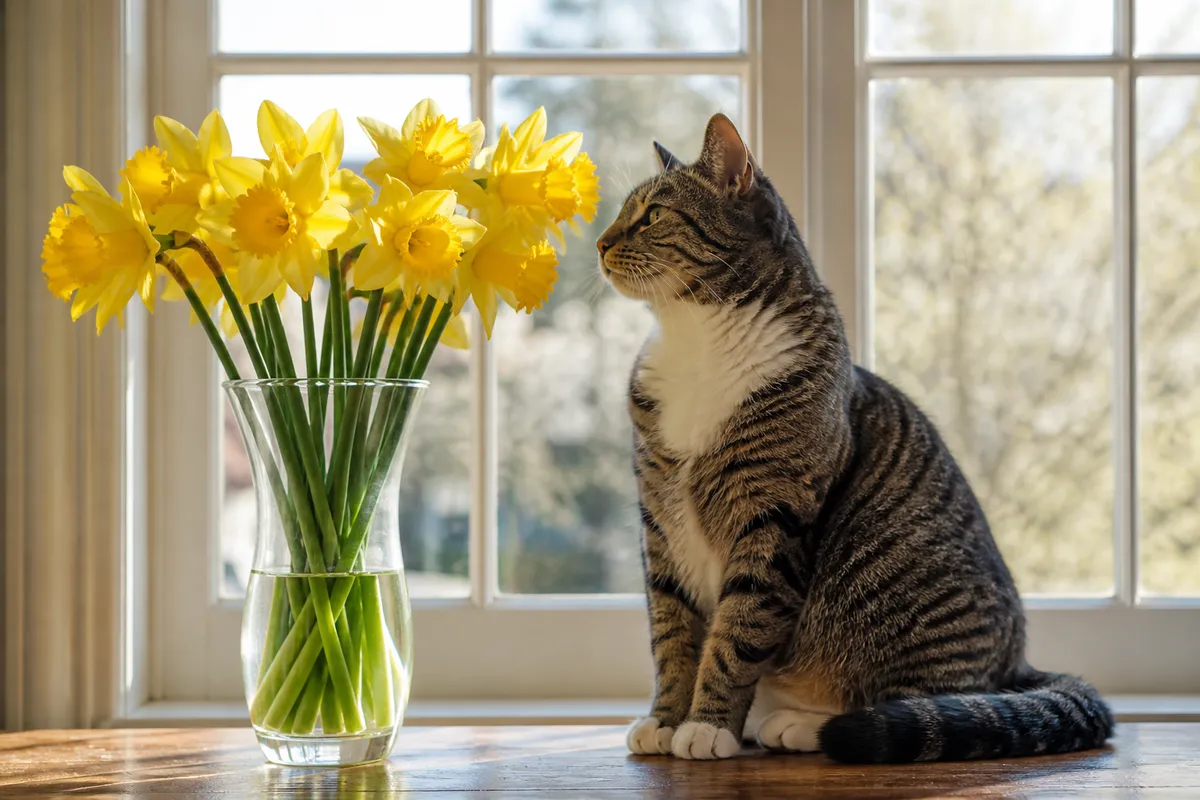
Bulbs and vase water both count
If your cat dug up a daffodil bulb or drank from a daffodil vase, call your vet. Do not wait to see whether vomiting “clears it”. Late-summer planting season is a peak digging risk even though blooms arrive months later.
Lycorine and related toxins
Daffodils (Narcissus species) contain lycorine and other alkaloids that irritate the gut and can affect the nervous system and heart at higher exposures. Calcium oxalate crystals in some plant parts add mouth pain and drooling. Together, these compounds explain why even a modest chewing session can produce dramatic vomiting. Cats rarely set out to eat a whole bulb, but boredom, outdoor access, and freshly turned soil create opportunities.
Bulbs versus flowers versus vase water
Bulbs hold the highest toxin levels and are the classic severe exposure — whether stored in a paper bag in the shed or planted along a path. Flowers and leaves can still cause oral irritation and vomiting if chewed. Vase water becomes a reservoir of sap and alkaloids as stems sit for days; cats who prefer novelty water sources may prefer the vase to their bowl. Empty and refresh water carefully, and never leave low vases in rooms where cats roam unsupervised.
Late-summer planting and spring displays
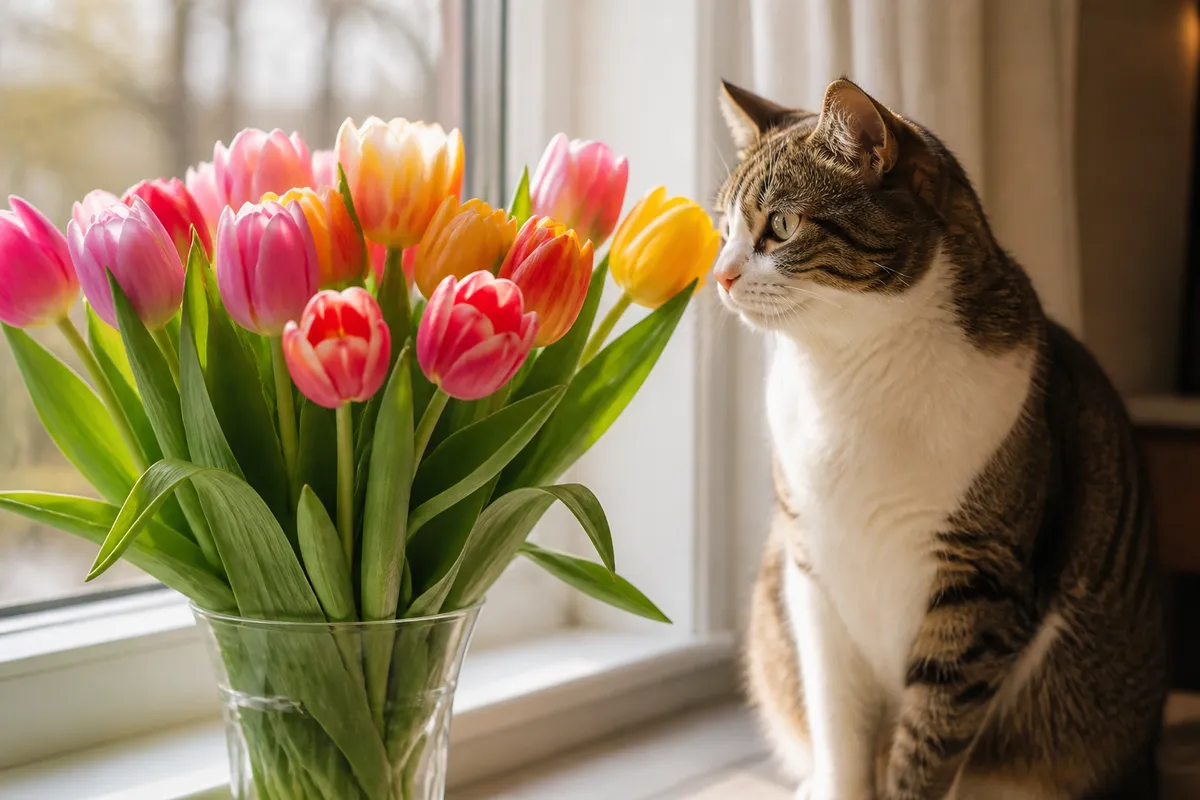
UK gardeners often plant daffodil bulbs from late summer into autumn. That is precisely when indoor-outdoor cats find loose soil irresistible. Netting, temporary fencing, or planting in areas cats already avoid reduces digging raids. Indoors, forced bulbs in bowls are popular winter gifts — treat them with the same respect as outdoor plantings. For neighbouring spring hazards, compare notes with are tulips toxic to cats and the seasonal planting warnings in flowers not to plant around cats.
Symptoms of daffodil exposure
- Profuse drooling
- Vomiting — sometimes persistent
- Diarrhoea
- Abdominal discomfort
- Lethargy or wobbliness in more serious cases
- Changes in heart rate or breathing if a large amount was eaten
Mouth pain may make cats refuse food even after the worst vomiting settles. Track signs with our cat poisoning symptoms guide and phone your vet if vomiting continues, gums look odd, or energy crashes.
What to do
Remove access to plants and vases. Wipe sap from fur if present. Collect a sample or photo of the plant. Call your vet or the Animal PoisonLine with how much plant material — especially bulb — may have been eaten and when. Do not induce vomiting unless directed. Supportive care from a clinic may include anti-nausea medication, fluids, and monitoring depending on severity. Our what to do if your cat ate poison steps help you organise the first half hour.
Mixed spring bouquets
Florists often combine daffodils with tulips or, more dangerously, true lilies. Always identify every stem. True lilies are a kidney-failure emergency and outrank daffodils on the urgency scale.
Prevention that lasts year-round
Choose cat-safer indoor displays, elevate vases, and garden with barriers during planting weeks. Teach guests not to arrive with unmarked supermarket bunches. If you love Narcissus colour, site bulbs away from litter zones and supervise outdoor time after gardening sessions when soil is soft. Pair plant choices with the broader houseplants toxic to cats checklist so one safe swap does not undo another risk elsewhere in the house.
How daffodil cases typically unfold
Many exposures begin with vomiting that looks like a simple dietary indiscretion. Owners clean the carpet, notice bits of yellow petal or white bulb flesh, and only then connect the garden work from earlier in the day. Early phone calls — even while your cat still seems “mostly okay” — give clinics a chance to advise on monitoring versus an immediate visit. Persistent vomiting risks dehydration; mouth pain risks longer appetite strikes that complicate recovery.
Forced indoor bulbs in decorative gravel are popular gifts around late winter. They sit at cat-nose height on sideboards and smell of damp soil. If you receive one, place it in a guest room with the door shut or politely re-home the display. Outdoor clumps naturalised in lawns are harder to remove entirely; manage access with supervision after mowing and edging when damaged bulbs may be exposed. Combine that outdoor awareness with indoor plant audits so you are not solving daffodils while leaving a toxic philodendron on the same landing.
Keep perspective without downplaying risk: daffodils are a well-recognised irritant and alkaloid hazard, not an excuse to panic about every yellow petal on the pavement. Focus effort on bulbs, vases, and known chewing. When in doubt, photograph the plant, call for advice, and follow professional guidance rather than internet dose calculators.
Frequently asked questions
Are paperwhites and narcissus the same risk as yellow daffodils?
Related Narcissus plants share the same general concern. Treat paperwhites, jonquils, and daffodils as unsafe to chew and keep bulbs secured.
My cat only bit a leaf — still call?
A small nibble may cause only mild irritation, but calling your vet or a poison helpline with details is still wise, especially for kittens. They can help you decide whether home monitoring is enough.
Can dried daffodils in crafts harm cats?
Dried plant material can still irritate if chewed. Keep craft supplies stored away, and do not assume “dead plant” equals “safe plant”.