Are Tulips Toxic to Cats?
Tulips signal spring on windowsills and in supermarket bunches — and they belong on the caution list for cat households. If you are asking are tulips toxic to cats, yes: tulipalin and related irritant compounds can cause oral and stomach upset, with bulbs carrying the highest concentration.
Bulbs are the worst part
If your cat digs up and chews a tulip bulb — planted or stored — contact your vet promptly. Bulbs pack more toxin than petals, and large pieces add blockage risk.
Tulipalin and how it affects cats
Tulips contain tulipalin A and related compounds that irritate the mouth, oesophagus, and gut. Cats who nibble leaves or petals may drool, paw at their faces, vomit, or lose interest in food. Severity usually tracks how much was eaten and which plant part was involved. Most household exposures involve mild to moderate gastrointestinal signs, but that is not a reason to leave bouquets at floor level — uncomfortable cats still need assessment when symptoms persist or appetite vanishes.
Why bulbs matter most
Gardeners store tulip bulbs in sheds and plant them in autumn for spring colour. Cats who dig in freshly turned soil may unearth bulbs and chew them like toys. Concentrated toxin plus fibrous plant material makes bulbs the priority hazard. Keep mesh or chicken wire over newly planted beds if you have dedicated diggers, and store spare bulbs in sealed tubs on high shelves.
Cut flowers indoors
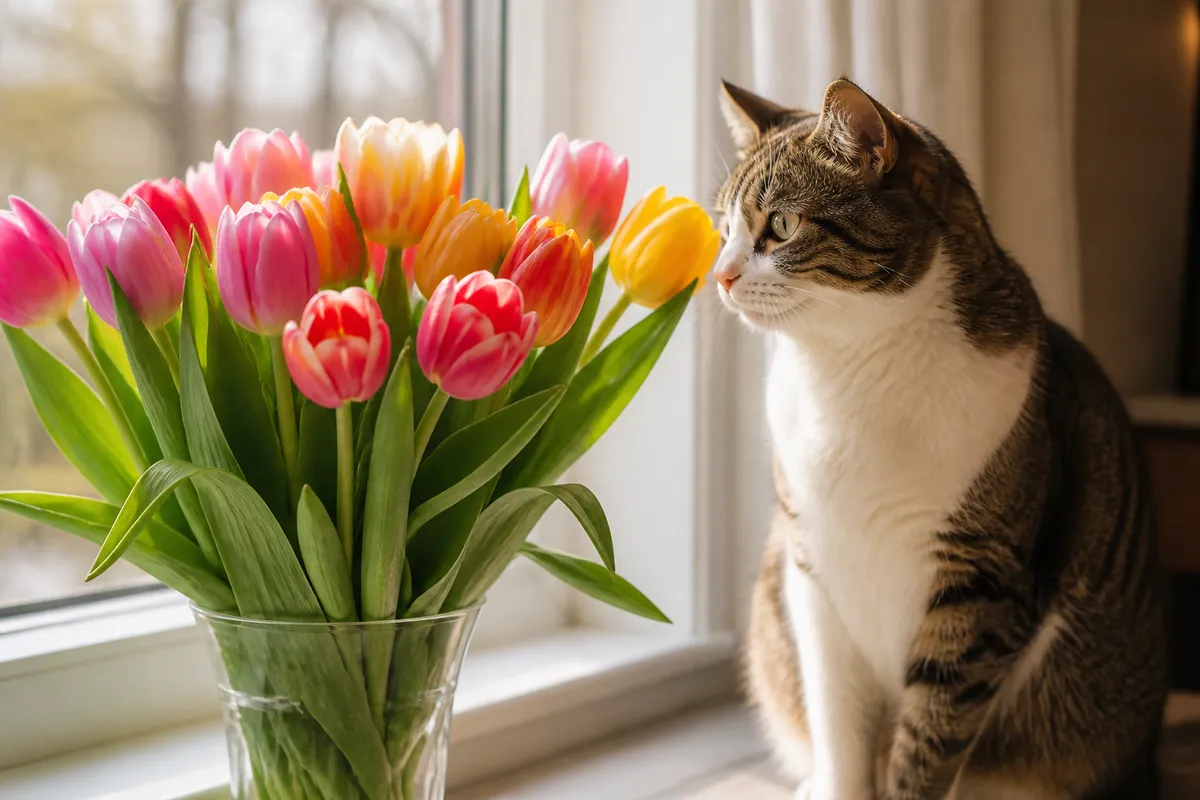
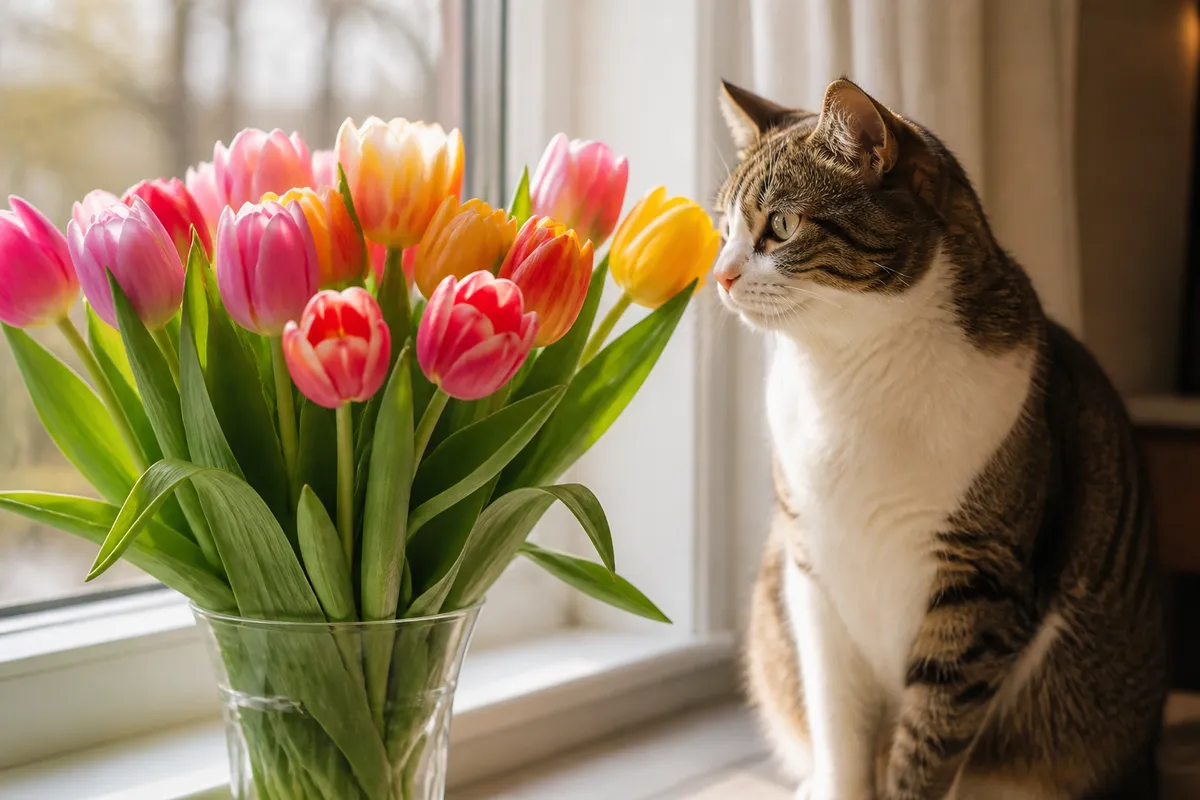
Supermarket tulips in a vase look innocent on a dining table. Fallen petals on the floor become toys; water may contain sap residues; curious climbers reach centrepieces overnight. Display arrangements in rooms cats cannot access, or choose genuinely safer blooms. Our houseplants toxic to cats hub helps you audit permanent greenery, while seasonal buying decisions sit alongside flowers not to plant in spring.
Symptoms and dose context
- Drooling and lip-smacking
- Vomiting or nausea
- Diarrhoea
- Reduced appetite
- Oral discomfort or reluctance to eat hard food
A single petal may cause brief irritation; bulb chewing warrants a lower threshold for calling the vet. Kittens explore with their mouths and may ingest more relative to size. If neurological signs appear, consider whether another plant (for example a true lily in the same bouquet) was also present — florists sometimes mix stems.
What to do after tulip chewing
Remove plant material and wipe any sap from the fur around the mouth with a damp cloth if your cat tolerates it. Do not induce vomiting unless advised. Call your vet with an estimate of petals versus bulb and the time of exposure. Save a photo of the plant for identification. Review cat poisoning symptoms so you can describe changes accurately if signs evolve overnight.
Bouquet audit
Before any supermarket bunch comes indoors, strip out true lilies entirely — they cause kidney failure and dwarf most tulip risks. When tulips are the only stems, elevate the vase and change water out of paw reach.
Prevention for gardeners and flower lovers
Plant tulips in beds cats ignore, or use barriers until shoots are less tempting. Offer cat grass indoors so bored chewers have a safer outlet. Prefer cat-safer spring colour such as roses (watch thorns) or plants from vetted safe lists rather than gambling on bulb borders beside a litter-tray flower bed.
If you grow tulips in large drifts, accept that complete cat-proofing is harder and lean on supervision plus indoor enrichment so outdoor chewing is less rewarding. For most households, simply skipping tulips in favour of safer seasonal colour is the lowest-stress choice — and it removes bulb storage hazards from the shed entirely.
Digging, storage and autumn planting
Tulip bulbs are often planted in autumn for a spring show, which means the highest digging risk arrives months before the Instagram blooms. Freshly mulched beds smell interesting; loose soil invites excavation. If your cat already digs in borders, delay planting until you can cover beds, or choose containers on high shelves and balconies cats cannot reach. Stored bulbs in cardboard trays under benches are equally tempting — move them into lidded plastic crates labelled clearly so guests do not mistake them for treats or toys.
Cut-flower longevity tips from florists — crushing stems, adding flower food — do not change the toxicity profile for cats. Flower food sachets add another chemical mix to vase water. Prefer simple water changes performed where cats cannot lap runoff, and dispose of spent stems in sealed bins rather than open compost bowls indoors.
Severity is usually lower than true lily kidney failure, but that comparison should never encourage complacency. A miserable, dehydrated cat still needs care, and mixed bouquets may hide worse stems. When symptoms include extreme lethargy or reduced urination, mention every plant in the house — not only the tulips you saw being chewed.
Frequently asked questions
Are tulip leaves as bad as the flowers?
Leaves and stems can still irritate if chewed. Bulbs remain the highest-concern part. Discourage chewing of any tulip tissue.
Is vase water dangerous?
Vase water can contain sap and bacteria. It is not a cat water bowl. Use covered vessels or rooms cats cannot access.
How do tulips compare with daffodils?
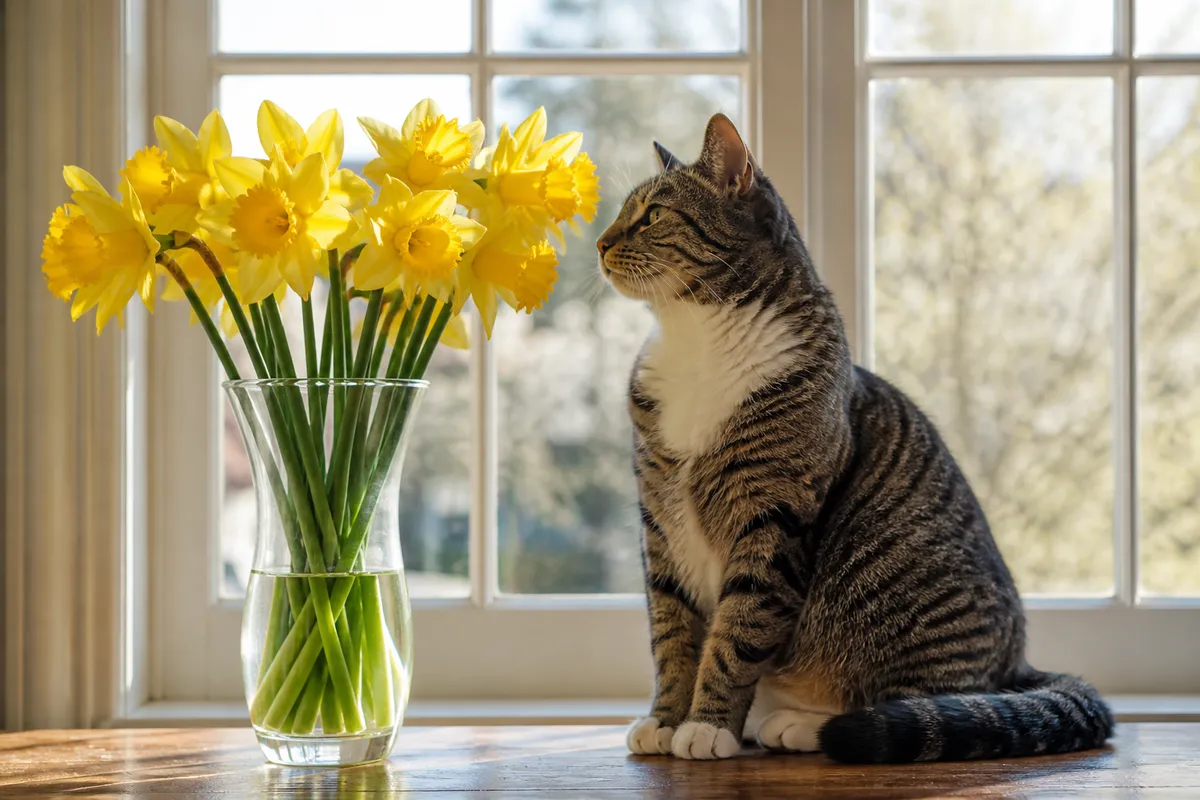
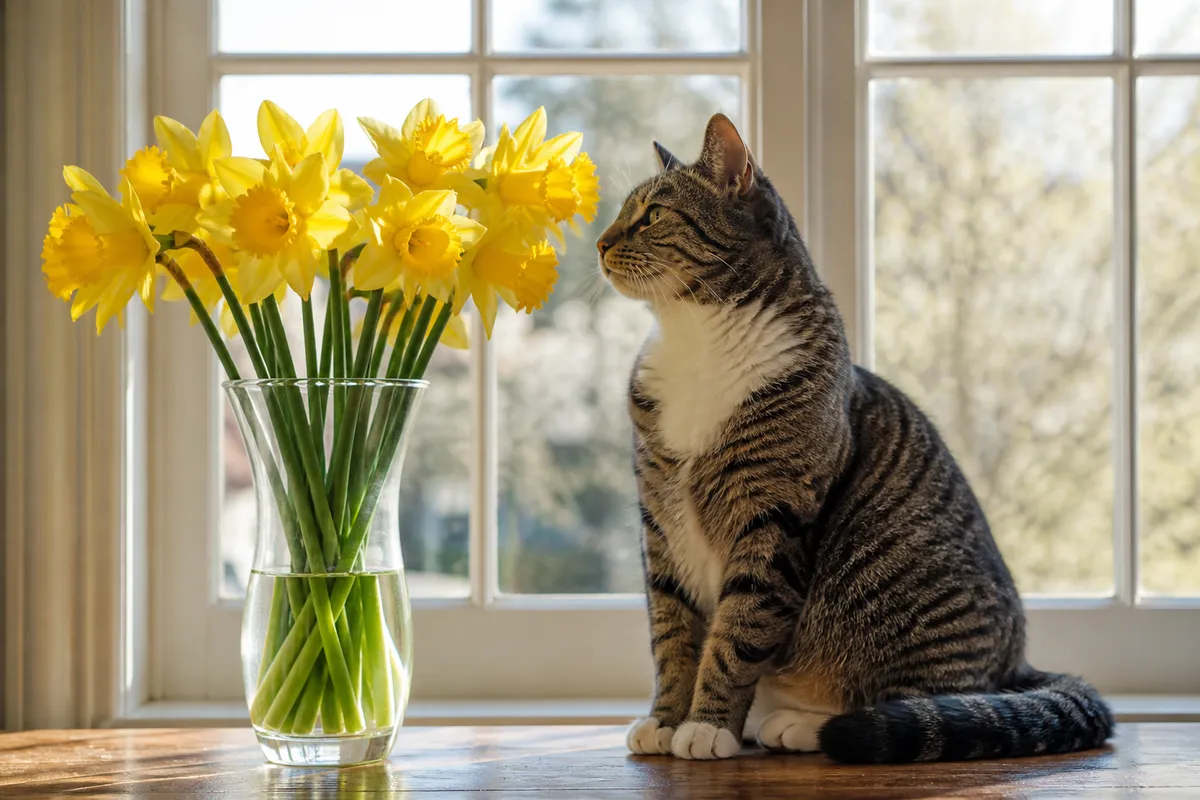
Both are spring bulb hazards. Daffodils contain lycorine and bring their own vase-water risks — see are daffodils toxic to cats for that comparison in detail.