Can Cats Eat Ham, Bacon and Other Cured Meats?
Breakfast smells travel — and cats notice. Can cats eat ham, bacon and other cured meats? An occasional tiny plain scrap is unlikely to poison a healthy adult cat, but salt, curing agents, and fat make these foods poor treats with real pancreatitis and thirst risks.
Why cured meats are a problem
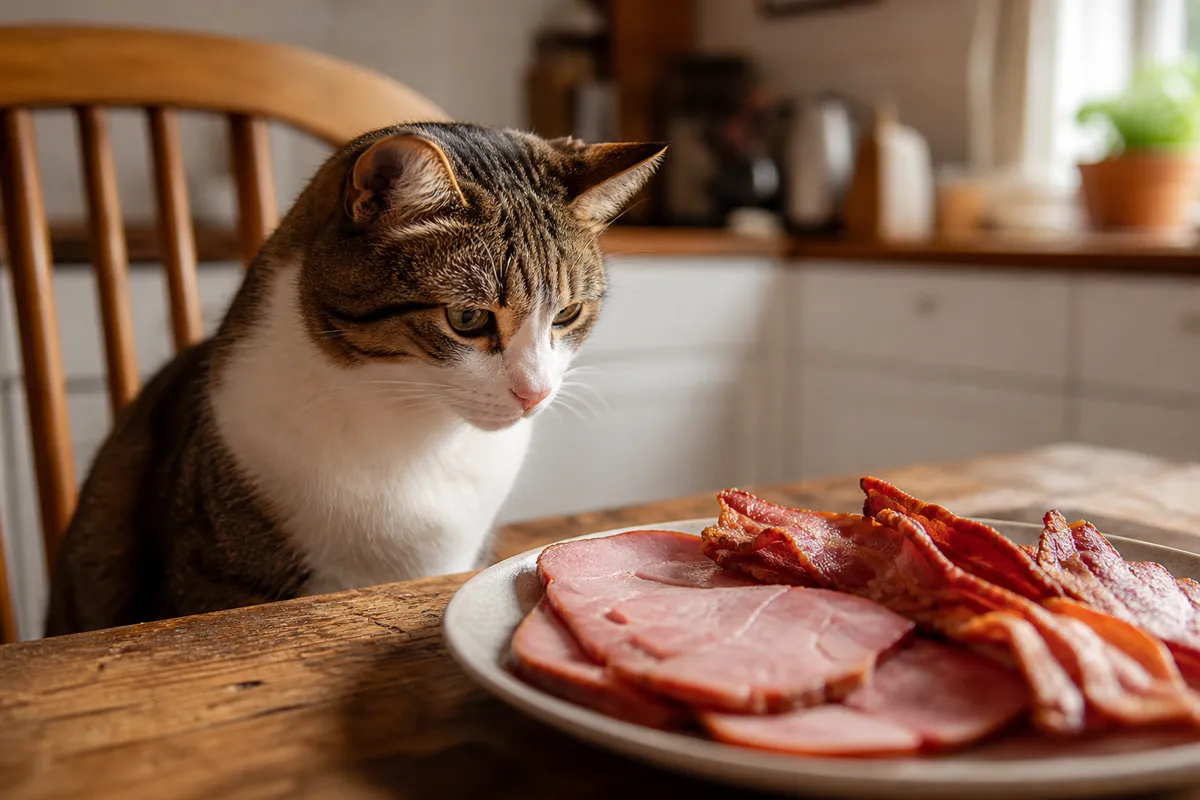
Ham, bacon, gammon, and many deli slices are loaded with salt compared with complete cat food. Excess sodium can make cats excessively thirsty and, in extreme cases, contribute to salt toxicosis. Curing and smoking add flavour compounds cats do not need. Fatty rind and streaky bacon deliver a sudden fat load that can trigger pancreatitis in susceptible cats — a painful, expensive emergency that can cost hundreds of pounds at an out-of-hours clinic.
Salt, cure, and seasonings
- Salt: High in bacon and ham; worsens with glazed or honey-roast products.
- Nitrates/nitrites: Common in cured meats; not appropriate as a regular part of a cat’s diet.
- Onion and garlic powders: Often hidden in flavoured hams and bacon bits — see onions and garlic toxicity.
- Fat and rind: Raise pancreatitis risk, especially in overweight cats.
Occasional treat framing — not a food group
If you choose to share, think in crumbs, not rasher strips. A pea-sized piece of plain, unseasoned cooked ham as a rare training reward is very different from letting a cat finish the bacon left on a Sunday plate. Treats — including human food — should stay well under about 10% of daily calories. For the wider rules of sharing from your plate, read can cats eat human food.
Skip these entirely
Do not offer raw bacon, mouldy leftovers, highly seasoned gammon, cocktail sausages with onion gravy, or fatty trimmings. Bones from cooked joints can splinter. When a product lists garlic, onion, or artificial sweeteners, put it back in the fridge — not in the cat bowl.
Symptoms after too much cured meat
Watch for vomiting, diarrhoea, abdominal pain (a hunched posture), lethargy, frantic thirst, or refusal of normal food. Pancreatitis signs can appear hours later. If your cat seems painful or repeatedly sick, contact your vet. Use the cat poisoning symptoms checklist to describe the timeline clearly — even when the issue is dietary indiscretion rather than a classic toxin.
What to do
If a large amount of bacon or salty ham disappeared, call your vet for advice rather than waiting. Ensure fresh water is available. Do not give leftover “remedies” from the medicine cabinet. For kitchen habits that reduce scavenging, see our cat-safe kitchen guide.
Better protein treats
Plain cooked chicken breast, commercial cat treats, or a lick of the water from poaching unseasoned meat are safer celebration snacks than streaky bacon.
How much is too much?
There is no single gram threshold that fits every cat, because body weight, existing kidney or heart disease, and overall diet matter. A crumb of plain ham as a rare reward is a different scenario from a kitten finishing half a rasher. When you are unsure, default to a cat treat you already trust — or scan the packet with Toxic Kitty before sharing anything cured.
Pancreatitis: why fat is not a harmless treat
Pancreatitis in cats can be hard to spot early — vague lethargy and a skipped meal may be the first clues. Fatty cured meats are a classic dietary trigger discussed in veterinary nutrition advice. Once pancreatitis takes hold, cats may need hospital fluids, pain relief, and anti-nausea care. That is a steep price for a breakfast photo opportunity. If your cat has had pancreatitis before, treat ham and bacon as permanent no-gos rather than rare exceptions.
Deli counters, sandwich shops and holiday buffets
Sandwich shops stack ham with mustard, pickles, and sauces. Buffet platters mix cured meats with cocktail onions and chutneys. The risk is not only the meat — it is everything clinging to it. Keep party trays covered, and assign a human to clear plates before mingling. Outdoor brunches are especially risky because cats can steal from low tables unnoticed.
Prevention
Clear plates promptly, keep cooling racks covered, and train the household not to feed from the table. Bin bags with meat scraps should not be open buffet stations. Guests often need a polite heads-up — bacon bribery is a common holiday habit. If you use meat as a pill disguise, ask your vet for cat-safe options instead of salty deli slices.
Frequently asked questions
Is turkey bacon any better?
Usually still high in salt and additives. “Turkey” on the label does not make it a balanced cat treat. Prefer plain cooked poultry you control yourself.
Can ham cause salt poisoning?
A huge salty meal can contribute to salt overload, especially in small cats with limited water access. Extreme cases are uncommon from a single scrap, but large volumes of cured meat are never worth the risk.
What about cat-safe “bacon flavour” treats?
Purpose-made cat treats formulated without toxic seasonings are preferable to human rashers. Still count them within the daily treat budget.