Halloween Chocolate, Wrappers and Sweets: Cat Poisoning Risks
Halloween in the UK is a chocolate delivery system aimed at children, with bags on the floor, bowls on the hall table, and wrappers everywhere. Cats do not trick-or-treat. They do steal. Dark bars, raisins in “trail mix” sweets, sugar-free gum, and foil wrappers are four different problems in one evening. If you only read one food page this week, make it can cats eat chocolate and then come back here for the seasonal extras.
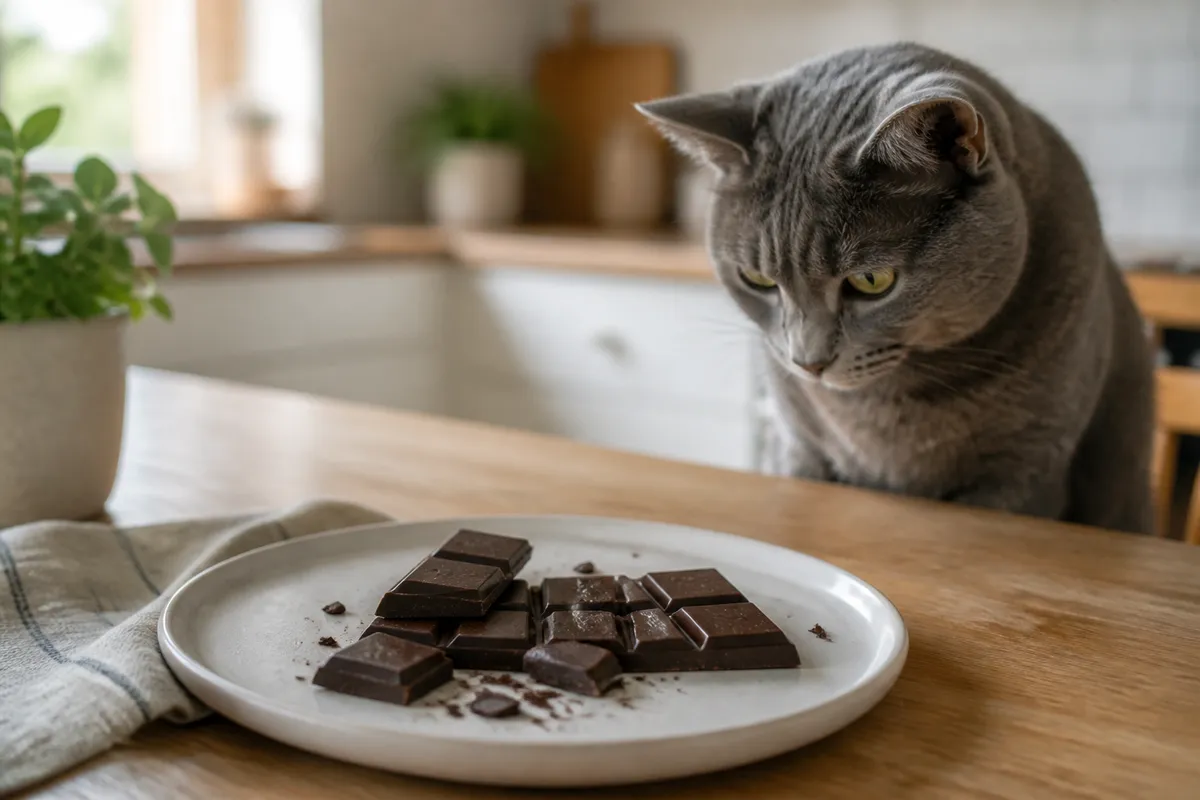
Dark chocolate and “sharing bags” are the high-risk pile
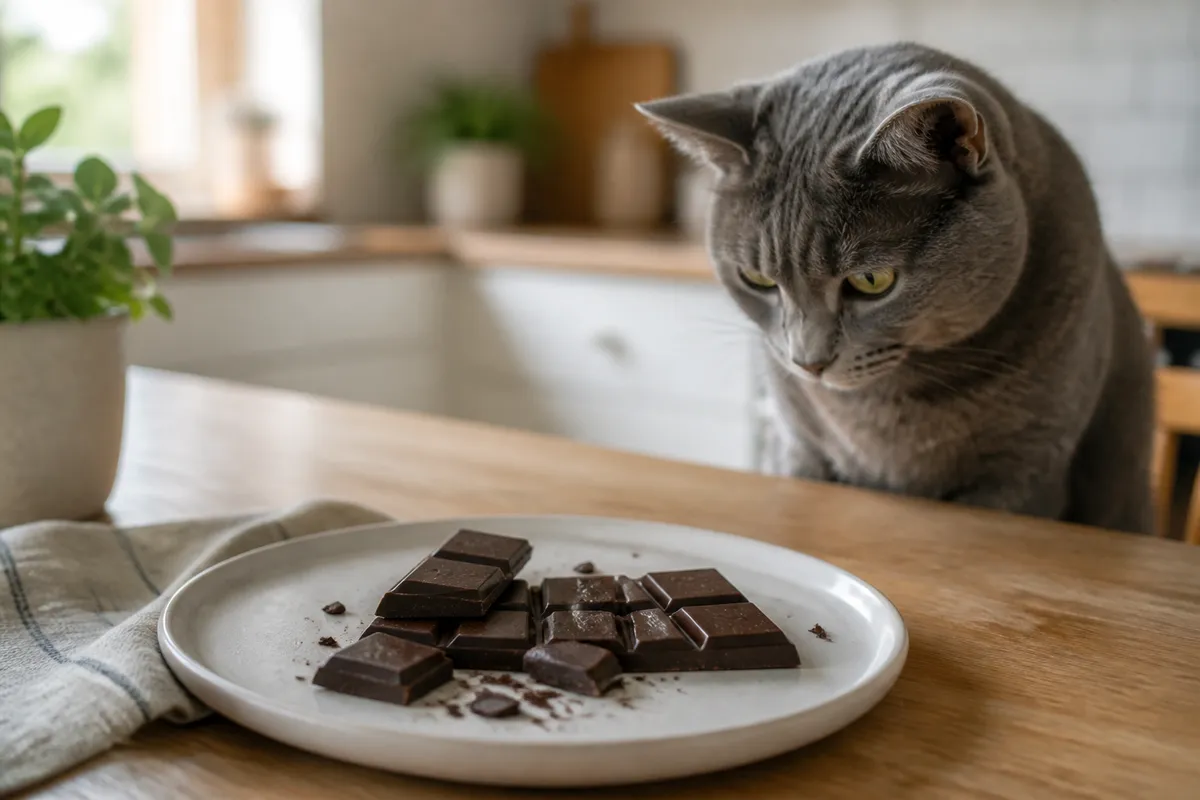
Theobromine and caffeine hit small bodies hard. Do not wait for tremors if you know a cat ate a proper bar. Call the vet with the brand, cocoa percentage if listed, and your cat’s weight.
Chocolate is still the headline toxin
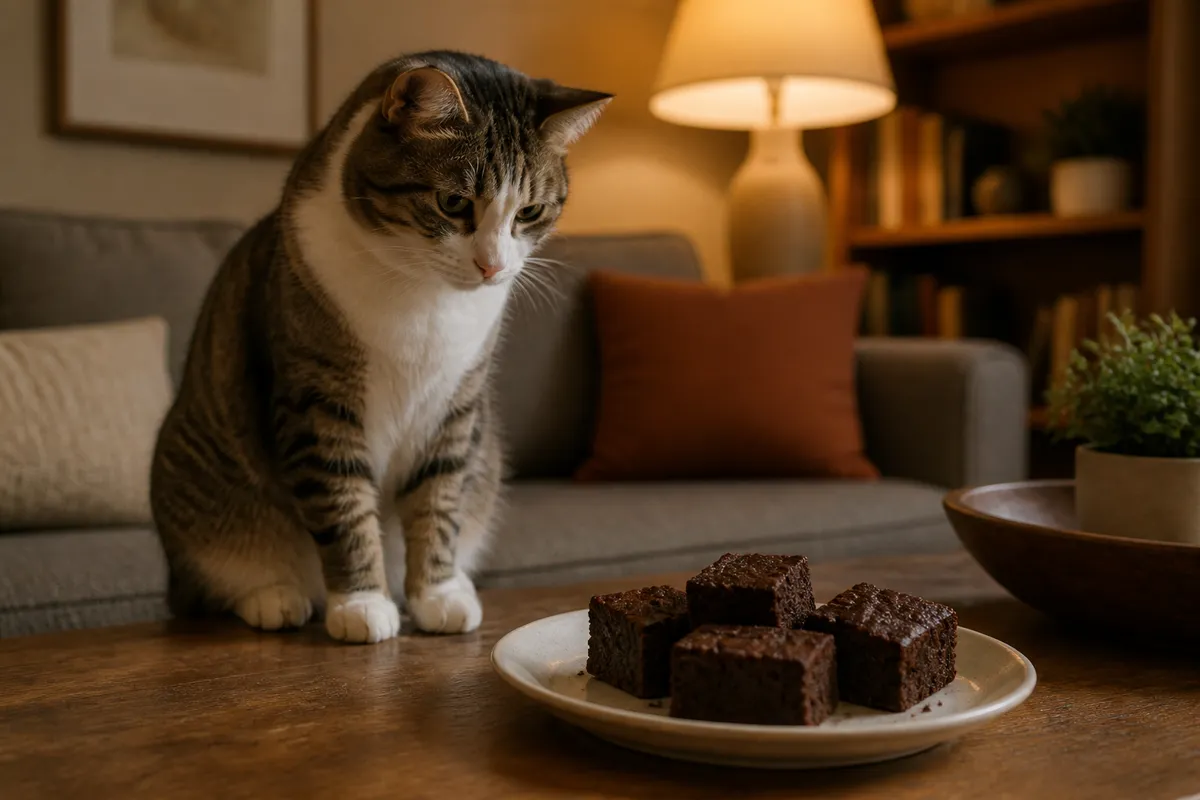
Cocoa contains theobromine and caffeine. Cats metabolise these slowly. Cooking chocolate and high-cocoa dark bars pack more punch per gram than cheap milk buttons, but milk chocolate in a large amount still matters for a three-kilogram cat. Symptoms can include vomiting, restlessness, a racing heart, tremors, and seizures. There is no “let them sleep it off” version of this.
Halloween multiplies access: open bowls, school-bag hauls by the door, guests’ handbags. Children drop sweets. Cats investigate crinkles. If you already know the chocolate pathway, skip to wrappers and raisins below. If you do not, read the full chocolate poisoning guide first.
Raisins, gum and “healthy” party mix
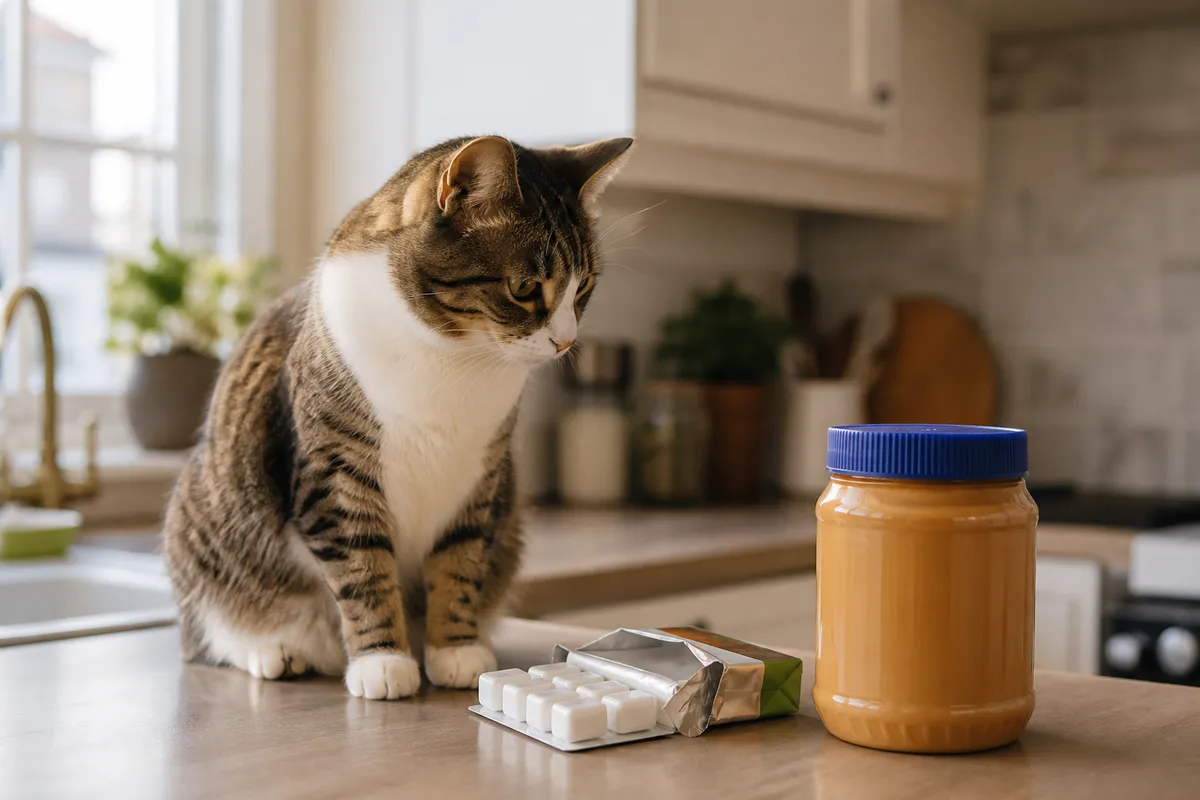
Not every orange wrapper is chocolate. Raisin boxes, chocolate-covered raisins, and cereal bars sit in the same bowls. Grapes and raisins are a kidney-risk food in cats — amounts that look silly to a human are not a home experiment. Sugar-free gum and mints in the same tote bag may contain xylitol. Those two deserve their own calls: grapes and raisins and xylitol.
Wrappers, sticks and foreign bodies
Foil and plastic do not “poison” in the chemical sense. They cut, obstruct, and sit in the gut. A cat that ate a wrapper may vomit, go off food, or strain. Lollipop sticks and cocktail sticks from party food are worse. Glow-stick liquid is mostly a taste-drama with drooling — still check our small household items page if they chewed a bracelet, because batteries in light-up toys are a different, serious hazard.
What to do on the night
Shut sweets in a high cupboard, not a pumpkins-and-bowl display at cat height. After trick-or-treat, sweep the floor. If ingestion happens, do not induce vomiting. Take the wrapper to the clinic. Use what to do if your cat ate poison and the emergency checklist so the time, brand, and amount are written down before adrenaline scrambles them.
White chocolate?
White chocolate is mostly fat and sugar with little cocoa. It is a poorer theobromine source than dark chocolate, but fatty puddings can still trigger pancreatitis, and fillings may include other toxins. Always read the label.
School bags, handbags and the morning after
The highest-risk hour is not 6pm on the 31st. It is 8am on 1 November, when bags hit the floor and everyone is tired. Cats have all night with dropped sweets under the sofa. Sweep once before bed and once in the morning. Check behind radiators. Foil rustles; cats treat that as a toy.
If you cannot get a cocoa percentage from a smashed bar, take the brand and any remaining squares to the clinic. Dose charts for dogs do not copy cleanly onto cats. Do not delay the call to finish a spreadsheet. For the mechanism and dark-versus-milk detail, stay with can cats eat chocolate — this page is the seasonal access pattern around it.
Sugar-free “tooth-friendly” sweets
Parents buy xylitol mints because they are kinder to human teeth. They are not kinder to pets. A single bag in a coat pocket on a chair is enough. If the ingredients list birch sugar or E967, treat it as xylitol until a vet says otherwise.