Is Xylitol Toxic to Cats? Sugar-Free Sweetener Risks
Sugar-free gum, toothpaste, and “light” peanut butter often hide a sweetener that is famous for poisoning dogs. If you are asking is xylitol toxic to cats, the honest answer is more nuanced than a simple yes — but you should still treat accidental ingestion as a reason to call your vet, not a wait-and-see experiment.
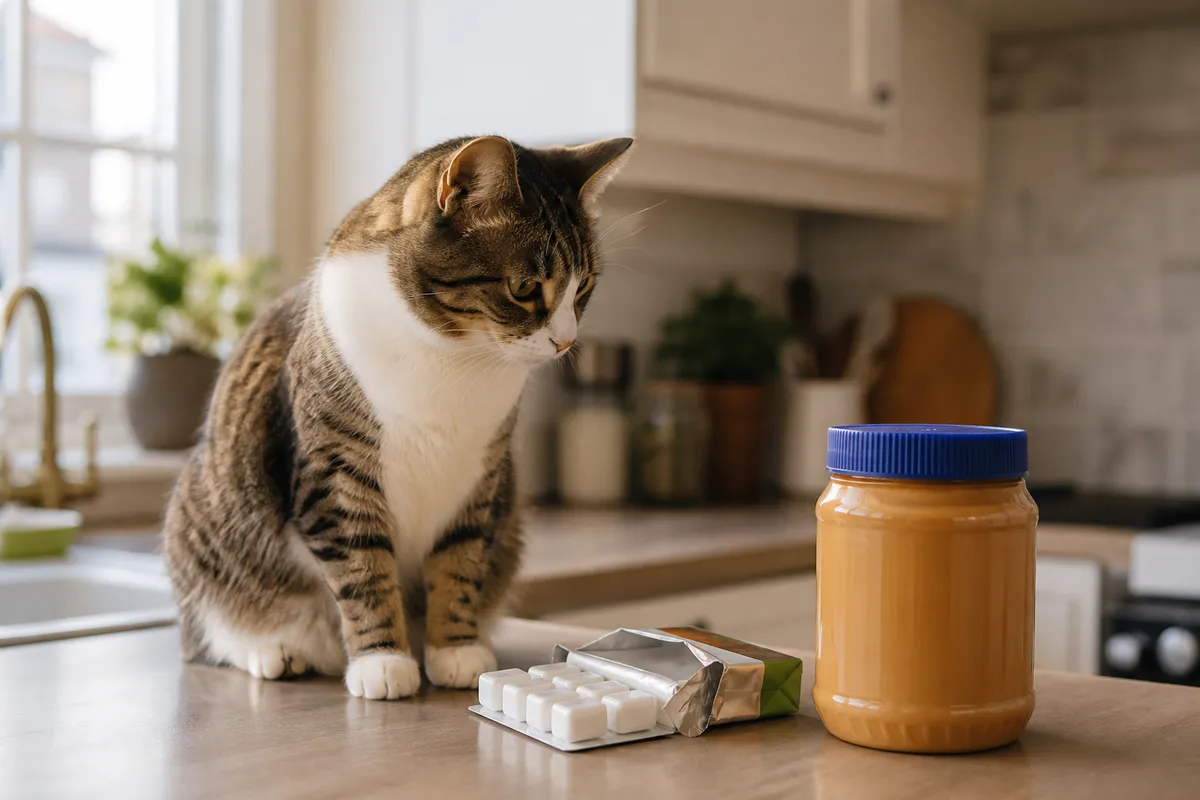
Call your vet if you know your cat ate xylitol
Do not wait for symptoms. Note the product name, any xylitol (or “birch sugar”) amount on the label, and your cat’s approximate weight. In the UK you can also contact the Animal PoisonLine for advice while you arrange veterinary care.
What xylitol is and where cats find it
Xylitol is a sugar alcohol used to sweeten products without ordinary sugar. It tastes pleasant to many animals, which is why discarded gum and wrappers are a classic risk. In UK kitchens and bathrooms it turns up in sugar-free chewing gum, mints and sweets, some peanut butters and nut spreads marketed as “no added sugar”, certain toothpastes and mouth rinses, diabetic-friendly baking mixes, and a growing range of “keto” or “low carb” desserts. Always read the ingredients list — xylitol may also appear as birch sugar or E967.
Cats are usually fussier than dogs about chewing gum, but they still lick residue from plates, steal a dollop of peanut butter, or bat a toothpaste tube until it splits. Multi-pet homes are especially risky: a product bought for a dog’s dental routine can end up within a cat’s reach. For a wider map of kitchen hazards, see our guide to human foods cats should never eat.
How xylitol harms pets — and what we know about cats
In dogs, xylitol can trigger a sharp release of insulin, driving blood sugar dangerously low, and in higher exposures it is linked with serious liver injury. That dog-focused evidence is strong and well publicised — which is why many owners assume cats face the same pathway at the same dose.
Published clinical evidence for cats is thinner. Cats are not miniature dogs: their metabolism, insulin response, and typical appetite for sweet products differ. That does not make xylitol “safe” for cats. It means we should avoid inventing cat-specific lethal doses or claiming identical mechanisms without evidence. The practical stance for owners is simple: keep xylitol products away from cats, and treat known ingestion as an urgent veterinary question rather than a home experiment.
Dose and severity in plain terms
Severity depends on how much xylitol was in the product, how much your cat actually swallowed, and your cat’s size and health. A lick of residue is not the same as chewing a whole pack of gum or eating a spoonful of xylitol-sweetened peanut butter. Kittens and small cats have less body mass to buffer any toxin. Because labels list xylitol among many ingredients, estimating exact milligrams at home is often impossible — which is another reason to phone a vet or the Animal PoisonLine with the packaging in hand rather than guessing.
Symptoms to watch for
After a possible exposure, watch for vomiting, weakness, wobbliness, trembling, lethargy, collapse, or unusual behaviour. Some cats show little at first and worsen later. Any neurological change, pale gums, or refusal to stand warrants emergency care. Cross-check what you see against our cat poisoning symptoms guide so you can describe signs clearly when you call.
- Early clues: drooling, vomiting, restlessness, or hiding after getting into sweets or toothpaste
- More serious signs: tremors, weakness, collapse, seizures, or marked lethargy
- Do not wait if: you saw your cat eat a xylitol product, even if they still seem bright
What to do if your cat ate xylitol
Remove any remaining product from reach. Do not try to make your cat vomit with salt, mustard, or hydrogen peroxide — those home remedies can cause their own harm. Collect the packaging, estimate when the exposure happened, and call your vet or an out-of-hours clinic. If advised to travel in, take the product with you. While you prepare, our what to do if your cat ate poison checklist covers the information clinics usually need.
Peanut butter tip
If you use peanut butter to hide tablets, choose a brand without xylitol and use only a pea-sized smear. Many “natural” or sugar-free jars still use alternative sweeteners — read every label, every time.
Prevention at home
Store gum, mints, and toothpaste in closed cupboards, not open bathroom shelves. Bin wrappers promptly — cats investigate bins. Prefer xylitol-free peanut butter if any pet in the house steals food. When guests visit, warn them not to leave handbags with gum on the floor. Building a cat-safe kitchen habit reduces many sweetener and leftover risks at once.
Toothpaste, gum and multi-pet households
Bathroom routines create quiet exposures. A cat who jumps on the sink may lick toothpaste foam from the basin rim, chew a soft tube, or bat a discarded floss pick that still smells sweet. Children’s sugar-free sweets left in school bags by the door are another overlooked stash. In homes with both dogs and cats, products bought specifically because they are “dog dental” or “vet toothpaste” still need ingredient checks — xylitol is used in some veterinary dental products aimed at dogs, and a shared bathroom shelf does not sort species automatically.
When you contact a clinic, describe the format clearly: gum pellets, dissolvable mints, paste, or a spread. Paste sticks to fur and prolongs grooming exposure; gum may be only partly chewed. That detail changes how urgently decontamination or monitoring is advised. Keep the receipt or online order confirmation if the packaging is mangled — brand pages often list sweeteners more clearly than a torn wrapper.
Frequently asked questions
Is xylitol as dangerous for cats as it is for dogs?
Dogs are the species with the clearest, most severe documented reaction to xylitol. Cats appear less often in published case reports, and their physiology differs, so it is misleading to copy dog dose charts onto cats. That uncertainty is not permission to share sugar-free gum or toothpaste. Treat any confirmed exposure seriously and get veterinary advice.
Is “birch sugar” the same as xylitol?
Yes — birch sugar is another name for xylitol. If you see it on a UK ingredients list, handle the product as a xylitol risk around pets.
What if my cat only licked a plate that had sugar-free dessert on it?
Call your vet with the product details anyway. A lick may be minor or meaningful depending on how concentrated the sweetener was. Professionals can help you weigh risk without you needing to invent a dose calculation at home.