Why You Should Never Make Your Cat Vomit at Home
Internet advice still tells people to force salt or hydrogen peroxide down a cat's throat. Please do not. This page explains why you should never make your cat vomit at home — and what to do instead when every minute feels urgent.
Do not use salt, mustard, or peroxide
These home remedies can cause their own poisoning, chemical burns, or aspiration pneumonia. Call a vet or emergency clinic for instructions tailored to the substance and your cat.
Why home-induced vomiting is dangerous for cats
Cats are not small dogs. Their throats, stress responses, and toxin list differ. Forcing liquid or paste into a struggling cat often means some of it enters the lungs. Aspiration can turn a poison scare into a critical breathing emergency. Caustic cleaners and petroleum products can burn even more on the way back up if vomiting is forced.
Stress alone worsens many situations: a panicked cat may bite, bolt, or inhale fluid. The minutes spent wrestling in the kitchen are often better spent phoning a clinic and packing the carrier. Professional decontamination, when appropriate, happens with training, dosing, and airway awareness you cannot replicate at home. Your job is identification, containment, and transport — not kitchen chemistry.
Salt myths
Salt water as an emetic is an outdated, harmful idea. Excess salt can cause sodium ion poisoning — neurological signs, seizures, and worse — on top of whatever was already eaten. There is no safe kitchen dose to "just try". Skip every tip that starts with a tablespoon of salt, and ignore social posts that treat cats like dogs for home first aid. If a relative insists "it worked for the dog", still refuse — cats are different patients.
Hydrogen peroxide myths
Peroxide is sometimes discussed for dogs under veterinary direction; it is not a home tool for cats. It can irritate or damage the stomach, fail to work, and still risk aspiration when you wrestle a bottle into a cat's mouth. If a clinician wants decontamination, they will choose a controlled method in the clinic — as described in how vets treat cat poisoning. Keep peroxide in the first-aid kit for humans if you wish — not for feline emergencies.
When vomiting is the wrong idea entirely
- Corrosive substances: Acids, alkalis, and some detergents — bringing them back up worsens burns.
- Petroleum distillates: High aspiration risk if vomiting occurs.
- Already symptomatic cats: Sedated, seizuring, or struggling to breathe should not be forced to vomit.
- Sharp objects: Bones or metal may injure on the return journey.
What to do instead
Follow a simple, safer sequence from our what to do if your cat ate poison guide:
- Remove access to the substance and confine your cat calmly.
- Collect packaging, plant samples, or photos.
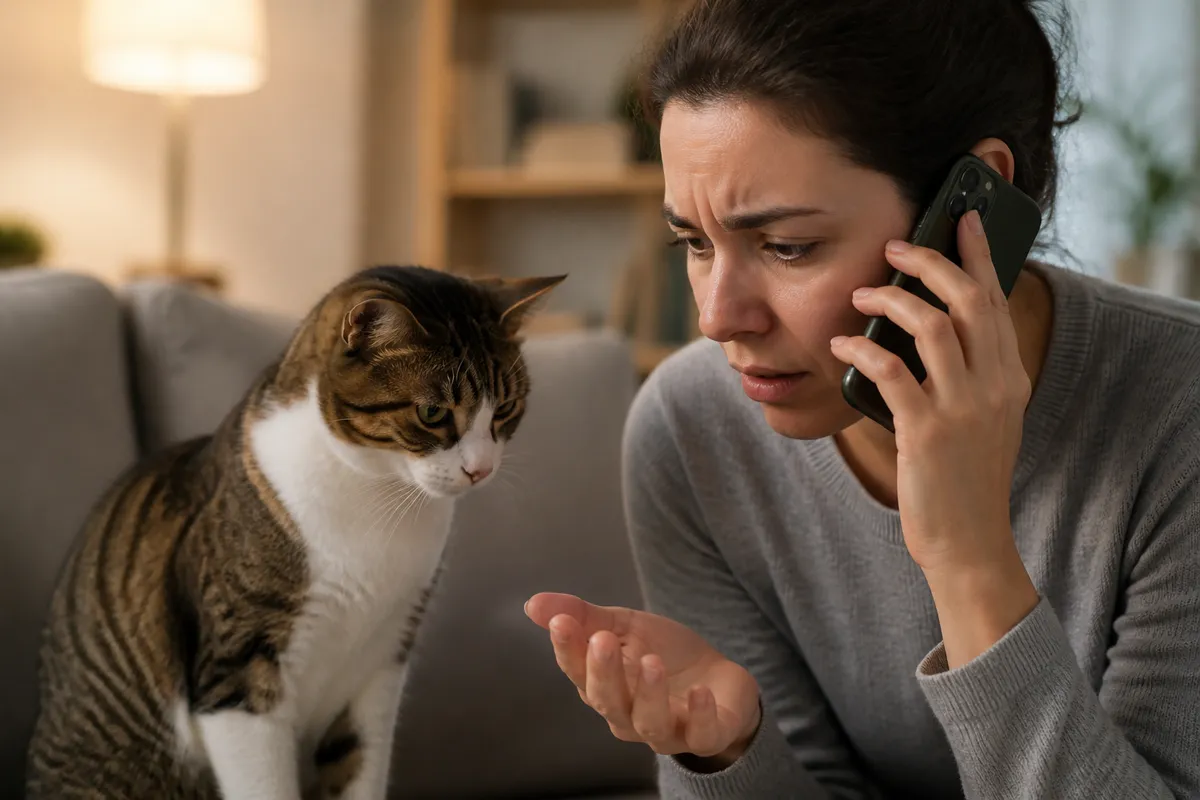
- Call your vet, an emergency clinic, or a poison helpline such as Animal PoisonLine for advice.
- Follow only the instructions you are given for your specific case.
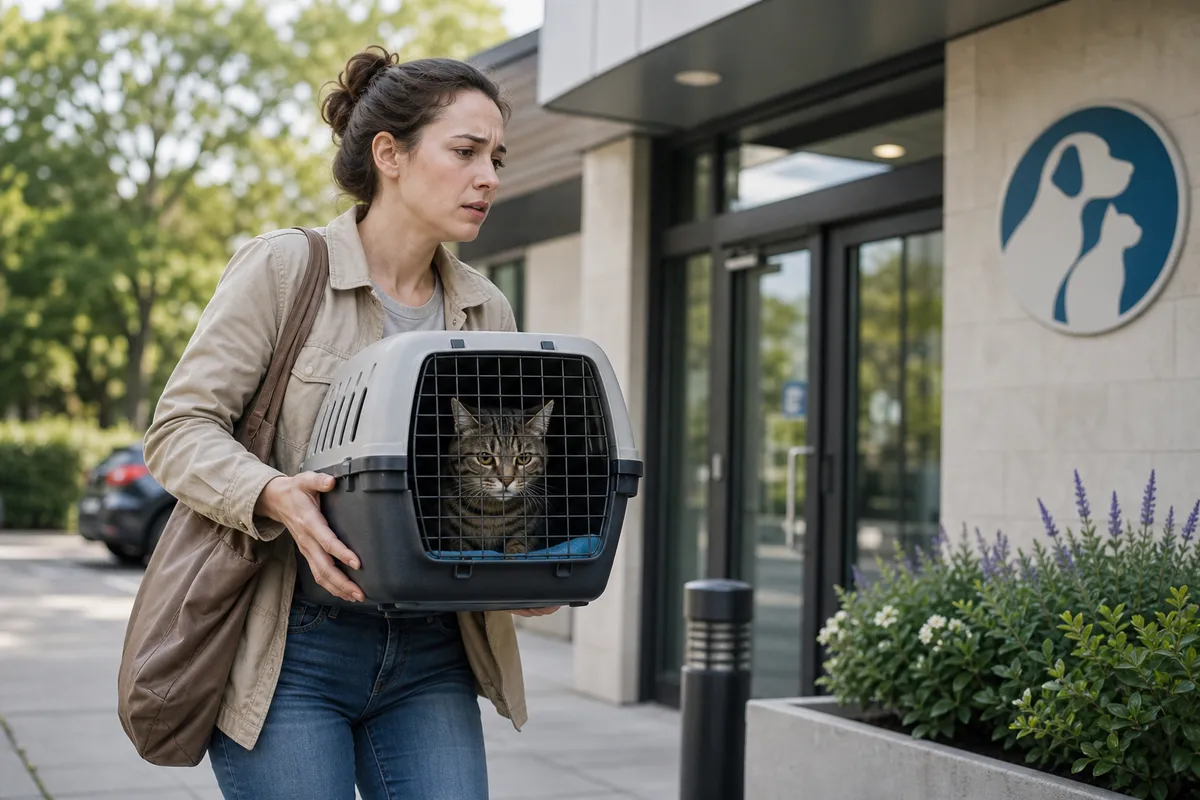
- Transport securely — carrier lined with a towel in case of vomiting on the way.
Wipe, don't wrestle
If a chemical is on the fur and your vet agrees while you travel, gently wipe with a damp cloth to reduce grooming — but do not delay leaving for a full bath if the mouth or eyes are involved.
Why clinics sometimes induce vomiting anyway
Professionals may use specific drugs, timing windows, and airway protection that you do not have at home. Seeing vomiting happen at the clinic does not validate last night's social-media remedy — it means trained people judged benefits and risks with the right tools. Ask them to explain if you want to understand the plan; good teams are happy to talk you through why home methods were refused.
Preparing for the call
Have your cat's approximate weight, the product name, how much is missing, and the clock time of exposure. Our cat poisoning emergency checklist keeps that list in one place for stressful moments. Save your practice's out-of-hours number in your phone before you need it.
Write the timeline down even if you feel sure you will remember — stress scrambles details. Note whether the substance was corrosive, oily, or a solid tablet, because that changes what the clinic will and will not do. Clear facts help them protect your cat faster than any home remedy ever could.
Frequently asked questions
What if my cat is already vomiting on their own?
Do not add home emetics. Prevent re-exposure, note the colour and contents if safe to look, and call your vet — spontaneous vomiting still needs professional advice.
Can I give milk to "neutralise" poison?
No. Milk is not an antidote, can worsen some situations, and wastes time. Phone for guidance instead.
Is there any situation where I should induce vomiting before leaving?
Only if a veterinary professional specifically instructs you for that toxin and gives a method. Otherwise, assume the answer is no.