Are Slug Pellets Toxic to Cats? Metaldehyde Poisoning
Blue or green pellets scattered along borders look like garden grit until a cat investigates. Slug pellets are toxic to cats when they contain metaldehyde or other harmful actives — and even “pet-friendlier” alternatives still need careful use around curious paws and grooming tongues.
Suspected pellet ingestion is urgent
If you see your cat eat pellets, or find chewed packaging, call your vet or the Animal PoisonLine immediately. Note the product name and active ingredient from the box. Do not wait for tremors to appear.
Metaldehyde in UK context
Metaldehyde slug killers were widely used in the UK for years and are notorious for causing severe neurological poisoning in dogs and other pets — tremors, seizures, hyperthermia, and life-threatening crises. Outdoor use of metaldehyde slug pellets for amateur gardeners has been restricted through UK regulatory action, which has reduced how often new boxes appear on shed shelves. That ban context matters: you should not assume every neighbour or allotment has switched products, and old stock can linger in garages for years.
If a label still lists metaldehyde, treat any exposure as a top-tier emergency. Do not use leftover metaldehyde products around pets. Dispose of them via local hazardous-waste guidance rather than spreading “the last of the bag”.
Ferric phosphate and other modern pellets
Many current UK slug controls use ferric phosphate (iron phosphate). These are generally considered a lower-risk option for pets than metaldehyde when used as directed, but “lower risk” is not the same as “treat”. Eating a pile of any pellets can still cause vomiting, diarrhoea, or other illness, and packaging attractants exist to tempt pests — and sometimes pets. Always follow label rates, avoid heaping piles, and keep cats out of treated beds until you have watered or the product has been absorbed as the instructions describe.
Neighbour gardens and shared spaces
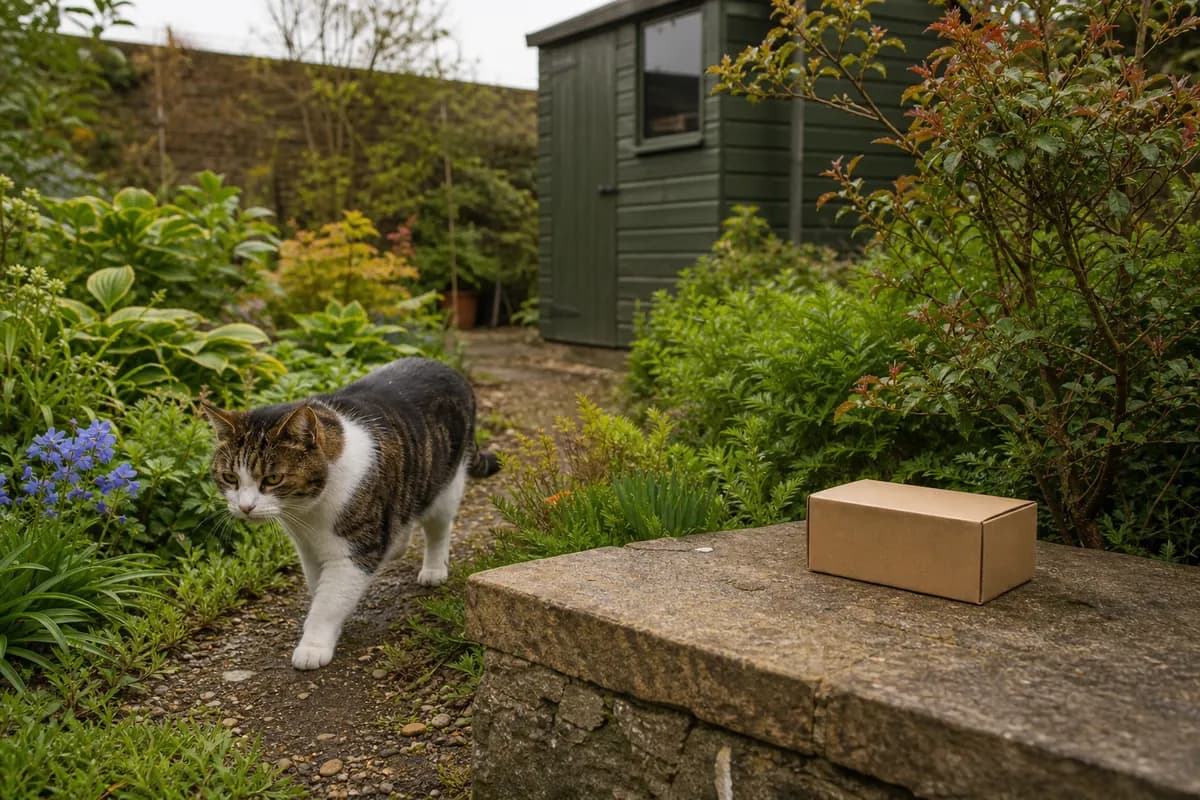
Indoor-outdoor cats do not respect fence lines. A carefully organic garden next door to heavy pellet use still exposes roaming cats. Allotments, communal beds, and holiday cottage gardens are common surprise sources. If your cat returns home drooling or unsteady after outdoor time, ask whether anyone nearby has been treating for slugs — and bring any granules you find for identification.
Symptoms of slug-pellet poisoning
- Anxiety, panting, or restlessness
- Muscle tremors or twitching
- Vomiting, drooling, or diarrhoea
- Seizures or collapse in severe metaldehyde cases
- Elevated temperature
Metaldehyde signs can escalate quickly. Compare what you see with our cat poisoning symptoms guide and note whether blue or green pellets are visible on fur or in vomit — that detail helps triage.
What to do
Prevent further grooming if pellets dust the coat — your vet may advise careful wiping before travel. Do not induce vomiting unless instructed. Take the product box with you. Follow the practical steps in what to do if your cat ate poison while someone phones the clinic. Speed matters for neurological toxins.
Safer slug strategies
Nematode biological controls, beer traps placed where cats cannot drink from them, copper tape, and evening hand-picking reduce reliance on pellets. If you must use ferric phosphate, apply sparingly and store the box like any poison — high and locked.
Prevention checklist
Audit your shed for old metaldehyde brands and remove them. Tell neighbours you have outdoor cats before they treat boundaries. After rain, pellets can look like gravel — check paths cats walk. Pair garden chemical awareness with our wider garden chemicals guide so weed killers and fertilisers are managed in the same habit loop.
Wildlife-friendly gardening does not require gambling with leftover toxins. Encourage ground beetles and frogs, keep borders tidy so slugs have fewer daytime hideouts, and water in the morning so foliage dries before evening feeding peaks. These habits cut pellet use without putting cats in the middle of a chemical experiment.
Talking to neighbours and allotment committees
Polite conversations prevent quiet exposures. A note on a shared fence group or allotment WhatsApp that you have outdoor cats often prompts people to switch methods or warn you before treating. Offer to share beer-trap or nematode approaches if someone is stuck in an old metaldehyde habit. When you house-sit or take holiday cottages, check sheds and borders on day one — previous occupants may have left open tubs.
If poisoning is suspected and the brand is unknown, describe pellet colour, size, and where they were found. Clinics and the Animal PoisonLine can still triage while you search for packaging. Photograph the granules before rain dissolves them. Keep cats indoors until you understand what was applied along their usual patrol route.
Frequently asked questions
Are all blue pellets metaldehyde?
No. Colour is not a reliable identifier. Always read the active ingredient on the label. When packaging is missing, treat unknown pellets as potentially serious and call for advice.
Is ferric phosphate completely safe for cats?
It is widely used as a lower-risk alternative to metaldehyde, but ingestion of any garden pesticide warrants caution. Use as directed and keep cats from eating concentrated product.
My cat walked on treated soil — is that enough to poison them?
Paw contact followed by grooming is a recognised route for many garden chemicals. Risk depends on the product and amount. If paws look dusty with granules, contact your vet for wipe-down and monitoring advice.