Sago Palm and Cats: One of the Deadliest Houseplants
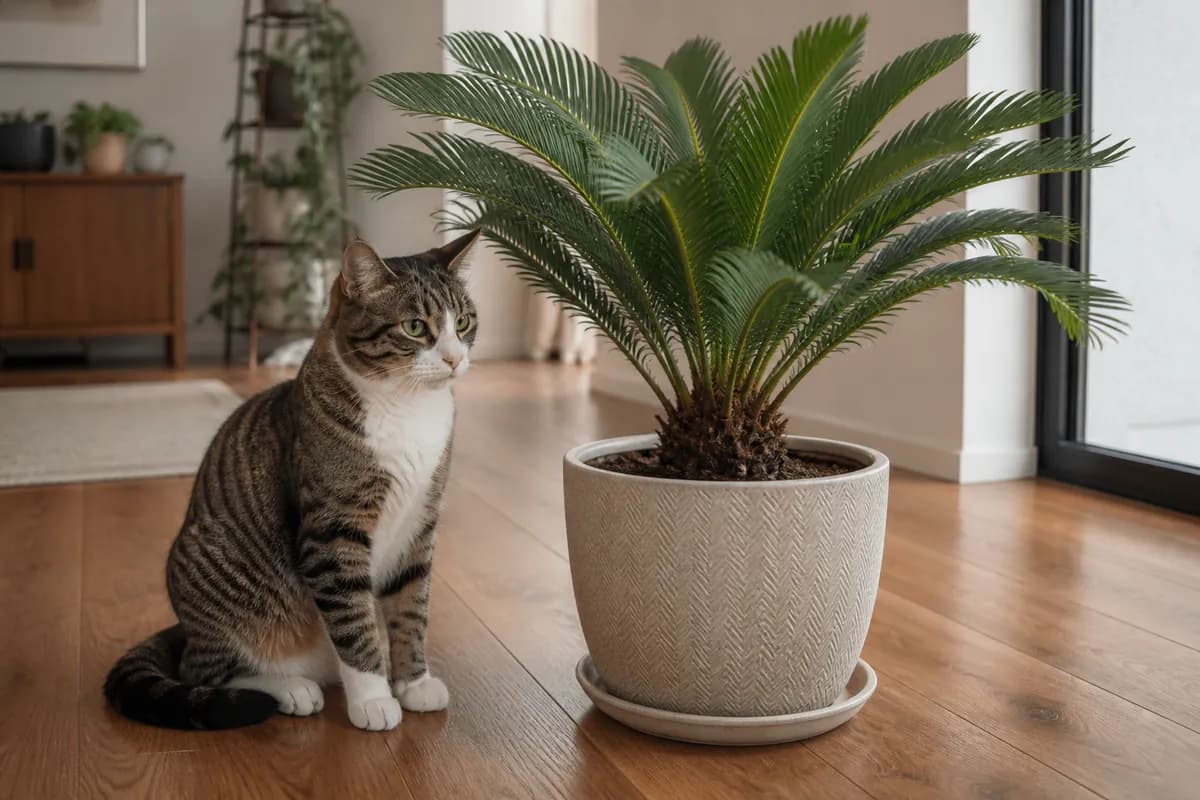
Sago palms look elegant on a patio or in a conservatory — but they are among the most dangerous plants a cat can chew. If you are wondering whether a sago palm is toxic to cats, the short answer is yes: every part of the plant is poisonous, and the seeds are especially lethal.
Treat any sago exposure as an emergency
Do not wait for vomiting or lethargy to appear. Call your vet or the Animal PoisonLine straight away if your cat chewed leaves, seeds, or roots. Early decontamination and supportive care give the best chance of protecting the liver.
What makes sago palms so dangerous?
Sago palms (Cycas revoluta and related cycads) contain cycasin and related toxins that damage the liver. Cats that ingest plant material can develop acute hepatic failure — a life-threatening emergency. Unlike many houseplants that mainly irritate the mouth, sago toxicity is systemic and can progress rapidly once the poison is absorbed.
Which parts are toxic?
All parts of the plant are toxic: leaves (fronds), stems, roots, and seeds. The seeds — sometimes called nuts — carry the highest concentration of toxin. A single seed can be enough to poison a small cat. Outdoor plants that drop seeds are especially risky for inquisitive outdoor or balcony cats.
- Seeds: Highest risk — even one seed warrants an urgent vet call.
- Leaves and stems: Still dangerous if chewed or swallowed; do not assume a nibble is harmless.
- Roots and soil-covered pieces: Toxic if dug up and chewed — keep pots inaccessible.
Dose and severity
There is no reliable “safe nibble” of sago palm. Severity depends on how much was eaten, which part, and how quickly treatment starts. Kittens and small cats face higher risk from the same amount of plant material. Even if your cat only chewed a leaf tip, assume the worst and get advice — do not try to wait it out at home.
Symptoms to watch for
Signs may appear within hours and can escalate over one to three days as liver damage develops. Common early signs include vomiting, diarrhoea, drooling, and loss of appetite. Later signs can include lethargy, abdominal pain, jaundice (yellow gums or eyes), unusual bruising, and neurological changes. Compare what you see with our cat poisoning symptoms guide so you can describe a clear timeline to your vet.
What to do if your cat chewed a sago palm
- Remove your cat from the plant and prevent further chewing. Take a clear photo of the plant for identification.
- Call your vet or an emergency clinic immediately — or contact the Animal PoisonLine for guidance while you travel.
- Do not induce vomiting unless a veterinary professional specifically tells you to. Follow the steps in what to do if your cat ate poison.
- Bring packaging, plant tags, or photos, plus an estimate of how much was eaten and when.
Safer greenery
Sago palms belong on the permanent avoid list alongside other high-risk species in our toxic houseplants for cats guide. For cat-friendly alternatives, see safe indoor plants for cats.
How liver damage unfolds
After ingestion, cycasin and related compounds are metabolised into toxic by-products that injure liver cells. Early gastrointestinal signs may look like a simple stomach upset, which is why owners sometimes wait. As hepatic function declines, cats can become jaundiced, confused, or unusually quiet. Blood tests and hospitalisation are often needed; treatment is supportive because there is no simple household antidote you can give at home. That timeline is why UK resources such as the PDSA emphasise prompt veterinary care for known toxic plant exposures rather than watchful waiting.
Lookalikes and buying mistakes
Garden centres sometimes group cycads with palms or sell juvenile plants without clear species labels. Online marketplaces may list “mini palm,” “Japanese sago,” or decorative Latin names that are easy to miss when you are shopping quickly. If a plant has stiff, feather-like fronds emerging from a shaggy trunk and produces large seeds, treat identification as a safety task, not a décor detail. When you cannot confirm the species, leave it at the shop or scan it before it enters a home with cats.
Prevention tips
Do not keep sago palms in homes with cats — high shelves and hanging baskets are not enough if seeds or fronds can fall. Check garden centres and online sellers carefully; cycads are sometimes sold under decorative names. If you inherit a plant, rehome it rather than risk an emergency visit that can run into hundreds of pounds. Inspect conservatories and communal gardens where neighbours grow ornamentals. Teach children not to offer plant “nuts” as toys. Scan unknown palms and cycads with Toxic Kitty before bringing them indoors.
Frequently asked questions
Is a sago palm the same as a true palm?
No. Sago palms are cycads, not true palms. That botanical detail matters because people sometimes assume “palm” plants are harmless décor. Treat any plant labelled sago, cycad, or Cycas as highly toxic to cats.
Can outdoor sago palms poison indoor cats?
Yes, if cats have balcony, garden, or conservatory access where fronds or seeds are within reach. Neighbours’ plants can also drop material into shared spaces. Keep outdoor areas inspected during fruiting seasons.
Will my cat recover after chewing sago?
Outcome depends on dose and how quickly treatment begins. Some cats recover with intensive supportive care; others suffer irreversible liver damage. Urgent veterinary assessment is always the right next step — never wait to “see how they are in the morning.”