Are Snake Plants Toxic to Cats?
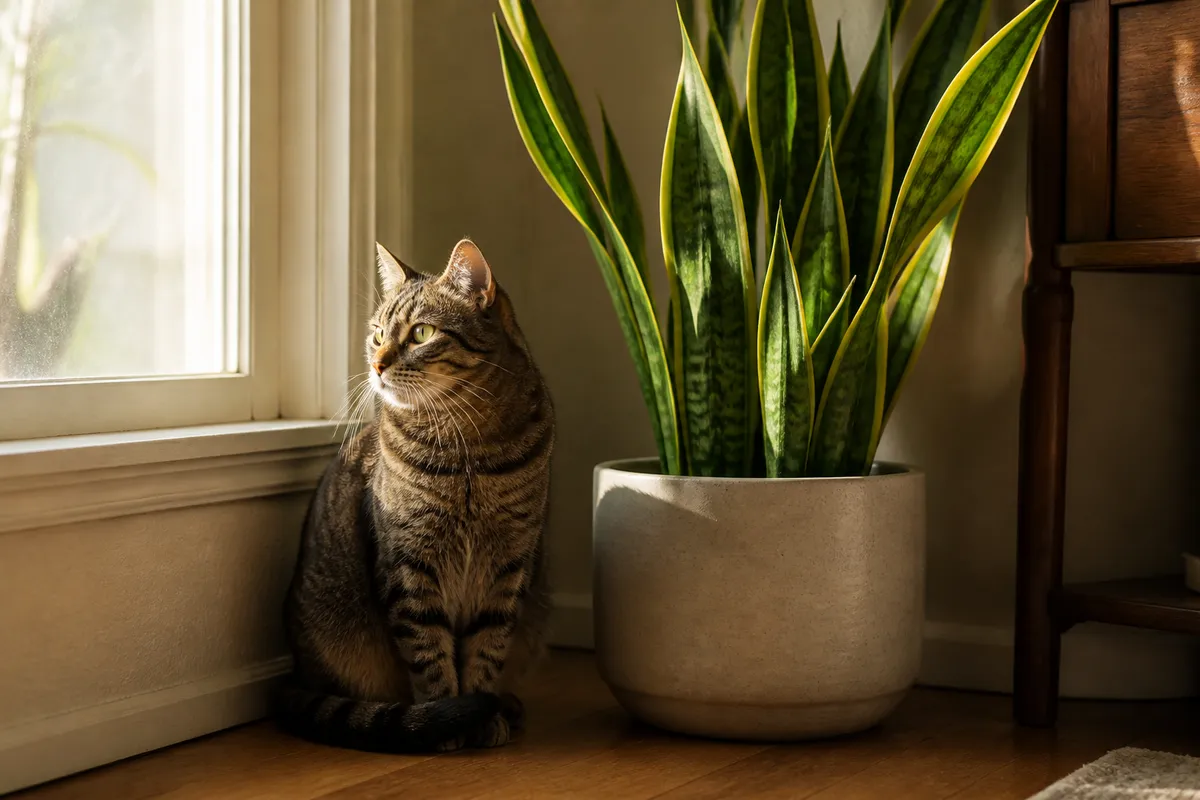
Snake plants (sansevieria / Dracaena trifasciata) are marketed as nearly indestructible — perfect for beginners, less perfect for cats. Are snake plants toxic to cats? Yes. They contain saponins that can cause nausea, vomiting, and diarrhoea if chewed.
How saponins affect cats
Saponins are natural compounds that foam when mixed with water and irritate the digestive tract when ingested. Cats that bite fibrous snake-plant leaves may swallow enough to trigger gastrointestinal upset. The fibres themselves can also be awkward to chew, leaving bits of plant around the room as a clue that something happened while you were out.
Mild versus severe exposures
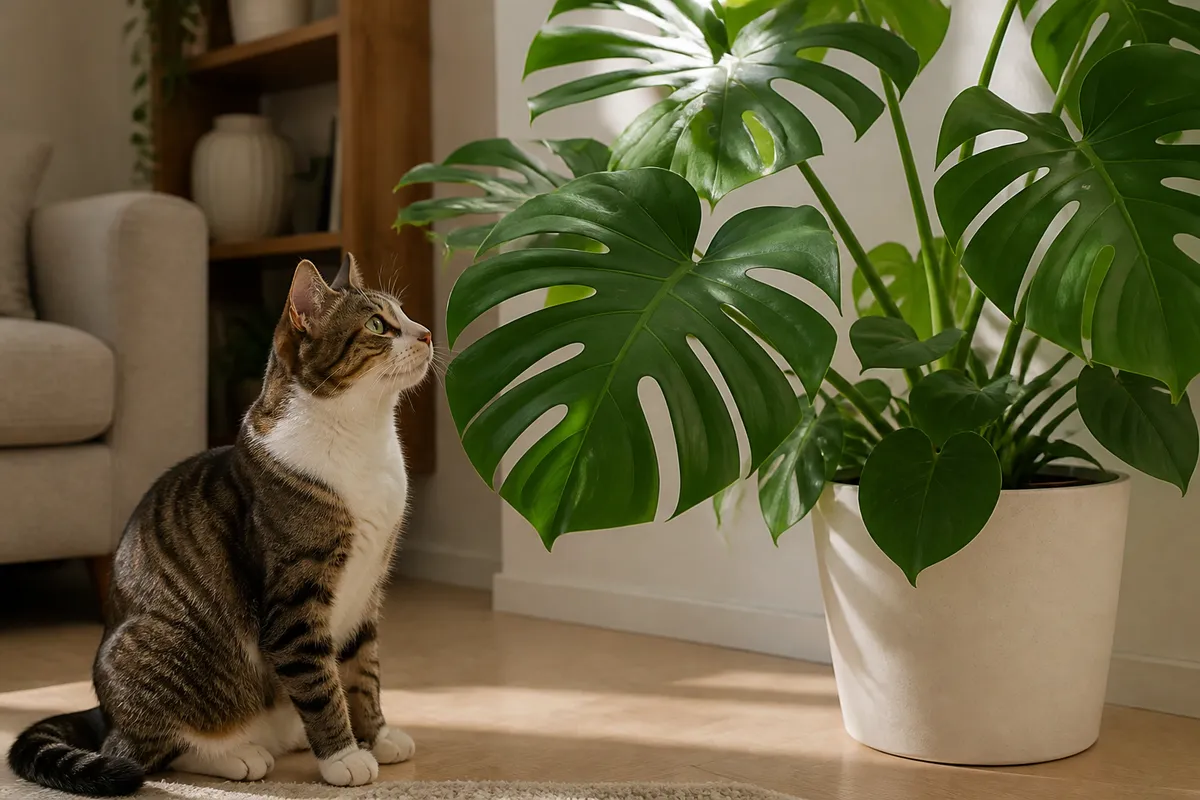
Many snake-plant incidents are mild: a short bout of vomiting or soft stools after a curious nibble. Severity increases with larger amounts eaten, very small body weight, or cats that already have sensitive stomachs. Unlike sago palm, snake plant is not typically framed as a rapid organ-failure toxin — but “usually mild” is not the same as “safe to keep within reach.” Compare risks with other popular species such as monstera, and remember that stacked mild toxins still deserve a tidy, cat-safer plant shelf.
Call if symptoms escalate
Persistent vomiting, bloody diarrhoea, marked lethargy, or a kitten that will not drink needs veterinary attention. When unsure, phone your practice or the Animal PoisonLine rather than waiting overnight.
Symptoms checklist
- Drooling after chewing
- Vomiting or nausea
- Diarrhoea
- Reduced appetite for a day or two
- Abdominal discomfort
Map what you see against our cat poisoning symptoms guide so you can give your vet a precise history.
What to do
Remove access to the plant, note how much leaf is missing, and call for advice. Offer water; do not give human anti-nausea medicines. Follow what to do if your cat ate poison if you need a calm sequence while you wait for a callback.
Placement advice that actually works
Tall snake plants on the floor are chew-height for most cats. Moving one to a high shelf helps only if your cat cannot jump there — many can. Closed rooms, sturdy cabinets with doors, or simply choosing non-toxic plants are more reliable. For cat-friendlier foliage ideas, see safe indoor plants for cats.
Name confusion
You may see labels for mother-in-law’s tongue, viper’s bowstring hemp, or sansevieria. They refer to the same group of toxic-to-cats plants. Scan the label before you buy.
Kittens, bored adults and fibrous leaves
Fibrous snake-plant leaves shred into ribbons that look like toys. Kittens may swallow more fibre than they can comfortably pass, adding a mechanical irritation on top of saponin upset. Adult cats with outdoor access sometimes ignore houseplants until winter keeps them indoors more — behaviour can change with the season. Reassess plant placement whenever routines shift: new baby gates, new furniture heights, or a second cat that teaches the first to climb.
Why “hard to kill” plants still fail the cat test
Snake plants thrive on neglect, which makes them default gifts for new homeowners and students. That usefulness does not translate into feline safety. A plant that survives low light still contains saponins. Gift-givers rarely check toxicity lists, so many snake plants arrive already unwrapped on a coffee table. If you receive one, thank the giver and either rehome the plant or move it to a sealed room the same day — do not leave “we’ll figure it out later” as the plan.
Indoor air myths versus real risk
Marketing copy sometimes emphasises air-purifying claims for snake plants. Whatever those claims mean for humans, they do not cancel toxicity for cats. Prioritise ventilation, dust control, and non-toxic décor if you want a healthier shared environment. A cat-safe home is built from what animals can chew and lick, not from plant folklore alone.
Prevention
Provide alternative textures — cardboard scratchers, cat grass, and interactive play — so upright leaves are less interesting. Check guest bedrooms and offices where “unkillable” plants often hide. If you love the look, search for verified non-toxic lookalikes rather than gambling on your cat’s self-control. After any pruning, clear leaf tips from the floor; dried pieces still tempt batting games that end in chewing.
Frequently asked questions
Are variegated snake plants more toxic?
Colour patterns do not make a meaningful safety difference for cats. Treat yellow-edged, silver, and dwarf varieties the same: toxic if chewed.
Can snake plant sap irritate skin?
Sap can irritate human skin for some people; for cats the main concern is ingestion while grooming after chewing. Wipe fur gently if sap is visible and seek vet advice if irritation continues.
Is one bite an emergency?
A tiny exploratory bite often causes limited signs, but you should still contact a vet for personalised advice. Err on the side of a phone call — especially for kittens.