Is Screenwash Toxic to Cats? Winter Car Fluids on the Driveway
When the first frost hits, British driveways bloom with bottles: blue screenwash, pink coolant, leftover summer mix “topped up for winter”. Cats sit under cars because engines are warm. They drink from trays and puddles because the liquid can taste sweet. This is not a repeat of our antifreeze (ethylene glycol) guide — that page is still the one to open if you know it was radiator coolant. This page is the winter car park: washer fluid, mixed spills, and how to tell them apart when you only saw a lick.
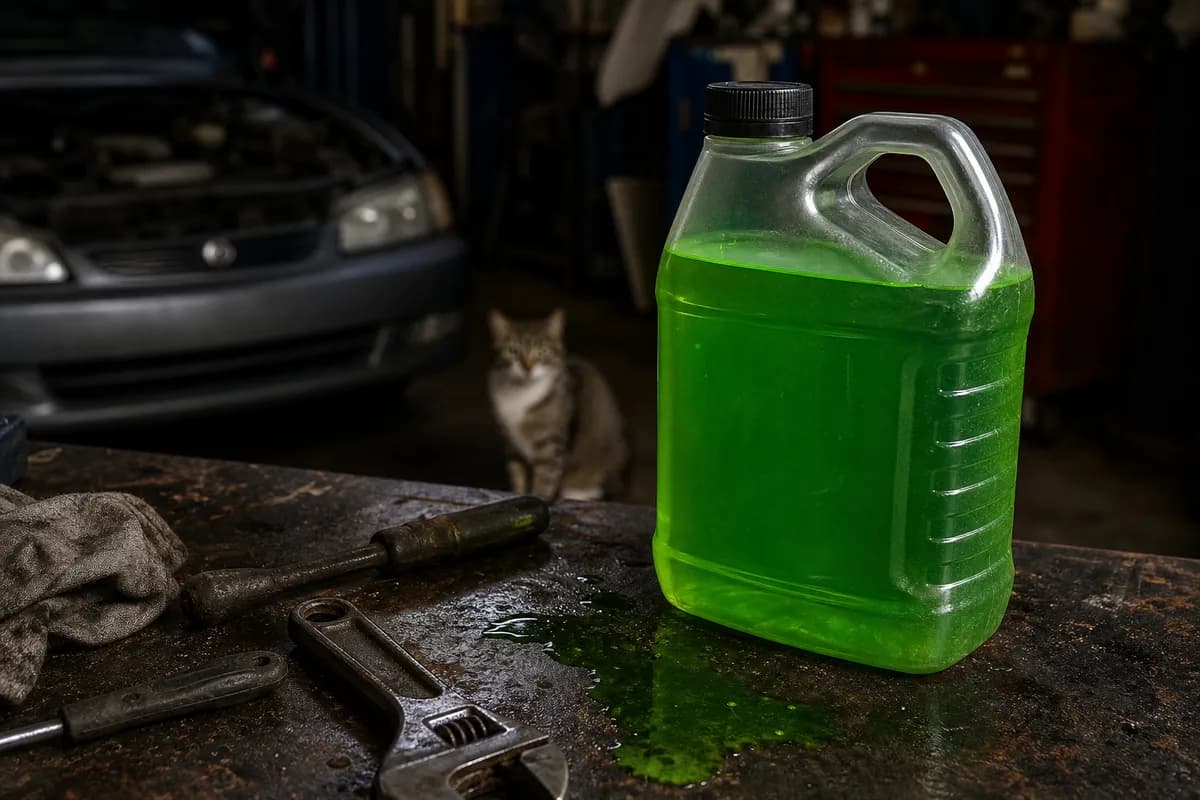
Any coloured winter puddle is a same-day vet call
Do not taste it yourself. Do not wait for “drunken” walking to stop. Take the bottle if you have it. Say “possible screenwash or coolant” so the clinic does not triage it as a mild tummy upset.
Screenwash is not “just soapy water”
Ready-mixed screenwash sold in the UK is mostly water plus alcohols (often methanol, sometimes isopropanol or ethanol) and detergents, with bittering agents in some brands and not in others. Methanol is toxic. Concentrated “add a capful to the bottle” products are worse per millilitre than a dilute summer mix. In a frost, people pour stronger mix. Cats do not read the dilution ratio on the label.
Alcohols depress the nervous system and can wreck blood acid-base balance. Early signs look drunk: wobbly, drowsy, vomiting. That overlap with ethylene glycol is exactly why you should not diagnose the puddle at home. Ethylene glycol goes on to crystalise in kidneys. Methanol has its own metabolic pathway. The owner’s job is not to pick the textbook toxin. It is to get the cat and the container to a vet. If the liquid was definitely coolant, follow antifreeze toxic to cats as well.
Where cats actually drink it
- Washer-jet drips: a parked car that was just used, puddle under the bumper
- Overfilled reservoirs: blue liquid on the inner wing after a DIY top-up
- Garage floors and trays: open bottles, leaking jerry cans, “I’ll tidy it later”
- Shared driveways: the neighbour’s spill is still your cat’s water bowl
Warm engines in January are a magnet. So are October evenings when the first ice warning hits and everyone tops up at once. Combine that with rock salt on the same tarmac — paws pick up both — and you have the winter porch problem we cover in rock salt and grit.
Symptoms that mean you leave now
Wobbliness, vomiting, rapid or very slow breathing, seizures, collapse, or a cat that was under a car and now hides. Some look briefly “drunk” then seem to rally — that quiet period is not safety, especially if coolant was involved. Match what you see to cat poisoning symptoms so the phone call is specific.
What to do — and what not to do
Keep them away from the puddle. Wipe paws and fur with a damp cloth if they are wet with blue or pink liquid, then wash your own hands. Do not make them vomit. Do not give vodka, bread, or milk. Call the clinic or out-of-hours service immediately. Pack the bottle. Follow what to do if your cat ate poison and the emergency checklist.
Winter car habits that actually help
Cap every bottle. Store fluids in a high cupboard, not the garage floor. Top up on cardboard you throw away, not on gravel cats walk. Bang the bonnet before you start the engine in the morning — cats and wildlife use wheel arches as dens. If you see a leak, fix the car; bittering agents are not a cat fence. For the rest of the house-to-garage map, see toxins by room.
Is “ready mixed” screenwash safer?
It is more dilute than concentrate, which lowers the dose per lick, not to zero. A cat that laps a puddle can still take in a lot. Treat any ingestion as a phone call.
DIY top-ups in the dark
Most spills happen at 7am with a headtorch, or at night after a long drive. Funnel slowly. Wipe the reservoir cap. If you overfill, absorb the drip with kitchen roll you bin in a closed bag, not a rag left on the wheel. Cats return to smells. A “tiny blue smear” you forgot is a water bowl by morning.
Shared car parks and flats with assigned bays are worse: you cannot control the neighbour’s leak. If your cat uses that tarmac, check it after frost the way you would check a kitchen floor after cooking. For paws that also walked through grit, wipe before they groom — see rock salt and grit.
Concentrate versus ready mix in the shed
A 5-litre bottle of concentrate knocked over in a shed is a different scale of disaster from a capful of ready mix on a bumper. Store concentrate like you would store bleach: high, capped, not on the floor next to the cat flap. If a bottle leaks into cardboard, the cardboard is now bait. Bin it.