Weed Killer, Fertiliser and Lawn Treatments: Garden Safety for Cats
Lawns, borders, and patio cracks tempt a parade of sprays and powders each spring. Garden chemicals can be toxic to cats not only when swallowed from the bottle, but when residue sticks to paws and is licked off during grooming — the quiet route many owners miss.
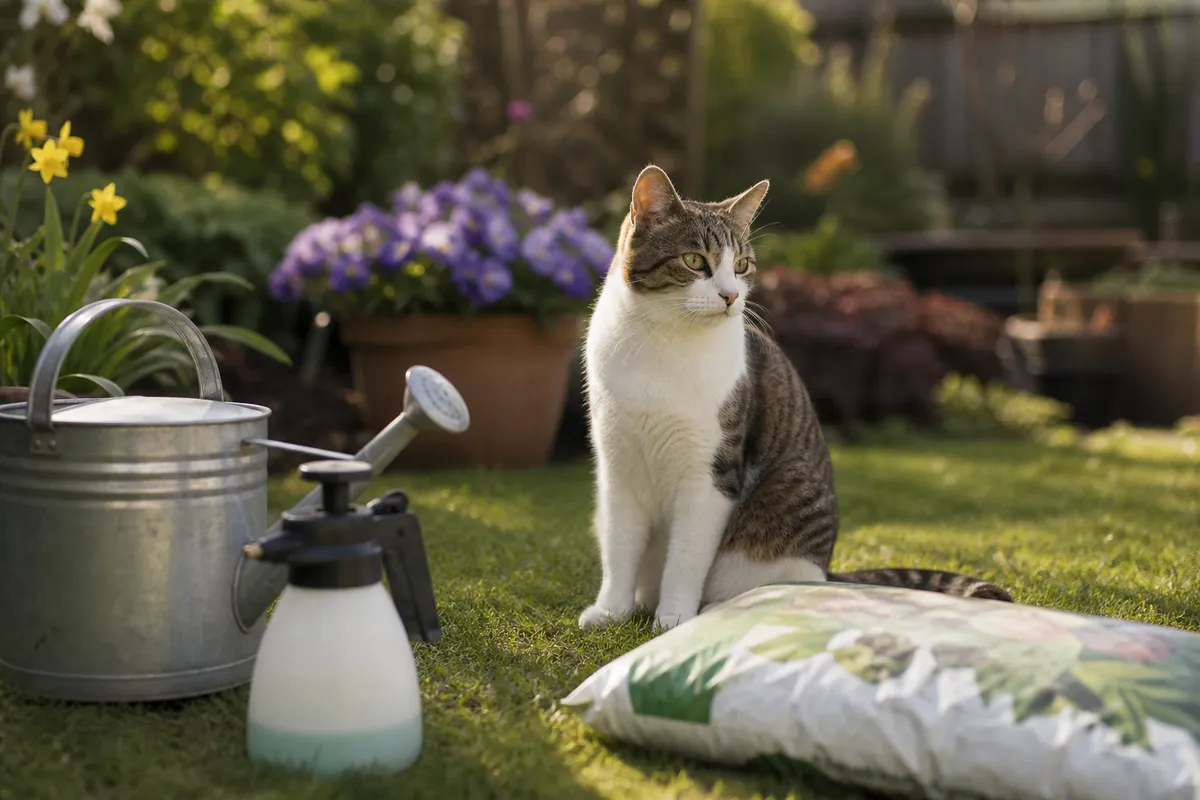
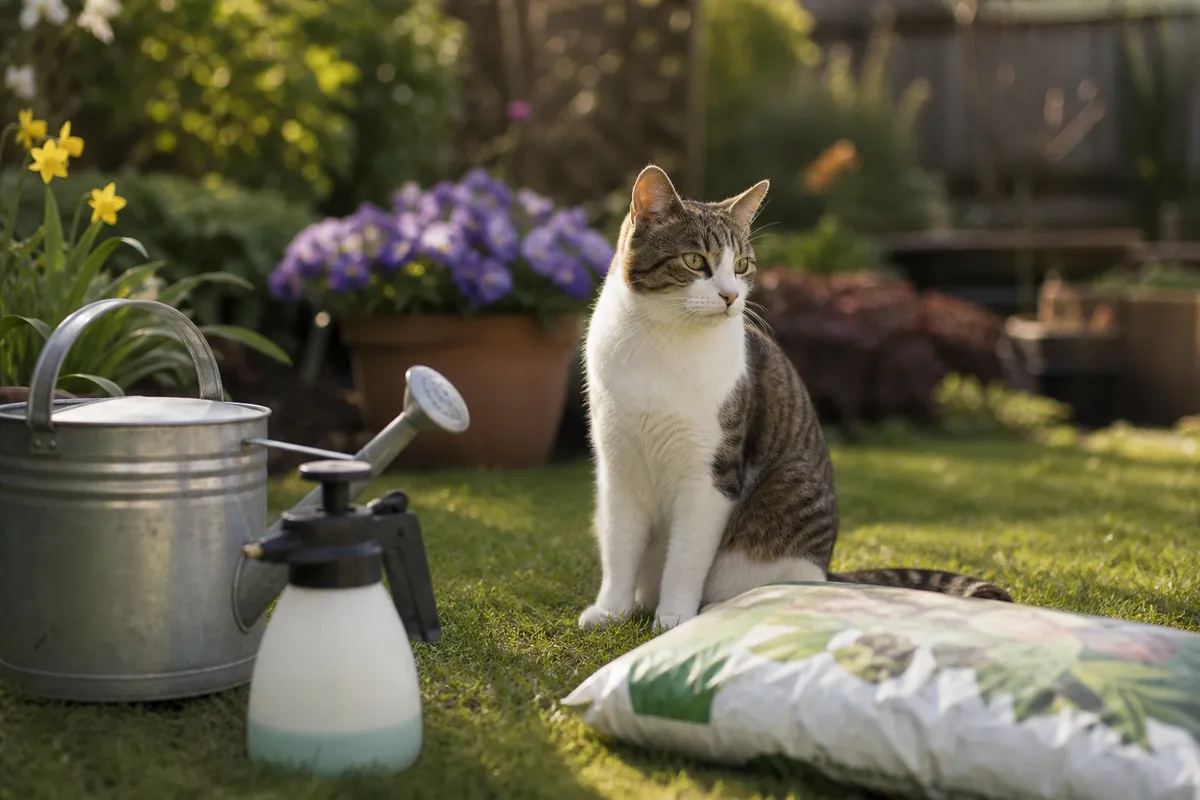
Read the label — then keep cats away until dry
Concentrates, wet sprays, and fresh granules are the highest-risk window. Shut cats indoors until treated surfaces are dry or watered-in as the product instructs. If exposure still happens, call your vet with the exact product name.
Glyphosate weed killers
Glyphosate-based weed killers are common on UK driveways and patio edges. Concentrated product and spray drift matter more than a fully dried, correctly diluted application in most household scenarios, but cats should still be kept off wet vegetation and puddles of mixed spray. Irritation to mouth and gut, drooling, and vomiting can follow licking freshly treated plants. Never store diluted leftovers in drinks bottles — a classic, tragic mix-up risk for every species in the home.
Fertilisers, bone meal and blood meal
Bone meal and blood meal smell attractive to some pets. Ingestion can cause vomiting, diarrhoea, and, with large amounts of bone meal, pancreatitis-like inflammation or digestive upset. Spills of granular fertiliser on lawns become toys. Water products in thoroughly and store bags sealed on high shelves, not open in the potting shed where cats nap.
Cocoa mulch and other surprises
Cocoa shell mulch can contain theobromine — related to chocolate toxicity — and has a smell some animals find appealing. Prefer alternatives in gardens cats use as litter trays or nap zones. Compost accelerators, moss killers, and path cleaners each carry their own actives; assume unknown powders deserve a label check before use. For a room-by-room mindset that includes sheds and utility spaces, see common cat toxins by room.
Slug pellets sit in the same risk family
Metaldehyde history, ferric phosphate alternatives, and neighbour-garden exposure are covered in depth in our slug pellets toxic to cats guide. Treat molluscicides as part of your overall garden-chemical audit, not a separate mental box.
The paw-and-grooming route
Cats walk, sit, and then lick. A patio sprayed at lunchtime and walked at teatime can deliver chemicals orally without the cat ever approaching the bottle. Damp fur after rolling in treated borders works the same way. This route explains why “they didn’t drink the weed killer” is not reassuring enough. Wipe paws if you know a cat crossed a fresh application, and phone your vet if remediation might be needed.
Symptoms after garden chemical exposure
- Drooling, pawing at the mouth, or oral redness
- Vomiting or diarrhoea
- Skin irritation on paws or belly
- Lethargy, tremors, or breathing changes with stronger toxins
- Unusual thirst or urination depending on the product
Match observations to our cat poisoning symptoms page and bring the chemical bottle to the clinic whenever possible. Labels save guesswork.
What to do and how to prevent repeats
Remove the cat from the area, prevent grooming if coat contamination is obvious (ask the vet how to clean safely), and call for advice. Do not use home emetics. For prevention: choose physical weed control where practical, apply chemicals on still days to limit drift, section off gardens until dry, and keep concentrates in locked storage. PDSA and other UK pet-health charities regularly remind owners that the shed deserves the same caution as the medicine cabinet.
Dilution discipline
Mix only what you need for the job. Rinse equipment where runoff will not pool in favourite sunning spots. Never leave a watering can of mixed herbicide unattended.
When a product label conflicts with how your cat actually uses the garden — for example, a “keep pets off until dry” rule on a lawn that is also a litter tray — choose a different control method rather than hoping for perfect compliance. Cats do not read re-entry intervals. Extra vigilance after professional spray visits matters just as much as your own DIY weekends.
Seasonal calendar for cat households
Spring brings moss killers and lawn feeds; summer brings patio sprays and wasp treatments; autumn brings leaf-mould additives and bulb fertilisers. Build cat shut-away time into each seasonal job rather than improvising after the sprayer is already primed. Check weather forecasts — rain can create puddles of diluted product in paw prints, while hot still days may keep residues sticky longer than you expect.
Professional gardeners and landlords sometimes treat properties on schedules you do not control. Ask for product names in advance when you rent or share outdoor space. Keep your own shed inventory short: fewer half-used bottles means fewer mysteries when a cat becomes ill after outdoor time. Pair that discipline with the slug-pellet advice above so molluscicides are not the forgotten bag behind the compost bin.
Frequently asked questions
Are “pet-safe” weed killers automatically fine?
Marketing language varies. Read the active ingredients and re-entry interval on the label. Even milder products can upset a cat who eats granules or licks wet concentrate. When a label is vague, choose another method or ask your vet before use.
Can cats use the garden the same day I fertilise?
Follow the product’s watering-in and drying guidance. As a house rule, keep cats off until granules are no longer loose on the surface and any liquid feed has dried.
Is homemade vinegar weed spray safer?
Strong vinegar and salt mixes can burn plants, soil life, and sensitive paw pads. “Homemade” does not mean harmless. Use thoughtfully and keep cats away until dry.