Is Monstera Toxic to Cats?
Monstera deliciosa — the Swiss cheese plant — filled Instagram feeds and high-street plant shops alike. If you are asking is monstera toxic to cats, the answer is yes: like pothos, it contains calcium oxalate crystals that cause painful oral irritation when chewed.
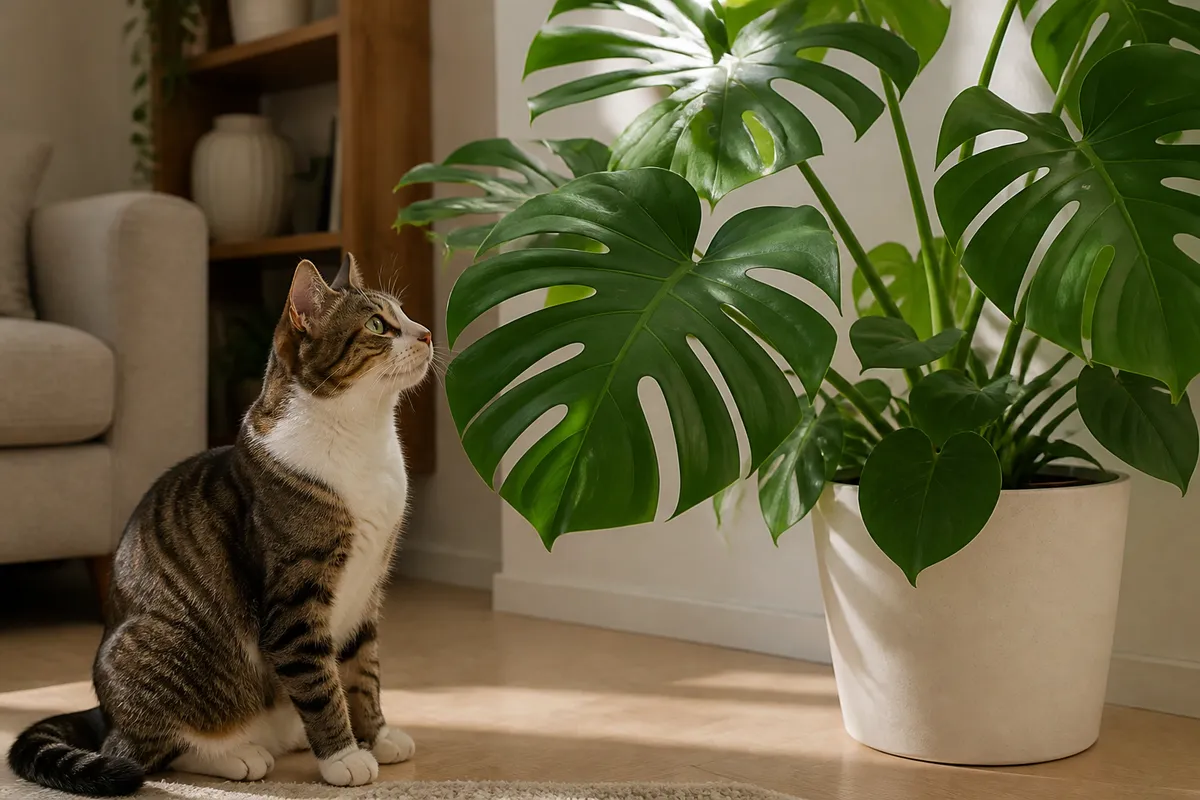
Trend plant, real risk
A stylish split leaf does not make a plant cat-safe. If your cat is drooling or pawing at their mouth after chewing monstera, call your vet for advice — especially for kittens or cats that swallowed larger pieces.
Why monstera irritates cats
Monstera belongs to the arum family and stores insoluble calcium oxalate crystals in its leaves and stems. When crushed by teeth, the crystals cause an intense burning sensation in the mouth and throat. Cats usually stop chewing quickly, but the pain can last and may be followed by vomiting. The mechanism is the same family of irritation seen with pothos (devil’s ivy).
Dose and severity
Most household exposures are mild to moderate oral and gastrointestinal irritation. Severity rises with the amount chewed, the cat’s size, and whether swelling affects eating or drinking. Monstera is not typically associated with the kidney failure of true lilies or the liver failure of sago palm — but “less deadly than sago” is a low bar for a living-room plant. PDSA and other UK pet-health resources still advise keeping oxalate plants away from cats.
Symptoms to expect
- Drooling and lip-smacking
- Oral pain — reluctance to eat dry food
- Vomiting
- Mild swelling of the lips or tongue
Watch for breathing difficulty or persistent refusal to drink. Log timing and signs using our cat poisoning symptoms guide before you call the clinic.
What to do after a chew
Move the plant out of reach, wipe loose leaf fragments from fur if safe, and phone your vet. Do not force home remedies or salt-water vomiting. Offer water and a quiet space. If advised to attend, bring a leaf photo. Our what to do if your cat ate poison walkthrough covers the first hour clearly.
Chew deterrents and safer swaps
Bitter sprays and sticky tape sometimes reduce interest, but determined cats find a way around them — especially bored indoor cats. The more reliable fix is replacement. Cat-safer statement plants include calatheas, parlour palms (confirm the species), and larger spider plants. Explore options in safe indoor plants for cats before you redecorate.
Propagation parties
Monstera cuttings in water jars on windowsills are easy chew targets. If you propagate, keep jars in a closed room or switch to non-toxic cuttings instead.
When a nibble needs more than a wipe
Most monstera chews settle with time, mouth rinsing advice from your vet, and a quieter evening. Escalate sooner if your cat cannot swallow, keeps vomiting, or is a kitten with limited reserves. Overnight out-of-hours fees add up quickly in the UK, so a same-day phone triage often saves money compared with waiting until 2 a.m. when signs worsen.
Why monsteras get chewed
Large fenestrated leaves move in draughts, collect dust cats want to investigate, and sit at perfect climbing height on moss poles. Indoor cats with limited outdoor stimulus often redirect hunting energy into foliage. A new plant arrival is especially exciting — the first week is when many chewing incidents happen. Pair any plant purchase with extra play sessions so the novelty object is not the only enrichment in the room.
Moss poles, soil, and fertiliser extras
Cats may dig in chunky aroid mixes, taste slow-release fertiliser pellets, or chew coconut coir liners. Even if the leaf toxicity is your main concern, messy soil additives add another reason to keep monsteras out of reach. Wipe leaves with plain water rather than leaf-shine products that introduce extra chemicals. If you repot, bag soil waste immediately so it cannot be treated as a litter-tray alternative.
Prevention for plant parents
Place toxic trend plants only in truly cat-free rooms with doors that stay shut — not open-plan living spaces. Provide cat grass or approved chew toys so foliage is less tempting. Scan nursery labels; juvenile monsteras are sometimes sold under nickname labels that obscure the species. If you share a flat, agree a plant policy so housemates do not surprise everyone with a floor-standing Swiss cheese plant beside the sofa.
Frequently asked questions
Is Monstera adansonii (Swiss cheese vine) safer?
No. Related monstera and many other aroids share the oxalate problem. Treat split-leaf and holey-leaf varieties as toxic until a reliable source says otherwise.
Can I keep monstera if my cat is elderly and calm?
Older cats still investigate new smells and fallen leaves. Guests’ pets and future kittens also change the risk profile. Safer plants avoid relying on your cat’s current personality.
Does monstera fruit poison cats too?
Indoor UK plants rarely fruit, but unripe monstera fruit can irritate. The everyday risk remains the leaves and stems cats actually chew. Focus on keeping foliage inaccessible.