Summer BBQ Hazards for Cats: Bones, Corn Cobs and Skewers
Long evenings, open doors, and plates at cat height make summer cookouts a perfect storm. Summer BBQ hazards for cats go well beyond “keep them away from the grill” — bones, corn cobs, skewers, onions, alcohol, and hot coals each deserve a plan before the first sausage hits the grate.
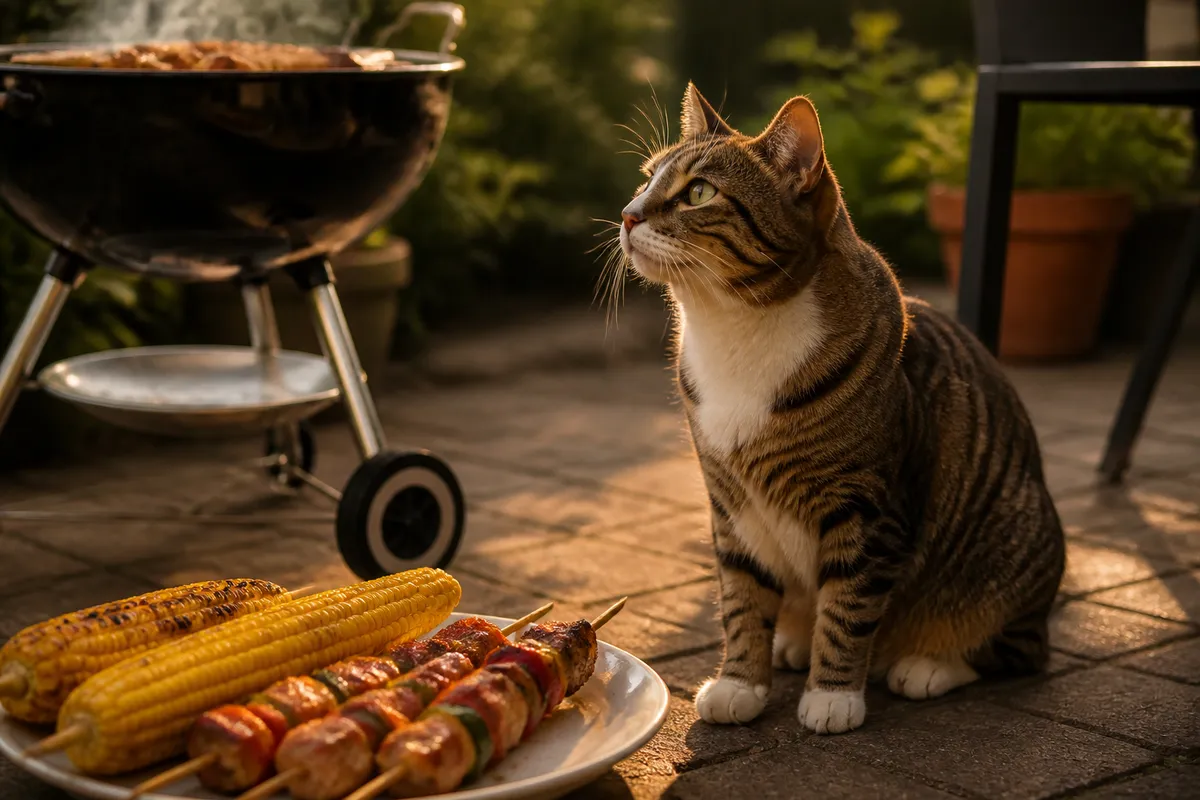
Seasonal urgency
Emergency clinics see a spike in foreign-body and toxin cases around bank-holiday barbecues. If your cat may have swallowed a skewer tip, cooked bone splinter, or corn cob piece, treat it as time-critical — those are surgical emergencies, not tummy upsets.
Cooked bones: brittle and dangerous
Cooking makes bones brittle. Chicken, spare-rib, and chop bones can splinter into sharp fragments that pierce or lodge in the mouth, throat, or intestines. Cats scavenging under the table or from coolable trays are classic patients. Never toss bones into an open garden bin cats can raid overnight. If you suspect bone ingestion — pawing at the mouth, gagging, lethargy, or refusal to eat — seek veterinary assessment promptly.
Corn cobs and kebab skewers
Corn cobs are indigestible and shaped perfectly to obstruct the gut. A cat who chews leftover cob from a paper plate can end up needing surgery. Wooden and metal skewers are worse: they can migrate through tissue after being swallowed or stepped on. Count skewers when you serve and when you clear — the same habit chefs use in professional kitchens. Foil, cling film, and plastic forks add choke and blockage risks of their own.
Onions, marinades and alcohol
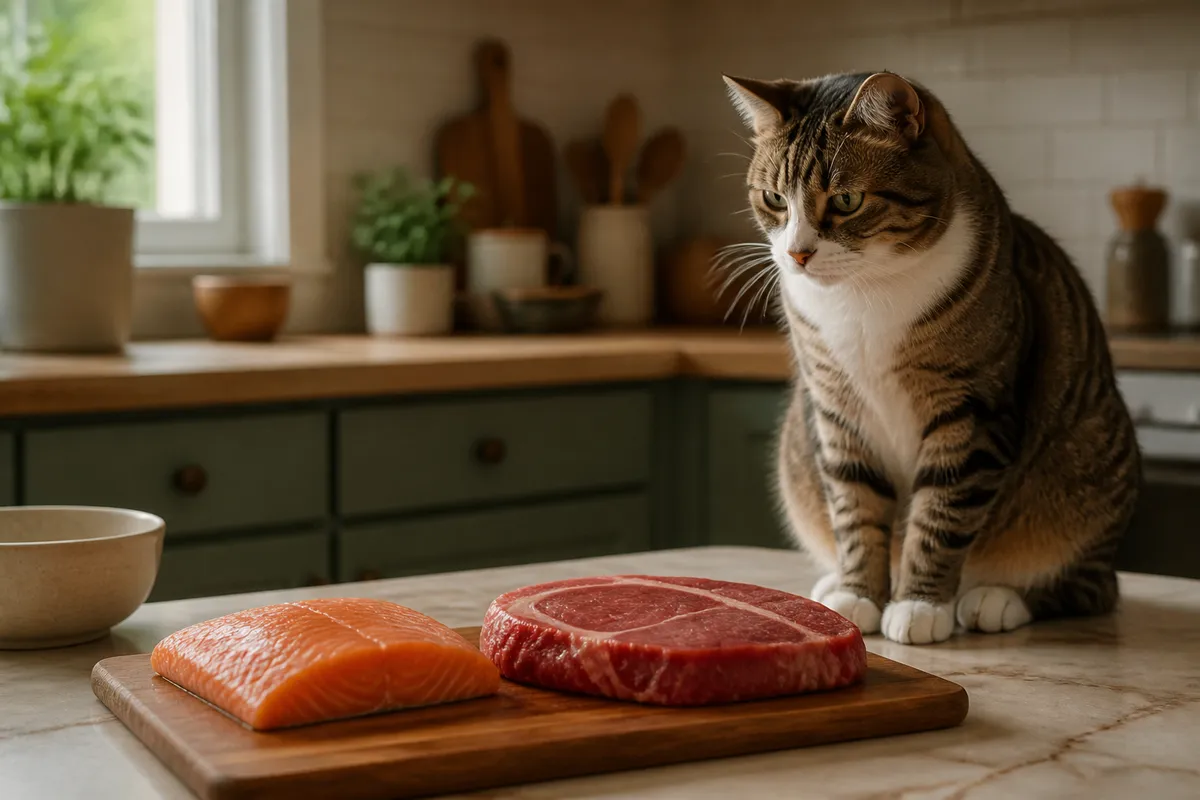
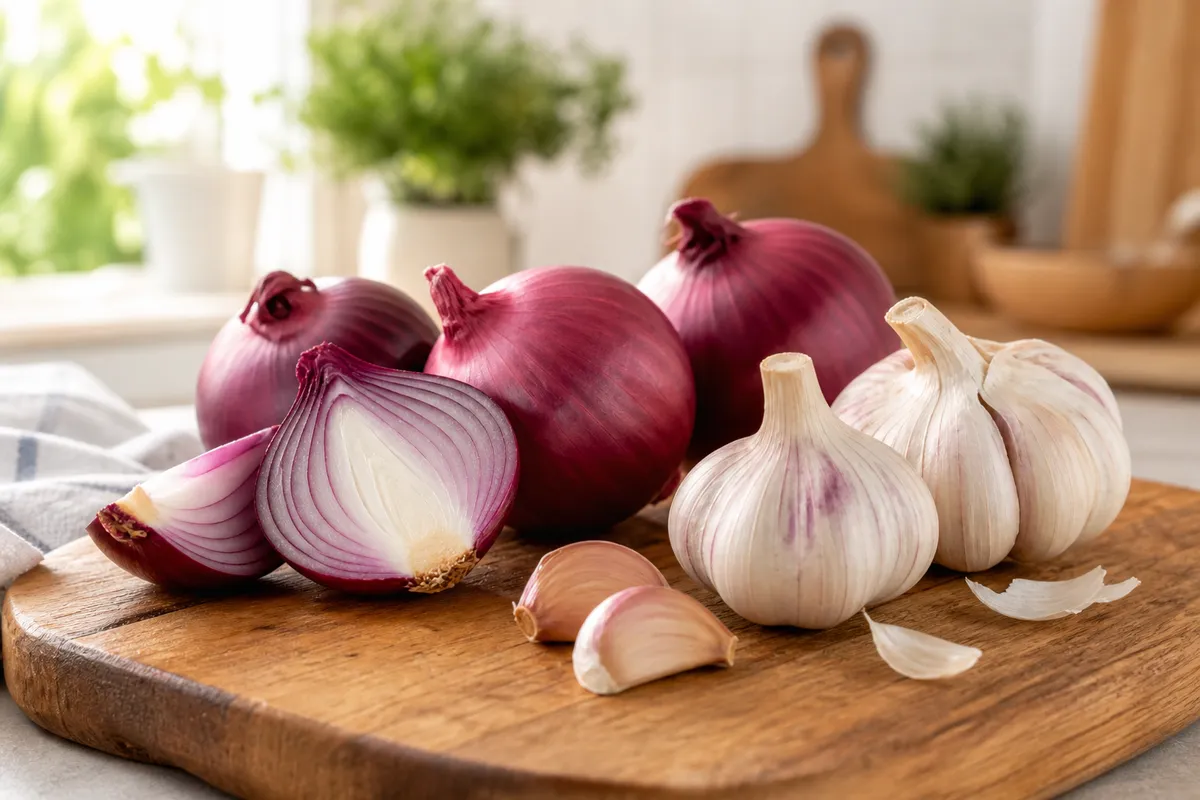
Onion-heavy burgers, garlic bread, and kebab marinades bring allium toxins onto paper plates that cats can reach when guests set food down. Spilled beer and wine under garden chairs create ethanol exposures we cover in can cats drink alcohol. Rich, fatty offcuts can also trigger pancreatitis-like illness even without a classic “poison”. Keep a cat-safe kitchen mindset outdoors: clearing plates matters as much as cooking safely.
Hot coals, lighter fluid and smoke
Cats may jump onto cooling grills or walk through ash. Burn injuries to paw pads are extremely painful and easily infected. Lighter fluid and firelighters should stay sealed and off the ground; petroleum distillates cause serious chemical pneumonia if aspirated or licked. Do not leave disposable BBQs on lawns overnight — curious paws investigate lukewarm trays that are still hot enough to burn.
Dose and severity in party conditions
BBQ risk is often about solid objects and secondary toxins rather than a single measured poison dose. A fragment of skewer can be devastating; a lick of cooled meat fat may only upset the stomach. Because guests distract you, the amount eaten is frequently unknown — another reason to phone a vet early when scavenging is likely.
Symptoms after a barbecue raid
- Gagging, drooling, or pawing at the mouth
- Vomiting, constipation, or straining
- Lethargy, hiding, or a painful belly
- Wobbliness after alcohol spills
- Limping or licking burned paws
Foreign-body signs can build over a day or two as an obstruction develops. Do not wait for complete refusal to eat if you know a cob or skewer is missing. Use our cat poisoning emergency checklist to assemble product names, photos of leftovers, and a timeline before you travel.
What to do in the moment
Separate your cat from the buffet. Check paws for ash or tar. Do not pull visible string or skewer ends from the mouth if they seem anchored — you may worsen injury; let a vet decide. Call your practice or out-of-hours service with what might have been swallowed. For toxin-focused scavenging (onions, xylitol desserts, chocolate), also follow what to do if your cat ate poison.
Host with a cat plan
Feed cats indoors before guests arrive, shut them in a safe room with water and litter during peak serving, and do a garden sweep for bones and skewers before bed. Prevention is kinder than a midnight emergency fee.
Guests, children and the cleanup hour
Most BBQ incidents happen after the food is served, not while you are flipping burgers. Children drop chicken strips; guests set plates on steps; someone “just rests” a skewer on the grass. Announce a house rule at the start of the party: plates stay on tables, bones go straight into a lidded bin, and the cat’s safe room stays closed until the garden sweep is done. Five minutes of clearing prevents hours at an emergency clinic.
Disposable BBQs left to cool on balconies are a particular flat-living hazard — cats squeeze through rail gaps or jump onto still-warm trays. Douse and dispose according to the pack instructions, then confirm the tray is cold before any pet access. If lighter fluid was used, store the bottle with other chemicals, not beside the salad bowls.
Frequently asked questions
Can cats have a little plain cooked chicken from the BBQ?
Plain, unseasoned, boneless, fully cooked chicken in tiny amounts is a common treat — but BBQ chicken is rarely plain. Rubs, sauces, and charred seasoning often include onion, garlic, salt, and sugars. When in doubt, do not share from the grill.
Are vegetable skewers safer than meat?
The skewer itself remains a puncture and obstruction hazard regardless of what was threaded on it. Onion, garlic, and corn still apply. Dispose of sticks immediately.
Is charcoal ash poisonous if licked?
Ash can irritate the mouth and gut, and lighter residues may contaminate it. More urgently, ash means heat risk to paws. Keep cats away until the BBQ is cold and cleared.