Can Cats Eat Raw Fish and Raw Meat?
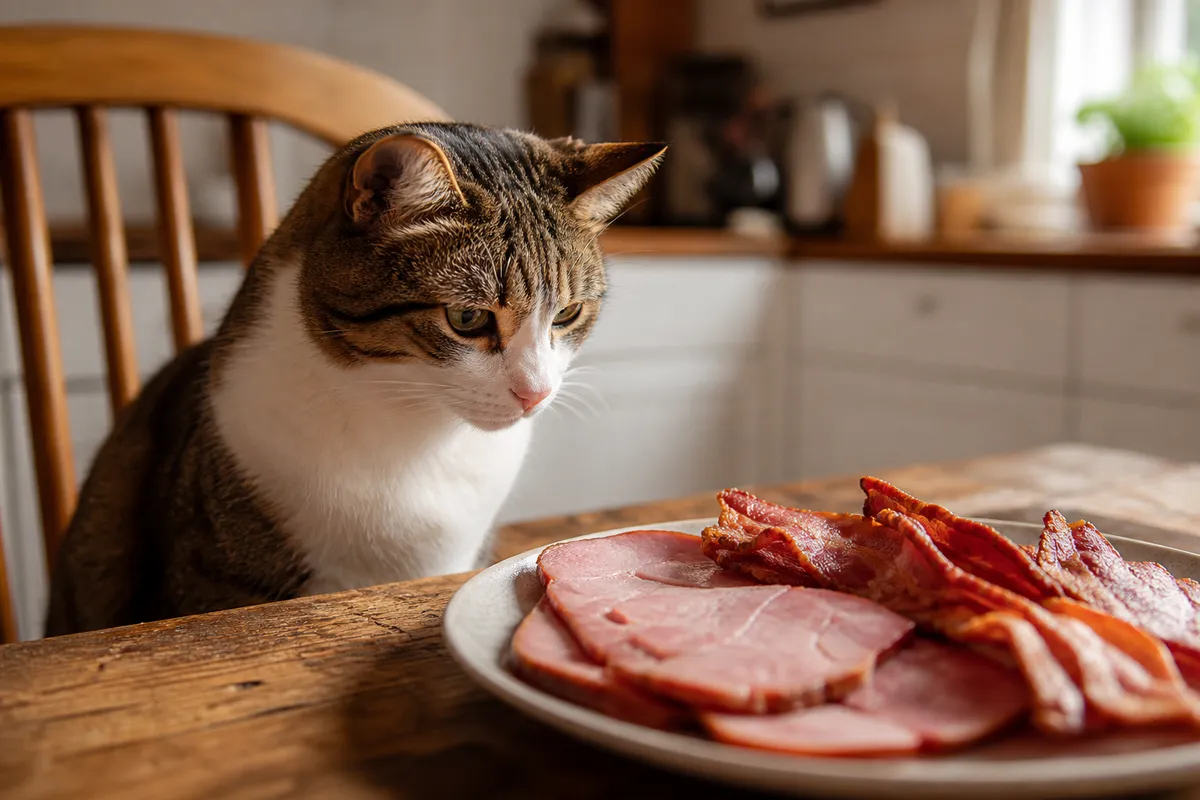
Sushi leftovers and raw mince look like a natural feast — but can cats eat raw fish and raw meat safely? Raw diets are debated among cat owners. The practical risks include parasites, bacteria, and thiaminase in some raw fish that can deplete vitamin B1 over time.
Thiaminase and raw fish
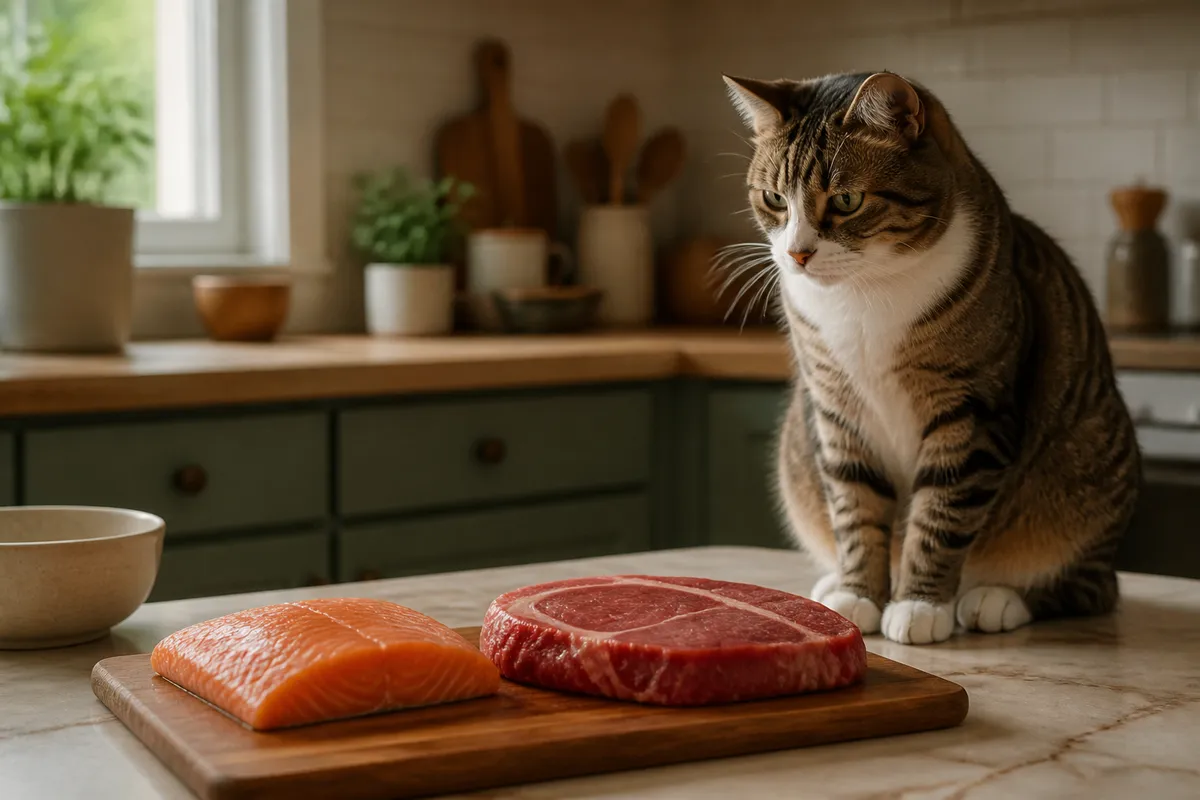
Some raw fish species contain thiaminase, an enzyme that breaks down thiamine (vitamin B1). A cat fed large amounts of certain raw fish over time can develop thiamine deficiency, which affects the nervous system. Cooking deactivates thiaminase, which is one reason plain cooked fish is generally a safer occasional share than a steady raw-fish habit. This is separate from mercury concerns with frequent tuna — moderation still matters.
Parasites, bacteria, and kitchen hygiene
Raw meat and fish can carry Salmonella, Campylobacter, Listeria, and parasites depending on source and handling. Cats may tolerate more than humans in some scenarios, but they can still become ill — and they can shed bacteria into the home, which matters around children, elderly relatives, or anyone immunocompromised. Keep raw products away from cat bowls you also use for cooked food, and clean surfaces thoroughly.
The raw diet debate — kept neutral
Some owners feed carefully balanced raw diets under veterinary nutrition guidance; others prefer complete commercial wet or dry foods. This article does not argue for or against raw feeding as a philosophy. It does stress that casually tossing supermarket raw mince or sushi-grade leftovers into a bowl is not the same as a formulated raw plan. Bones, seasoning, and unbalanced DIY mixes create extra hazards. For everyday sharing rules, see can cats eat human food.
Cooked alternatives that make more sense
- Plain cooked white fish — unseasoned, boneless, in small amounts
- Plain cooked chicken or turkey — no skin, bones, onions, or gravy
- A complete commercial cat food as the dietary foundation
- Vet-approved treats rather than continual table scraps
Avoid milk as a chaser for fish dinners — many cats are lactose intolerant. Details are in is milk bad for cats.
Seasoned raw preparations
Raw marinades often include garlic, onion, soy, alcohol, or xylitol-containing sauces. Those additions can be more dangerous than the meat itself. When a dish is flavoured for humans, it is rarely appropriate for cats.
Symptoms that need a call
After a raw binge, watch for vomiting, diarrhoea, lethargy, feverish behaviour, or neurological signs such as wobbliness if thiamine issues are a longer-term concern. Fresh food poisoning-type illness can appear within hours to a couple of days. Use our cat poisoning symptoms guide to structure what you tell the vet — and mention exactly which fish or meat was eaten.
What to do
If your cat stole a large amount of raw product, or the meat smelled off, phone your vet. Bring packaging if allergens or marinades are listed. Do not dose human anti-diarrhoeals. Follow what to do if your cat ate poison when toxic seasonings may have been involved.
Storage habits
Defrost meat in the fridge, not on the counter where cats can drag it. Bin wrappers promptly — the fatty film on packaging is a favourite steal.
Thiamine deficiency: a slow-burn risk
Unlike a one-off tummy upset, thiamine problems can build when certain raw fish dominate the bowl for weeks. Neurological signs — wobbliness, unusual eye movements, seizures in severe cases — are emergencies. That does not mean every piece of raw fish causes deficiency overnight; it means a casual “my cat loves sushi scraps every night” habit is a poor long-term plan. Complete commercial diets are formulated with vitamin levels in mind; random leftovers are not.
Household hygiene when cats share the kitchen
Raw juices drip from chopping boards onto floors cats walk across and then groom. Use separate boards for raw meat, wash with hot soapy water, and keep cats off counters during prep. Pregnant household members and anyone immunocompromised should be especially careful about cross-contamination. A tidy kitchen protects people and pets at the same time.
Prevention
Prep raw meals behind a closed door, wipe floors after packing lunch sushi, and keep cats off worktops. If you choose a raw feeding programme, work with a vet knowledgeable in nutrition rather than improvising from internet recipes alone. Freeze and label portions so thawing trays are not left overnight as open buffets.
Frequently asked questions
Is sashimi safer than supermarket raw salmon?
“Sushi-grade” describes handling standards for people, not a cat nutrition guarantee. Parasite and bacteria risks still exist, and thiaminase concerns remain for some raw fish. Cooked plain fish is the simpler occasional treat.
Can cats eat raw chicken necks as dental treats?
Some raw feeders use raw meaty bones under careful protocols; cooked bones are unsafe because they splinter. Discuss dental options with your vet rather than starting from social media trends.
Does freezing kill everything in raw meat?
Freezing can reduce some parasites depending on temperature and time, but it does not make raw meat sterile or balanced. Hygiene and formulation still matter.