Caffeine and Cats: Coffee, Tea and Energy Drink Risks
Morning coffee, afternoon tea, and energy drinks are normal for people — and risky for cats. If you need a clear answer on caffeine toxic to cats, treat caffeine as a stimulant toxin: small bodies, inefficient metabolism, and concentrated sources like grounds or pills make “just a lick” more serious than it sounds.
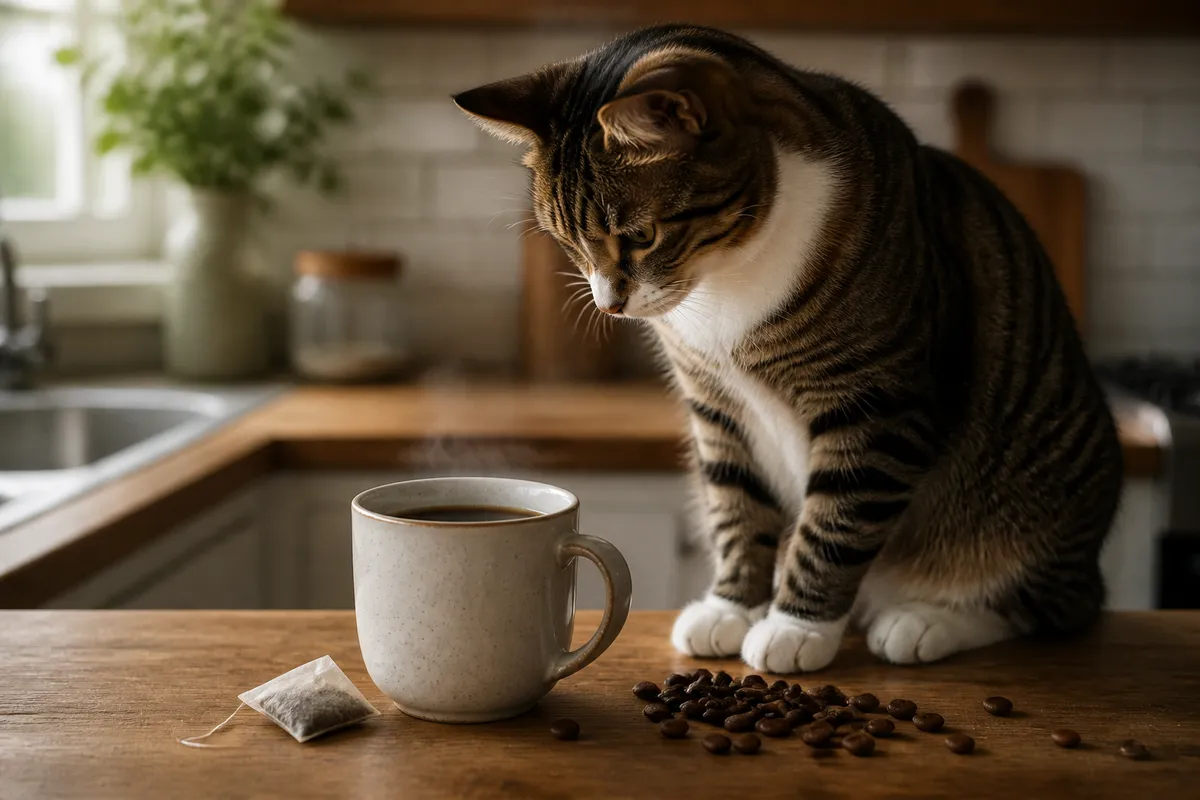
Concentrated caffeine is an emergency
Coffee grounds, espresso powder, caffeine tablets, and energy-drink spills pack far more punch than a cooled cup of tea. If your cat ate any of these, call your vet now — do not wait for tremors to start.
How caffeine affects cats
Caffeine is a methylxanthine, in the same broad family as theobromine — the toxin that makes chocolate dangerous. It stimulates the heart and nervous system and can disrupt blood pressure and muscle control. Cats clear these compounds slowly compared with humans, so effects can last and escalate. Restlessness can tip into racing heart rate, hyperthermia, tremors, and seizures when the dose is high enough relative to body weight.
Coffee grounds versus brewed coffee
Used or fresh coffee grounds are a classic hazard because they concentrate caffeine in a form cats may paw at in the bin or compost caddy. A curious kitten investigating the cafetière plunger or a spilled bag of beans faces a different risk level than a cat who dipped a tongue in lukewarm filter coffee. Espresso, Turkish coffee, and instant granules are stronger per teaspoon than a dilute mug. Still, no brewed drink is a treat — cool cups left on low tables remain an invitation.
Tea bags and loose-leaf tea contain caffeine too, though usually less than coffee by volume. Green tea, black tea, and many iced-tea concentrates still count. Herbal infusions vary wildly: some are caffeine-free but may include other unsafe botanicals. When in doubt, keep all steeping equipment out of reach and empty mugs promptly.
Energy drinks, pre-workouts and tablets
Energy drinks combine caffeine with sugars, acids, and sometimes guarana or other stimulants. Open cans on the floor are an obvious risk during gaming or gym routines. Pre-workout powders and caffeine tablets are worse: they are designed for adult human doses. A single tablet chewed by a cat can be catastrophic. Store gym supplements exactly as carefully as you would Panadol or Nurofen.
Chocolate crossover
Chocolate adds theobromine on top of caffeine, which is why cocoa-rich desserts are a double problem. Mocha drinks, coffee cake, and chocolate-covered espresso beans stack risks. If your cat got into chocolate or a mocha treat, read can cats eat chocolate alongside this page and call your vet with both ingredients in mind.
Symptoms and timing
- Restlessness, pacing, or agitation
- Rapid breathing or heart rate
- Vomiting
- Muscle tremors or twitching
- Elevated temperature
- Seizures or collapse in severe cases
Signs may appear within a few hours. Mild exposures might look like brief hyperactivity; serious ones escalate. Track what you see against our cat poisoning symptoms guide and note the clock time when each change began — vets use that timeline.
What to do if your cat had caffeine
Remove access to the product. Do not induce vomiting unless instructed. Phone your vet with the source (grounds, drink, tablet), an amount estimate, and your cat’s weight. Bring packaging if you travel in. Early care can include monitoring, fluids, and medication to control heart rate or seizures depending on severity. Our emergency checklist helps you gather the right details before you leave the house.
Prevention that fits real mornings
Empty the cafetière into a sealed bin, not an open compost bowl on the floor. Keep capsule machines and bean hoppers closed. Put energy drinks away after sipping. Offer cats water fountains or fresh bowls so they are less tempted by abandoned mugs. Guests should know the house rule: no coffee cups on the coffee table when cats are out.
Bin and compost habits
Coffee grounds in a kitchen caddy are a magnet for investigation. Use a lidded caddy and take grounds out promptly, especially in flats where indoor bins are the only option.
Dose context without invented numbers
Exact milligram thresholds vary with product strength and cat size, and publishing invented “safe sip” charts would be irresponsible. What owners can judge qualitatively is concentration and quantity: a licked drop of milky tea is not the same as a kitten eating a heap of espresso grounds from the compost caddy, and neither matches a chewed caffeine tablet. When you phone for advice, give the product name, preparation method (instant, filter, grounds, capsule), an honest portion guess, and whether chocolate or xylitol might also be in the mix. That beats guessing from memory of a blog table.
Office and café culture also matters. Takeaway cups abandoned on low walls, sugar sachets mixed with spilled coffee, and colleagues who “don’t mind cats on desks” create exposures outside the home kitchen. If you work from home with an outdoor cat flap open, do a sweep of mugs before meetings — multitasking is when spills get ignored.
Frequently asked questions
Is decaf coffee safe for cats?
Decaf is not caffeine-free. Residual caffeine remains, and flavourings or sweeteners can add other problems. Do not offer decaf as a treat.
Are coffee grounds more dangerous than a sip of coffee?
Often yes, because grounds concentrate caffeine and cats may eat a larger amount while scavenging. Both warrant a vet call if ingestion is known or strongly suspected.
Can tea tree or other “detox” teas harm cats too?
Many specialty teas are not just about caffeine — essential oil components and unfamiliar herbs can irritate or poison pets. Keep all steeped drinks and dry tea stores out of reach.