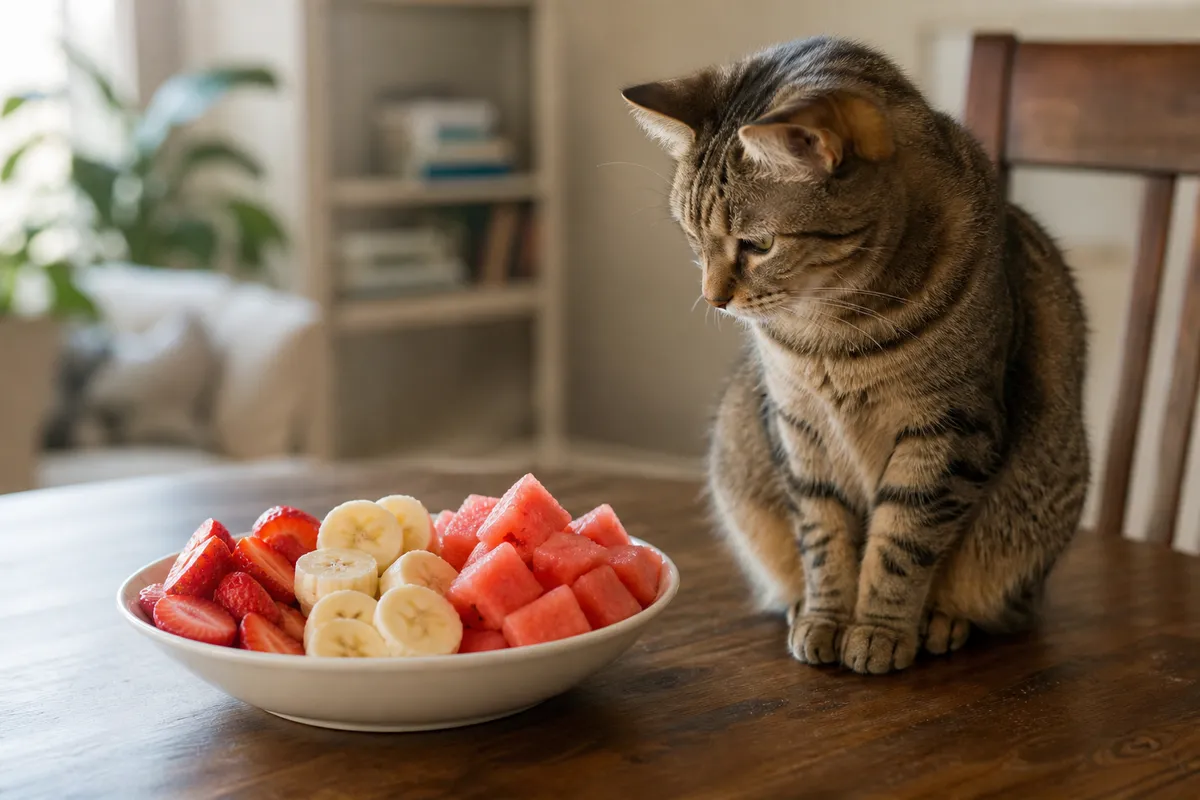
Can Cats Eat Bananas, Strawberries and Watermelon?
Fruit bowls look colourful and “healthy” — but cats are obligate carnivores. Can cats eat bananas, strawberries and watermelon? Some fruits are fine in tiny amounts; others, especially grapes and raisins, are dangerous. Know the difference before you share a picnic plate.
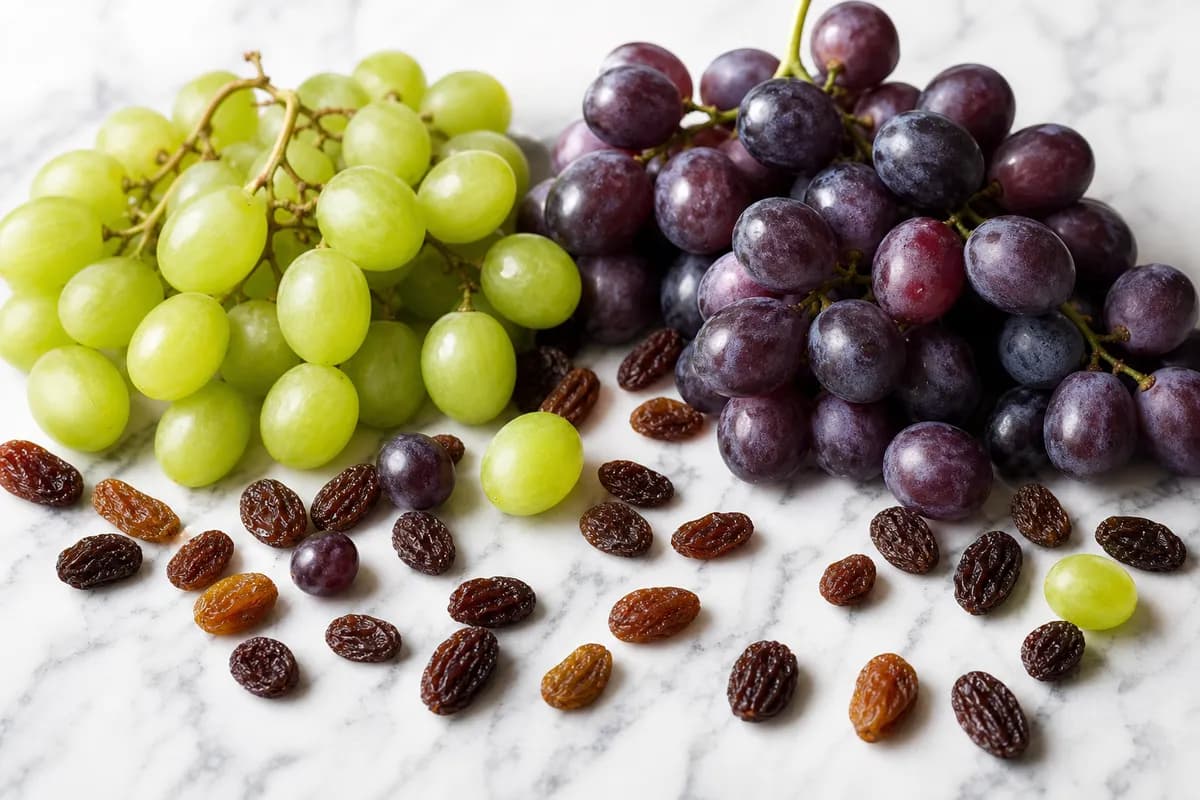
Grapes and raisins are never a fruit treat
Do not offer grapes, raisins, sultanas, or currants. They are associated with kidney failure in cats and dogs. If your cat ate any, call your vet immediately — details in our grapes and raisins toxicity guide.
Fruits often fine in moderation
These options are generally considered low-risk as occasional tiny treats for healthy cats — always plain, washed, and free of stones, pips where relevant, and sugary coatings:
- Banana: A small soft piece; high sugar, so keep portions tiny.
- Strawberry: A thin slice, hulled; watch for choking on whole berries in tiny cats.
- Watermelon: Seedless flesh only — never the rind as a chewing block unsupervised.
- Blueberry: One or two berries at most as a novelty.
- Peeled apple: Tiny piece without seeds or core.
Remember: cats do not need fruit for nutrition. If your cat ignores the offering, that is normal and fine. Human-food sharing principles still apply — see can cats eat human food.
Fruits and fruit products to avoid
- Grapes, raisins, sultanas, currants
- Citrus peels and concentrated citrus oils
- Fruit stones and large seeds (choking and toxin concerns vary by fruit)
- Dried fruit mixes that hide raisins
- Tinned fruit in syrup, fruit yoghurt, and crumbles with sugar, xylitol, or spice
- Avocado preparations with onion or garlic — see dedicated avocado guidance when unsure
Dose and sugar context
Even “safe” fruit is sugary relative to a cat’s natural diet. Overdoing banana mash can contribute to upset stomachs and unhelpful calories. Think of fruit as a rare novelty the size of a fingernail, not a dessert bowl. Diabetic cats or those on prescription diets should skip fruit unless your vet agrees.
Symptoms after a fruit mishap
Mild soft stools or a single vomit after too much sweet fruit can happen. With grapes or raisins, watch for vomiting, lethargy, and changes in urination — and do not wait for those signs before calling. Use the cat poisoning symptoms guide and our emergency checklist if you are heading to a clinic.
What to do
Identify which fruit and how much. For grapes or raisins, seek urgent care. For a large sugary binge of otherwise lower-risk fruit, phone your vet if vomiting persists or your cat seems unwell. Do not add milk or cream as a comfort food.
Picnic and pudding hazards
Fruit salads often include grapes. Trifle and hot cross buns can hide dried fruit. Scan leftovers before a cat steals from a paper plate on the lawn.
Serving ideas that stay tiny
If you still want to share, mash a pea-sized amount of ripe banana into a lickable smear on a plate, or offer a thin watermelon cube you can supervise. Never leave a whole bowl of fruit salad down “for everyone.” Supervise, remove uneaten pieces within minutes, and wash sticky juice from fur so grooming does not turn a nibble into a larger dose.
Why cats are not mini fruitarians
Cats taste sweetness differently from humans and gain little nutritional benefit from fruit fibre and fructose. Sharing a strawberry may feel wholesome, but it is a social gesture more than a health upgrade. Focus dietary love on high-quality complete cat food, water intake, and species-appropriate treats. Fruit is optional theatre — never a requirement.
Hidden fruit in “healthy” snacks
Cereal bars, trail mix, hot cross buns, and kids’ lunchbox raisins are common stealth sources. A knocked-over snack bowl can empty faster than you notice. During Easter and Christmas, dried-fruit baking multiplies risk. Sweep floors after baking sessions and keep mixing bowls out of reach while you answer the door.
Prevention
Store fruit bowls out of leaping range, clear fallen grapes immediately, and remind guests that “healthy” human snacks are not automatically cat snacks. Offer cat-safe commercial treats when you want to include your pet in celebration moments. If you meal-prep fruit for the week, refrigerate containers with lids rather than leaving chopped grapes on open plates.
Frequently asked questions
Can kittens have watermelon?
A tiny taste of seedless flesh is unlikely to poison a kitten, but their calories should come from kitten food. Skip experiments if weaning or stomachs are sensitive.
Are strawberries toxic or just sugary?
Strawberries are not in the same toxicity category as grapes. The main issues are sugar, pesticides on unwashed fruit, and choking on large pieces.
What about fruit-flavoured baby food as a pill pocket?
Check labels for xylitol, onion, garlic, and raisin content. Purpose-made pill treats or a dab of vet-approved paste are safer than improvising with jarred desserts.