Air Fresheners, Plug-Ins and Candles: Are They Safe for Cats?
Plug-ins, sprays, wax melts, and scented candles make homes smell pleasant to us — but cats share the same air and groom whatever lands on their fur. If you are asking whether air fresheners, plug-ins and candles are safe for cats, the practical answer is: minimise concentrated fragrance, treat essential-oil products as high risk, and prefer ventilation over constant scent.
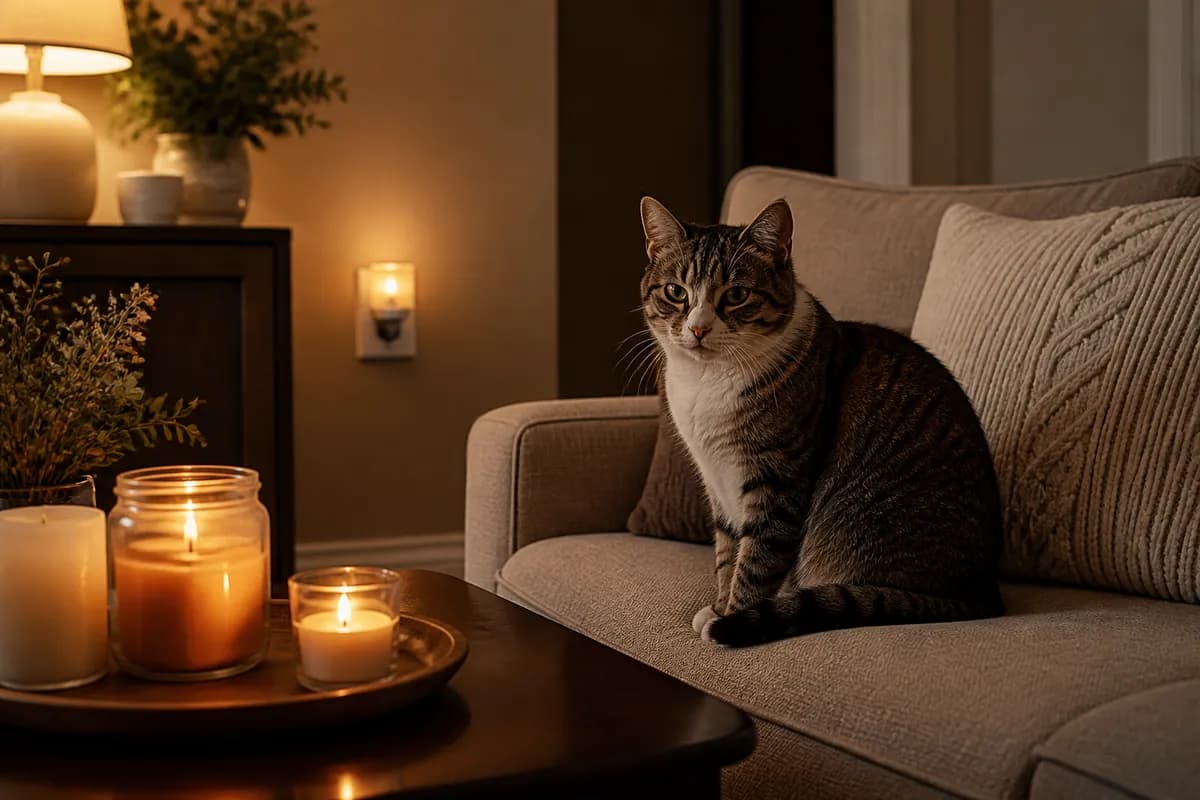
Essential-oil diffusers need extra caution
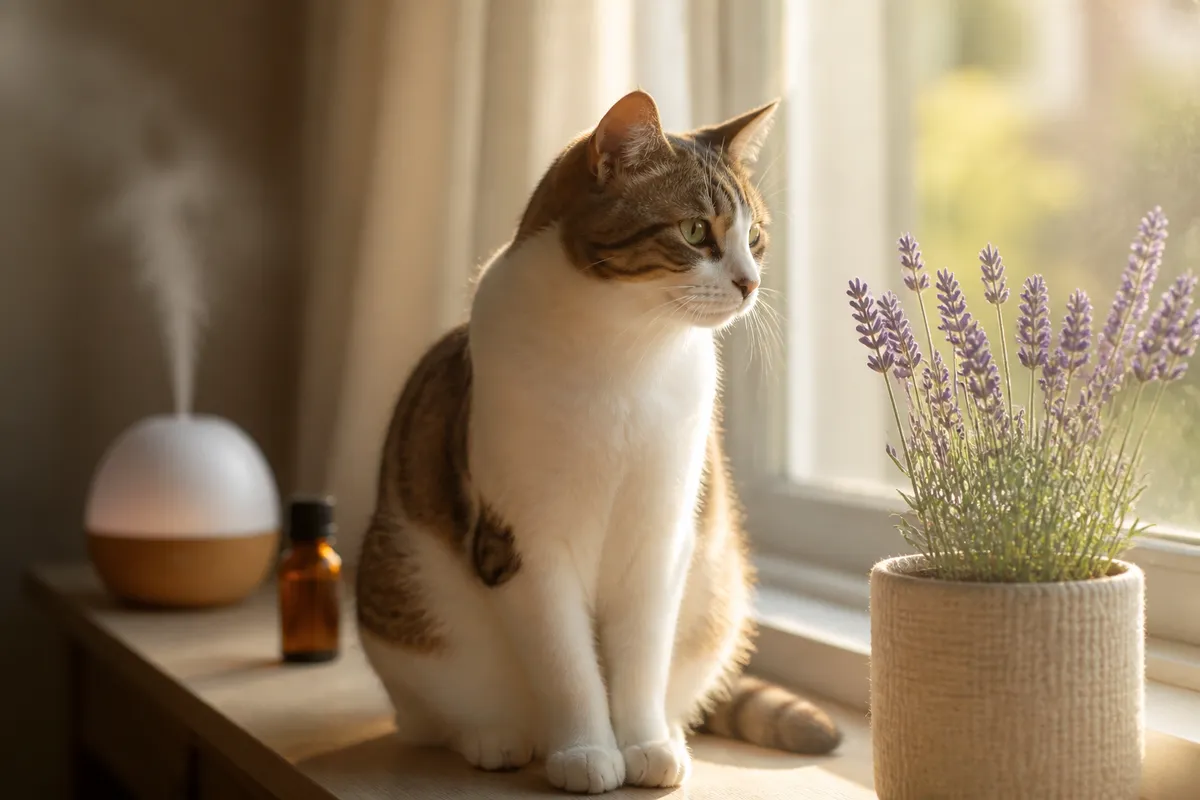
Oil diffusers and many "natural" fresheners overlap with essential-oil hazards. If your cat shows drooling, wobbliness, breathing changes, or lethargy after fragrance use, turn devices off, air the room, and call your vet.
VOCs and shared indoor air
Many air fresheners release volatile organic compounds (VOCs) and fragrance chemicals into the room. Cats have sensitive airways and a grooming habit that turns airborne particles into oral exposure. Continuous plug-ins and automatic sprays keep levels topped up in small UK flats where windows stay shut for heat, rain, or street noise.
You do not need a chemistry degree to reduce risk: fewer continuous scent devices, shorter spray bursts, and more fresh air. If a product stings your eyes or throat, it is too strong for a closed room with a cat. Layering a plug-in, a cleaning spray, and a candle in the same afternoon stacks exposures that each looked "mild" alone.
Diffusers, essential oils, and "natural" marketing
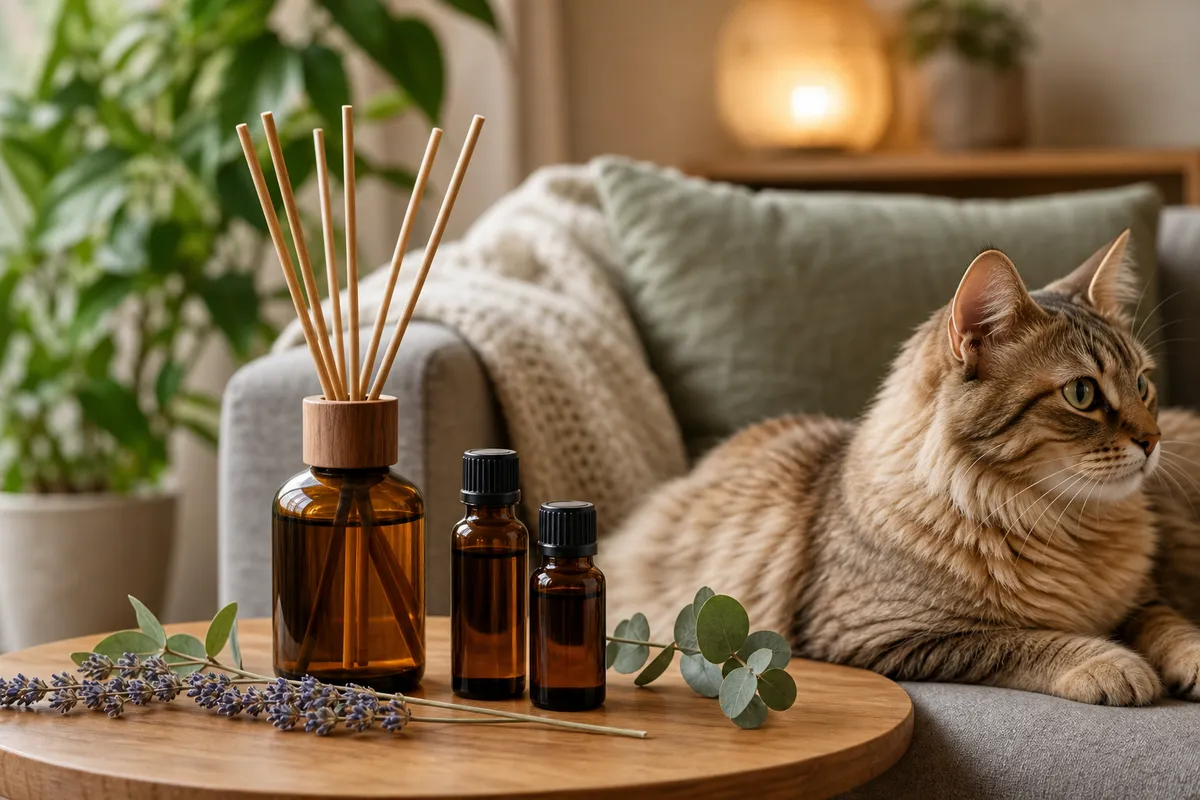
Tea tree, eucalyptus, citrus, peppermint, and other oils appear in reed diffusers, nebulising machines, and scented sprays. Cats metabolise some oil compounds poorly. Our dedicated guide on essential oils and cats covers plant oils in more depth — treat fragrance devices that list essential oils with the same seriousness as bottled oils on a shelf.
- Diffuser crossover: Ultrasonic and heat diffusers spread fine oil droplets that settle on fur, bedding, and food bowls.
- Reed sticks: Curious cats may chew oily reeds or tip bottles, creating a spill and a grooming emergency.
- "Pet-safe" claims: Marketing language varies. Prefer products designed to leave rooms unscented, or skip fragrance entirely.
"Natural" does not mean harmless. Plant-derived fragrance can still irritate lungs and skin. If you love a signature home scent, use it occasionally in a room your cat can leave, rather than running a diffuser for hours beside their favourite radiator bed.
Candles, wax melts, and open flames
Scented candles add smoke particles and fragrance load. Wax melts and warmers can tempt cats to investigate warm plastic trays; chewed wax is a foreign-body and stomach-upset risk, and concentrated fragrance oils in melt pots may be licked from paws. Never leave lit candles where a tail can tip them — burn risk sits alongside chemical risk, especially on shelves cats already patrol.
If wax or melt liquid is ingested, note the brand and scent type, watch for vomiting or lethargy, and call your practice. Combine that advice with good sense from our cleaning products guide when sprays and polish fumes stack on top of air fresheners in the same cleaning session.
Safer options that still feel homely
- Open a window when weather allows and use an extractor fan while cooking.
- Wash fabrics and bin liners on a schedule instead of masking smells with spray.
- Choose unscented litter and clean trays daily — odour control starts at the source.
- If you love candles, use them briefly in a room the cat can leave, snuff them when you leave, and skip essential-oil blends.
- Keep all bottles, refills, and melt packs in closed cupboards — see toxins by room for living-room and bathroom checklists.
One scent job at a time
Avoid stacking plug-ins, cleaning sprays, and a diffuser in the same afternoon. Cats cannot open a window themselves — give them an unscented escape room.
When to seek veterinary help
Call promptly for breathing difficulty, persistent coughing, drooling after chewing a reed or melt, wobbliness, vomiting, or collapse. Turn off devices, ventilate, and prevent further grooming of contaminated fur with a damp wipe if your vet advises while you travel. Mention every product used that day — clinics triage faster with a complete fragrance list.
Mild eye watering or a short spell of sneezing after a heavy spray is still worth noting and cutting back on fragrance. Repeated irritation is a signal to change habits, not to "get the cat used to it". Cats cannot opt out of shared air the way a guest can step outside.
Frequently asked questions
Are unscented candles safer?
They reduce fragrance load, but flame, smoke, and wax ingestion risks remain. Never leave them unattended with pets.
Is a short burst of aerosol spray okay?
Occasional light use in a ventilated room with the cat elsewhere is lower risk than continuous plug-ins — but sprays are still unnecessary for most homes. Prefer cleaning the source of the smell.
My cat likes sitting near the radiator plug-in — should I stop?
Yes. Continuous devices next to favourite sleeping spots mean prolonged exposure. Unplug them and refresh the air instead.