Is Lavender Safe for Cats? Plant, Oil and Diffuser Risks
Lavender smells calming to people — but is lavender safe for cats? It depends which form you mean. Fresh or dried plant material, concentrated essential oil, and room diffusers sit on three different rungs of risk.
Essential oil exposures need urgent advice
If your cat licked lavender oil, had oil spilled on their fur, or spent time in a closed room with a strong diffuser, call your vet or the Animal PoisonLine. Concentrated oils are far more dangerous than a sniff of garden lavender.
Risk level 1: the living plant
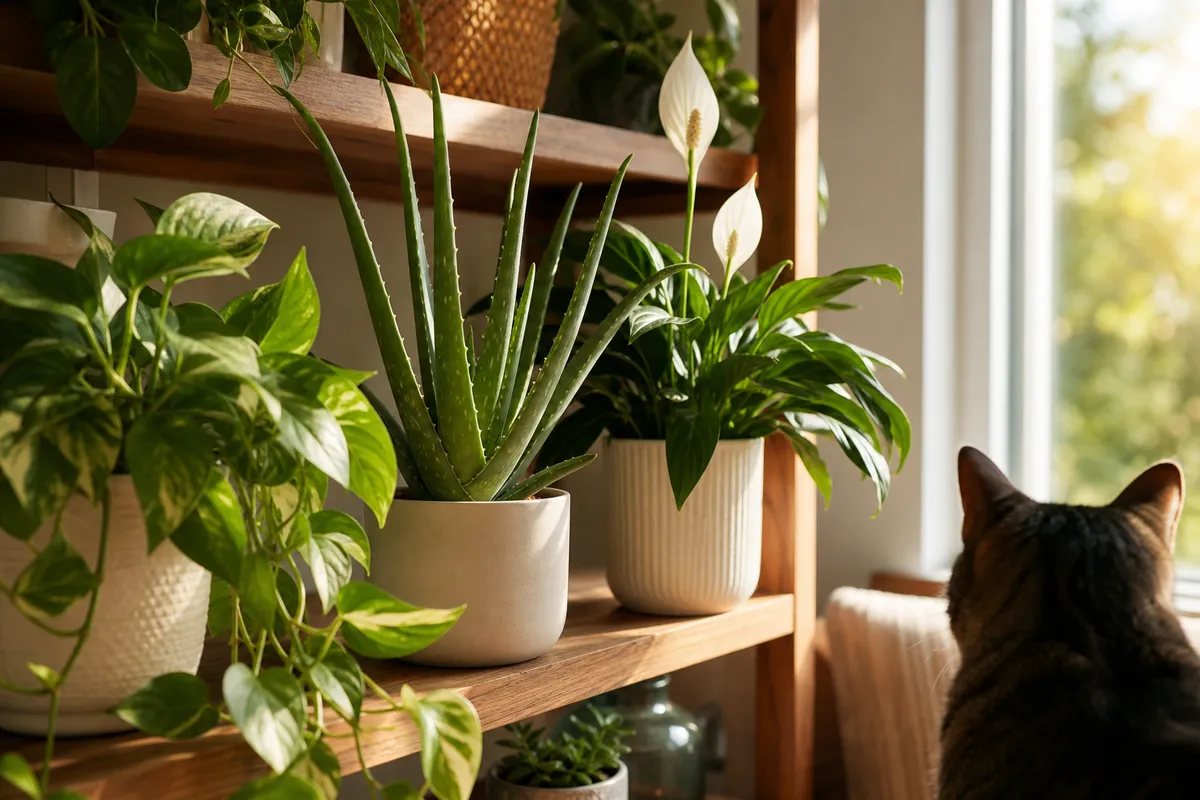
Lavender plants contain linalool and related compounds. Cats that chew leaves or flowers may develop mild stomach upset — drooling, vomiting, or soft stools. Outdoor garden lavender is a lower everyday risk than a bottle of oil, but it is still not a snack plant. If your cat is a determined chewer, choose options from safe indoor plants for cats instead of potting lavender on a balcony they patrol.
Risk level 2: dried sachets and culinary sprigs
Drawer sachets, potpourri, and dried bunches concentrate plant material and are easy to bat around like toys. Ingestion can irritate the gut; some decorative mixes also include other toxic botanicals. Keep sachets inside sealed drawers cats cannot open, and never leave loose potpourri on coffee tables.
Risk level 3: essential oils and diffusers
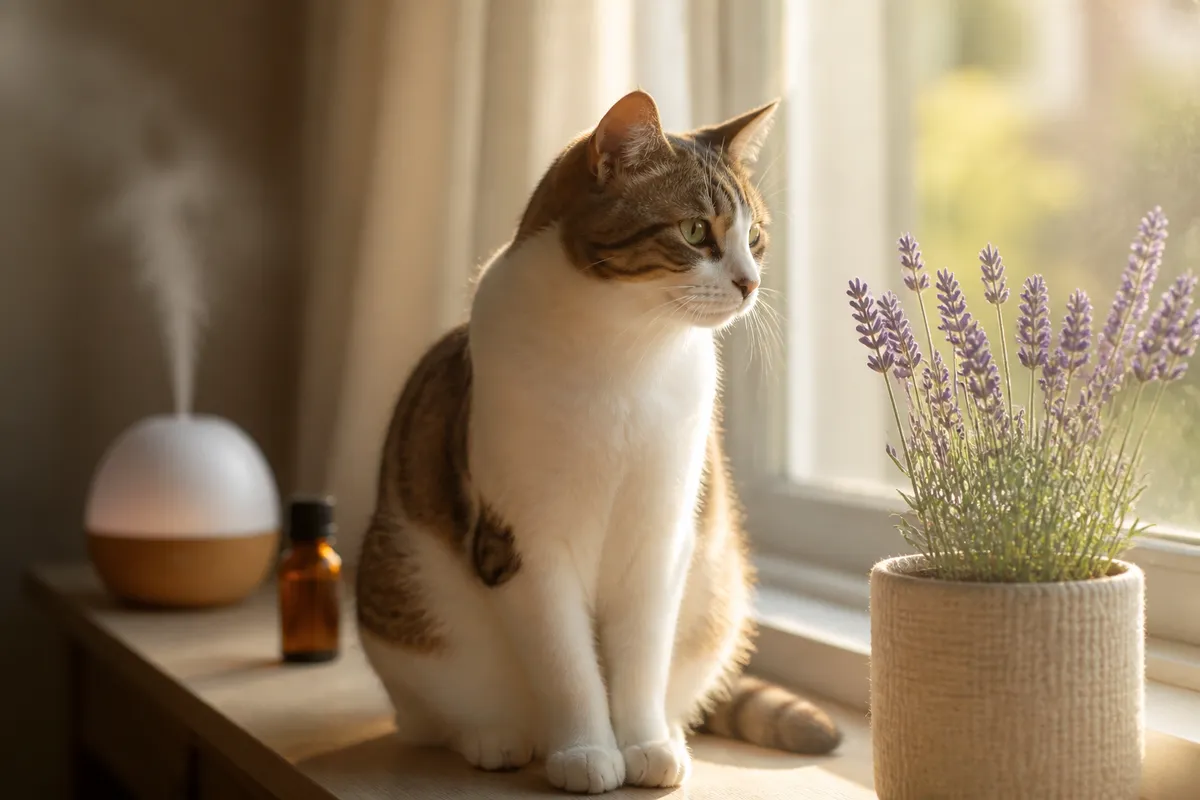
This is where lavender becomes a serious household toxin concern. Cats lack efficient pathways to metabolise many essential-oil compounds. Undiluted oil on skin or fur can be absorbed and then licked during grooming. Active diffusers fill small UK flats with airborne droplets that coat fur and airways. Read the full picture in our essential oils and cats guide — lavender is only one oil on a longer high-risk list.
Dose and severity
A few chewed garden flowers usually cause mild, short-lived signs. A licked drop of essential oil, oil-based “natural” flea products, or prolonged diffuser use in an unventilated room can cause more serious neurological or liver-related signs. Kittens and cats with existing liver disease are especially vulnerable. There is no home dosing chart — when oil is involved, get professional advice immediately.
Symptoms by exposure type
- Plant chew: Drooling, mild vomiting, temporary fussiness with food.
- Oil on fur/skin: Redness, grooming obsession, lethargy, wobbliness, drooling.
- Diffuser/inhalation: Watery eyes, coughing, breathing changes, hiding, reduced appetite.
Severe signs — tremors, collapse, or difficulty breathing — are emergencies. Cross-check with cat poisoning symptoms.
What to do
For oil on fur, prevent grooming (an Elizabethan collar if you have one) and call your vet before washing — some washing techniques can increase absorption. Turn off diffusers and ventilate the room. For plant ingestion, remove remaining material and seek advice. Do not induce vomiting unless instructed. Follow what to do if your cat ate poison while you prepare to travel.
“Pet-safe” fragrance claims
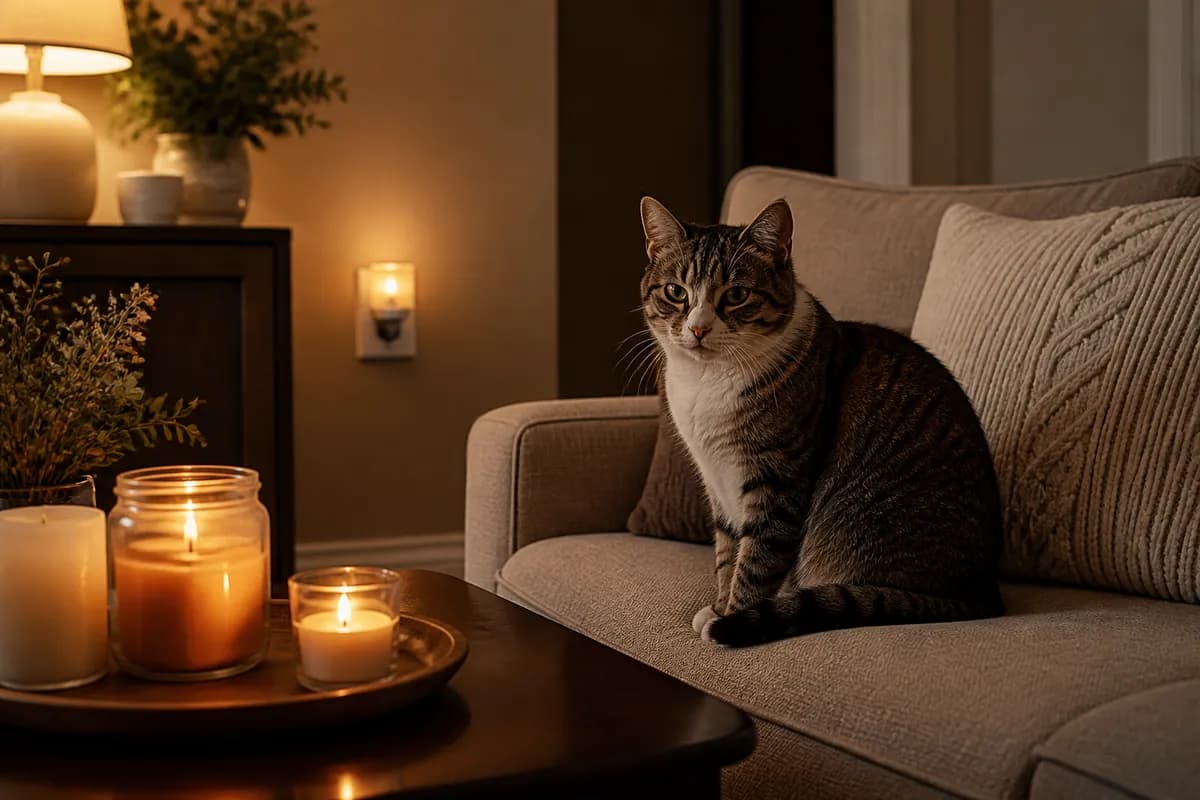
Marketing language on candles and oils is not a veterinary safety test. If a product lists lavender essential oil as a main ingredient, treat it as a cat hazard until proven otherwise.
Small flats amplify diffuser risk
In a compact UK flat, one active diffuser can scent every room through open doorways within minutes. Cats rest in high places where vapour pools and groom constantly, so inhalation and dermal exposure overlap. Turning a diffuser off when you leave does not instantly clear residue on soft furnishings. If you want fragrance, step outside with a personal product rather than fogging the home — or choose truly cat-free zones with doors that latch.
Spa products, pillow sprays and “calming” kits
Pillow mists, bath oils, reed diffusers, and wellness kits often list lavender near the top of the ingredient panel. Reed sticks wick oil continuously. A knocked-over bottle on a duvet becomes an urgent grooming hazard. Keep bathroom cabinets closed, and never apply human aromatherapy products to cats — including diluted recipes shared online as natural anxiety aids.
Prevention
Skip lavender oil diffusers in homes with cats, or use them only in sealed rooms cats never enter — with residual scent considered before cats return. Store oil bottles like medicines: high, closed cupboards. Prefer unscented cleaning routines in shared spaces. If you grow lavender outdoors, supervise balcony access during flowering so chewing does not become a habit.
Frequently asked questions
Is lavender hydrosol safer than essential oil?
Hydrosols are more dilute but are not automatically cat-safe, especially if sprayed near faces or on bedding. When in doubt, avoid aromatic sprays around cats altogether.
Can cats walk through a lavender garden?
Brushing past plants outdoors is usually low risk compared with chewing or oil exposure. Discourage eating flower heads, and wipe paws if they have been in freshly treated soil or pesticide-sprayed beds.
Are lavender-scented litter additives safe?
Strong fragrances in litter can put sensitive cats off using the tray and may add unnecessary chemical exposure. Unscented clumping litter is the simpler, cat-friendlier choice.