Are Laundry Pods and Detergents Dangerous for Cats?
Laundry pods look like colourful toys — and liquid detergents leave residues cats can walk through and groom. If you are wondering whether laundry pods and detergents are dangerous for cats, yes: concentrated pods, cationic surfactants, and damp washing all deserve careful storage and clean-up habits in every UK utility room and cupboard.
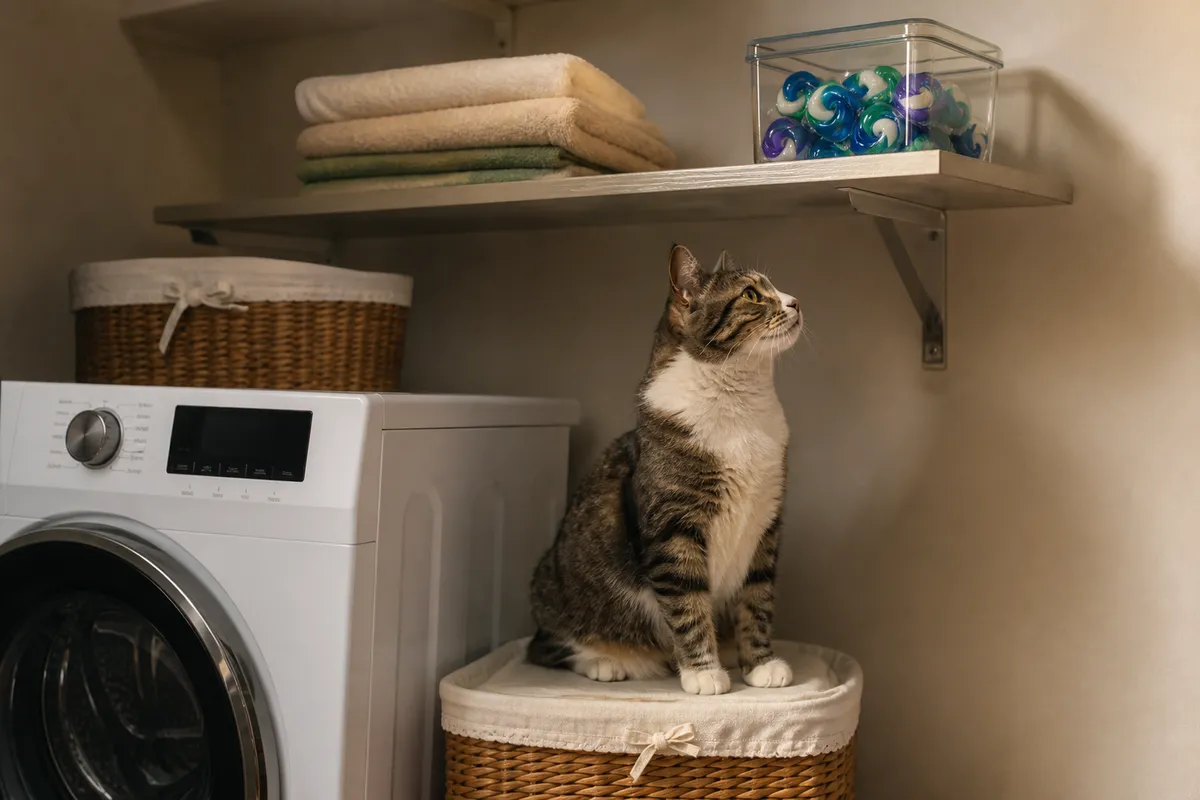
Pods are an emergency if chewed or licked
If your cat bites a pod, gets film stuck in their mouth, or drinks detergent solution, call your vet or emergency clinic immediately. Do not wait to see if they "seem fine". Bring the packaging so the team can identify surfactants and other ingredients.
Why laundry pods are especially risky
Pods pack highly concentrated detergent inside a water-soluble film. That design is convenient for people and hazardous for pets: one puncture releases a dose meant for a full washing-machine load into a mouth that weighs a few kilograms. Cats may bat pods across tiled floors, puncture them with teeth, or lick film that sticks to fur and whiskers after a spill.
The film itself can cling inside the mouth or on the tongue, prolonging contact with caustic or irritant chemicals while the cat frantically tries to groom. Owners sometimes find sticky residue on paws hours later because the cat walked through a burst pod and then settled on the sofa.
- Film on fur and mouth: Sticky film keeps detergent against tissues while the cat grooms — increasing exposure with every lick.
- Burst pods: A sudden squirt into the mouth or eyes causes burning pain, drooling, foaming, and distress.
- Attractive packaging: Bright colours and a soft "clicky" feel encourage play. Never leave pods in open baskets or on worktops.
Liquid and powder detergents — and cationic cleaners
Traditional liquids and powders still matter even if you never buy pods. Cats walk across spills, sit in damp laundry baskets, or lick residue from wet utility-room floors. Some fabric conditioners and specialised cleaners use cationic surfactants (including quaternary ammonium compounds), which can cause serious oral and oesophageal injury when licked from paws — a theme we cover in our cleaning products toxic to cats guide.
Even "fragrance-free" products can irritate mucous membranes. Scented lines add volatile compounds that bother sensitive airways, especially in small flats with poor ventilation. After mopping or wiping machine drawers, rinse areas thoroughly and keep cats out until floors and appliances are fully dry. Undissolved powder in a door seal is another lickable hotspot.
How exposure usually happens
Busy households leave pods in washing-machine drawers "ready for next time", tip liquid into open dosing balls on the floor, or store soft refill pouches where climbing cats can puncture them. Shared laundry rooms in flats add guest mistakes: someone else's pod left on a shared counter. Kittens and young adults are especially playful with anything that rolls.
Symptoms to watch for
- Drooling, pawing at the mouth, or frothing
- Vomiting, reluctance to eat, or lip-smacking
- Red or ulcerated gums and tongue
- Coughing, wheezing, or noisy breathing after inhalation or aspiration
- Lethargy, hiding, or crying after a known exposure
- Squinting or pawing at the face if product reached the eyes
Respiratory signs after foam or liquid goes the wrong way are particularly worrying — aspiration can follow choking or forced home rinsing. Mouth ulcers may worsen over hours even if the first minutes looked "only" dramatic. Compare what you see with our cat poisoning symptoms guide and phone for advice rather than waiting overnight.
Utility-room storage that actually works
Utility rooms and cupboards under the sink are common failure points. Cats investigate open doors, climb washing machines, and tip soft bags. Treat laundry products like medication: sealed, high, and boring. If your machine lives in the kitchen, the same rules apply — pods next to the food bowl are an invitation.
- Keep pods in their original tub with a child-resistant lid — not in a bowl for "easy access".
- Store liquids upright on a high shelf inside a closed cupboard.
- Wipe machine drawers and seals so cats cannot lick concentrated gel.
- Empty pockets before washing — nicotine gum and painkillers are extra hazards.
- Map other room-by-room risks in our common cat toxins by room guide.
What to do if exposure happens
Remove your cat from the area and prevent further grooming if you can do so calmly. Wipe excess product from fur with a damp cloth if it is safe and your vet agrees while you travel — but do not spend ages "washing" a distressed cat at home if the mouth or eyes are involved. Do not induce vomiting. Rinse paws briefly only if advised; never force water into the mouth. Bring the product label to the clinic. Our emergency checklist lists what to gather before you leave.
Fresh laundry is not a bed
Warm piles of washing smell interesting. Let clothes cool and put them away before cats nest in detergent-scented fabric — especially after using fabric softener sheets or strong conditioners.
Frequently asked questions
Are "eco" or plant-based detergents safe for cats?
"Eco" is not a toxicity guarantee. Concentrated surfactants can still burn mouths and stomachs. Store and rinse them with the same care as conventional brands.
My cat only licked a tiny drip — do I still call?
Yes, especially with pods or fabric conditioner. Severity depends on the product and the cat. A quick call with the brand name is better than guessing.
Can residue on washed clothes harm cats?
Properly rinsed laundry is usually low risk. Problems more often come from spills, undissolved powder, wet machine drawers, or chewing pods — not from a clean T-shirt.