Is Pothos (Devil's Ivy) Toxic to Cats?
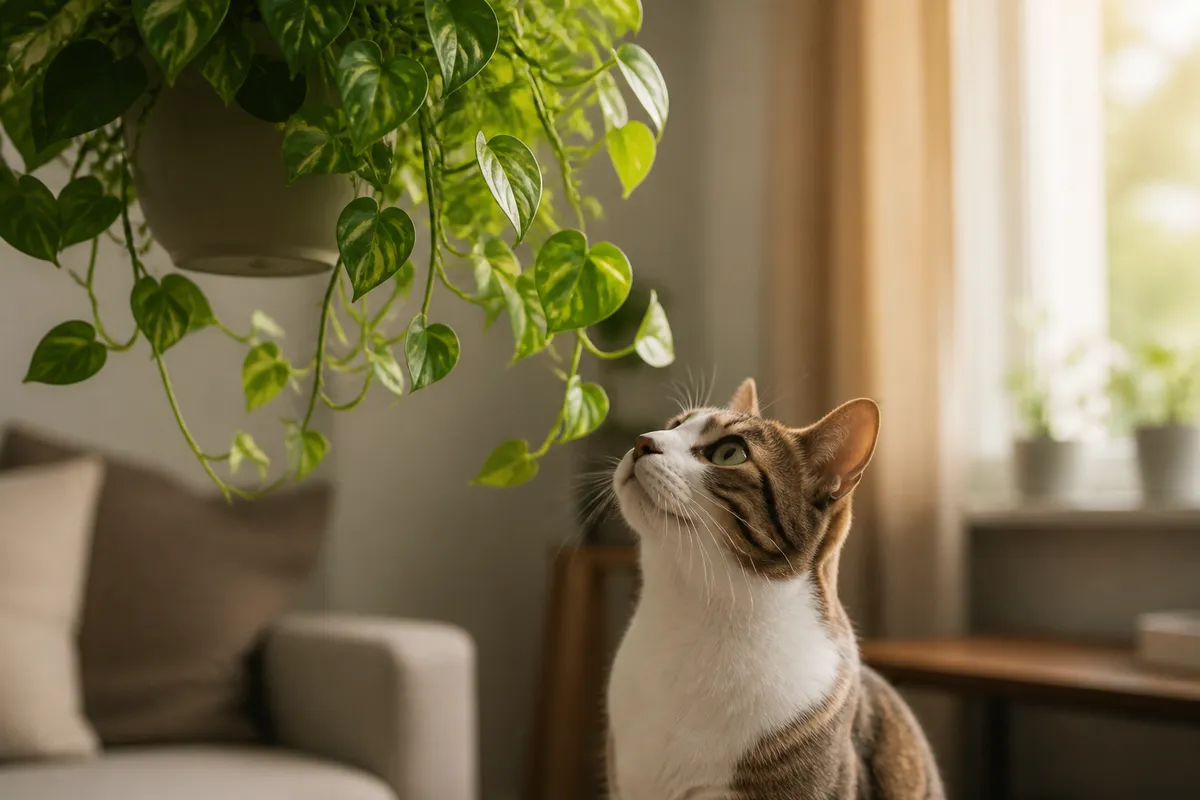
Devil’s ivy trails from shelves in countless UK flats — but is pothos toxic to cats? Yes. Pothos (Epipremnum aureum) contains insoluble calcium oxalate crystals that cause intense mouth pain, drooling, and vomiting when chewed.
Mouth pain is a warning, not a minor inconvenience
If your cat is pawing at their face, drooling heavily, or refusing food after chewing a trailing vine, call your vet. Most exposures cause irritation rather than organ failure — but you still need professional advice, especially for kittens.
How pothos harms cats
When a cat bites into a pothos leaf or stem, needle-like calcium oxalate crystals embed in the soft tissues of the mouth and throat. That triggers immediate pain, swelling, and excessive salivation. Cats often spit out the plant quickly — which limits how much they swallow — but the experience is distressing and can put them off eating or drinking for a while.
The hanging-plant myth
Many owners hang pothos “out of reach,” assuming cats cannot climb. In reality, cats jump onto bookcases, curtain rails, and hanging macramé with ease. Trailing vines that brush furniture become irresistible toys. If a leaf can dangle within leaping distance, it is not cat-safe placement. The only reliable approach is to choose plants that are non-toxic or keep toxic species in rooms cats never enter.
Dose and severity
Severity usually tracks how much tissue was chewed and how sensitive your individual cat is. A single bite often causes local irritation; larger amounts swallowed can lead to more vomiting and temporary appetite loss. Pothos is generally less catastrophic than sago palm or true lilies, but that does not make it a safe houseplant. See where it sits among other risks in our houseplants toxic to cats list.
Symptoms after chewing pothos
- Sudden drooling and lip-smacking
- Pawing at the mouth or face
- Vomiting or retching
- Reluctance to eat or drink
- Swelling of the tongue or lips in more severe cases
If breathing looks laboured or swelling seems to affect the airway, treat it as an emergency and go to a clinic immediately. For a broader symptom checklist, read our cat poisoning symptoms guide.
What to do next
Gently wipe away any plant material from the fur and mouth if your cat will tolerate it — do not force water down their throat. Offer fresh water once they are calm. Call your vet with a photo of the plant. Follow what to do if your cat ate poison for a clear step-by-step, and bring the plant sample or packaging if you have it.
Swap the trailing vines
Replace pothos with cat-safer options such as spider plants, calatheas, or Boston ferns. Browse our safe indoor plants for cats guide before your next garden-centre trip.
Why the pain starts so fast
Calcium oxalate crystals act mechanically — they physically irritate tissue on contact — so signs often begin while the cat is still next to the plant. That sudden reaction can look dramatic even when the total amount swallowed is small. Owners sometimes worry that intense drooling means organ failure; with pothos the main story is pain and inflammation, but airway swelling or dehydration still deserve a professional check. Keep a photo of the vine and note the time of chewing so your vet can triage quickly.
Propagation jars and cuttings
Pothos is famous for rooting in water on sunny windowsills. Those cuttings are soft, dripping, and perfectly placed for batting paws. Freshly snipped stems can ooze sap that sticks to fur and gets licked off during grooming. If you love propagating, use a closed cabinet greenhouse or switch to non-toxic cuttings. Shared housemate desks and office corners are common blind spots — a “temporary” jar becomes a permanent hazard.
Prevention in small homes
In compact UK flats, vertical gardening often means trailing vines at cat-nose height. Prefer closed terrariums for toxic species, or switch entirely to non-toxic plants. Enrichment — puzzle feeders, climbing trees, and scheduled play — reduces boredom chewing. Rotate toys so vines are less novel. Scan mystery vines labelled “devil’s ivy,” “golden pothos,” or “money plant” before they come home. If you already own pothos and cannot rehome it yet, confine it to a room with a door that stays shut whenever cats are loose.
Frequently asked questions
Is pothos the same as philodendron?
They are different plants but both contain calcium oxalate crystals and cause similar oral irritation. Treat both as toxic to cats and keep them out of reach — or better, out of the home.
Can cats die from eating pothos?
Fatal outcomes are uncommon compared with true lily or sago exposures, but severe swelling, dehydration from vomiting, or secondary complications can still become serious. Always seek veterinary advice rather than assuming it will pass.
Will cutting the plant back make it safer?
No. Fresh cuttings and sap can still irritate, and regrowth brings new leaves within reach. If you share a home with cats, rehoming the plant is safer than constant trimming.