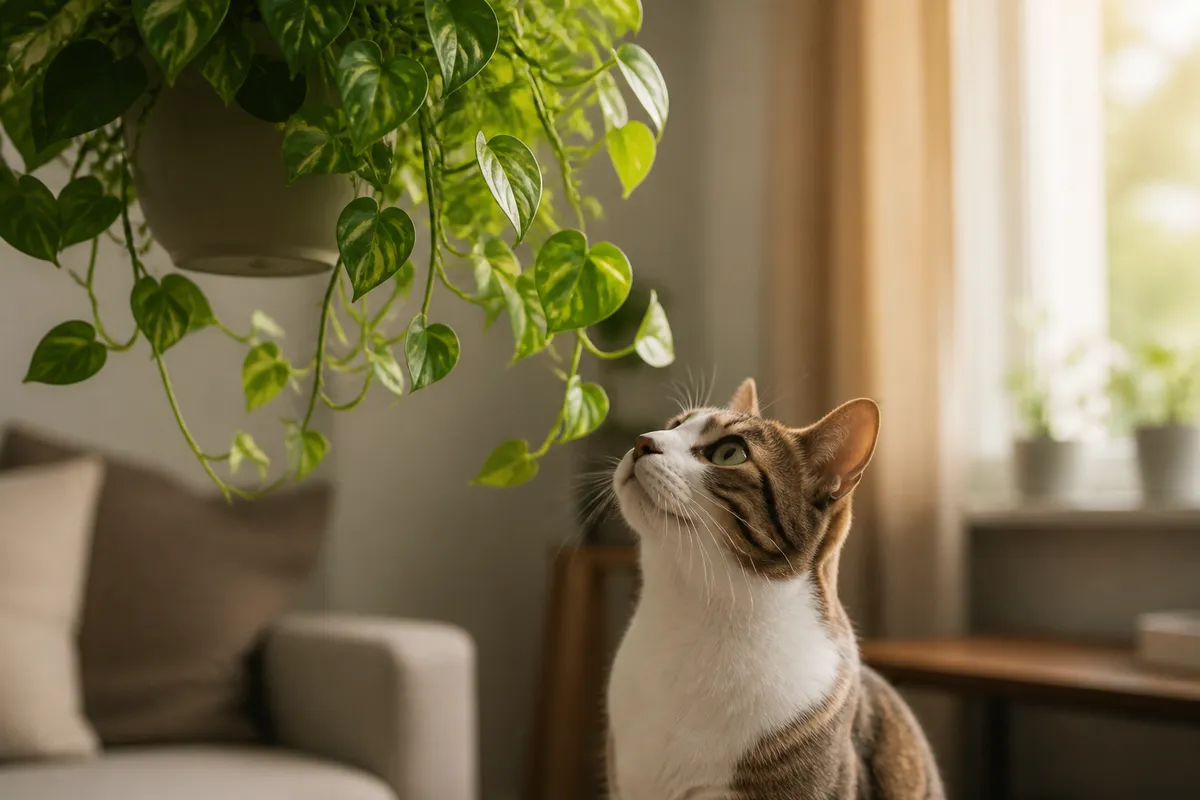
Are Peace Lilies Toxic to Cats? Not a True Lily — Still a Problem
Peace lilies are popular “easy care” houseplants — and their name causes dangerous confusion. Are peace lilies toxic to cats? Yes, but not in the same way as true lilies. Peace lilies cause painful oxalate irritation; true lilies can cause fatal kidney failure. Knowing the difference changes how urgently you act.
Identify the plant before you panic — then still call your vet
If you are unsure whether the plant is a peace lily or a true lily (Easter, tiger, stargazer, Asiatic), treat it as a true-lily emergency until proven otherwise. True lily exposure needs immediate veterinary care. Read why lilies are dangerous to cats if there is any doubt.
Peace lily vs true lily: the critical difference
Peace lilies (Spathiphyllum) are not members of the true lily family (Lilium and Hemerocallis). They contain insoluble calcium oxalate crystals — similar to pothos and philodendron — which stab the mouth and gut lining when chewed. True lilies contain an unidentified toxin that destroys kidney tissue; even pollen groomed from fur can be enough. Our are lilies toxic to cats guide covers which bouquet flowers sit in which category.
- Peace lily: Oxalate irritation — drooling, pawing at the mouth, vomiting; usually local and gastrointestinal.
- True lily: Kidney failure risk — emergency decontamination and IV fluids; do not wait for symptoms.
- Calla lily: Also not a true lily; typically oxalate-type irritation, still not cat-safe.
Dose and severity for peace lilies
Most cats that nibble peace lily leaves experience oral pain and temporary digestive upset. Large amounts swallowed can worsen vomiting and reduce appetite. While peace lily exposure is generally less catastrophic than true lily poisoning, kittens can dehydrate quickly and any swelling near the airway needs urgent assessment. Never use “it’s only a peace lily” as a reason to skip professional advice.
Symptoms after chewing a peace lily
- Immediate drooling and mouth discomfort
- Head shaking or pawing at the face
- Vomiting
- Difficulty swallowing or reluctance to eat
If you see reduced urination, severe lethargy, or collapse after any lily-type plant, assume worst-case kidney involvement until a vet rules it out. Cross-check signs with the cat poisoning symptoms checklist.
What to do
Photograph the plant, remove access, and call your vet. Mention that you believe it is a peace lily (Spathiphyllum) but ask them to confirm. Do not induce vomiting at home. Offer water if your cat wants it. Bring a leaf sample if safe to collect. Use our emergency checklist so you have packaging, timing, and symptoms ready.
Bouquets and garden-centre labels
Shop assistants sometimes call many white flowers “lilies.” Always check the Latin name. When in doubt, leave the plant at the till — or scan it with Toxic Kitty before it enters a cat household.
How to tell peace lily from true lily at a glance
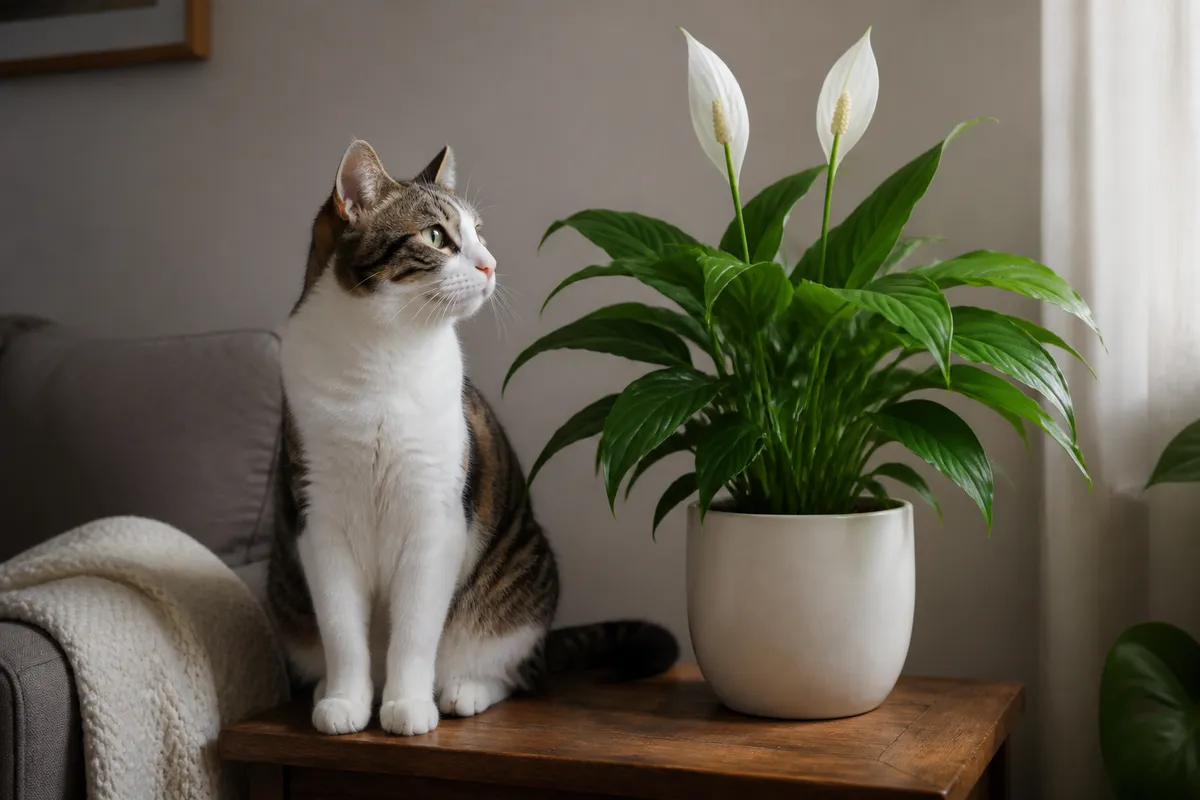
Peace lilies usually show a single white spathe (a hood-like bract) around a central spadix, with glossy green leaves growing from soil level — not tall flowering stems packed with classic lily trumpets. True lilies often have prominent stamens that shed dusty pollen onto tables and fur. That said, visual ID under stress is unreliable. If someone arrives with a bouquet and you cannot name the flowers confidently, isolate the arrangement away from cats and verify before the vase stays overnight. A quick scan or a call to your vet nurse while you send a photo is cheaper than a weekend of IV fluids.
Why the name causes emergencies
Search results and plant tags both use the word “lily,” so owners understandably assume every lily-shaped plant shares one risk level. The clinical difference is stark: oxalate pain versus acute kidney injury. Animal PoisonLine and veterinary teams would rather you over-react to a peace lily than under-react to a tiger lily. Keep both out of cat homes if you want zero ambiguity — especially in multi-cat households where one curious kitten sets the rules for everyone.
Prevention
Skip peace lilies if you have cats that chew greenery. Choose clearly non-toxic foliage instead, and keep all bouquet water out of reach — vase water from true lilies is especially dangerous. Educate guests who bring sympathy flowers; many well-meaning arrangements include real lilies. Put a note on your hallway console during holidays when flower deliveries spike. If you work from home with plants on video-call shelves, double-check those “background greens” too.
Frequently asked questions
Can peace lilies cause kidney failure in cats?
Peace lilies are not known for the acute kidney failure associated with true lilies. Their main risk is oxalate crystal irritation. Misidentification is the real danger — if the plant might be a true lily, act as if kidneys are at risk.
Is peace lily pollen as dangerous as tiger lily pollen?
True lily pollen groomed from fur is a classic kidney-failure pathway. Peace lily pollen is not in the same category, but chewing leaves still hurts. When pollen is on a cat’s coat and you cannot identify the flower, seek urgent vet care.
Should I remove peace lilies even if my cat never chews plants?
Curiosity changes with boredom, new kittens, or guests leaving doors open. Many owners only discover a chewing habit after the first incident. Safer plants remove that gamble entirely.