Can Cats Eat Mushrooms? Garden and Wild Mushroom Risks
Warm days and wet autumn nights push mushrooms through British lawns, pots, and compost heaps. Most cats ignore them. Some bat, chew, or eat a cap the size of a coin. You cannot tell a “safe” mushroom from a deadly one by colour, and you should not try. If your cat had a mushroom in its mouth, get veterinary advice the same day — the same urgency we describe in what to do after a toxic nibble.
Do not identify wild mushrooms at home
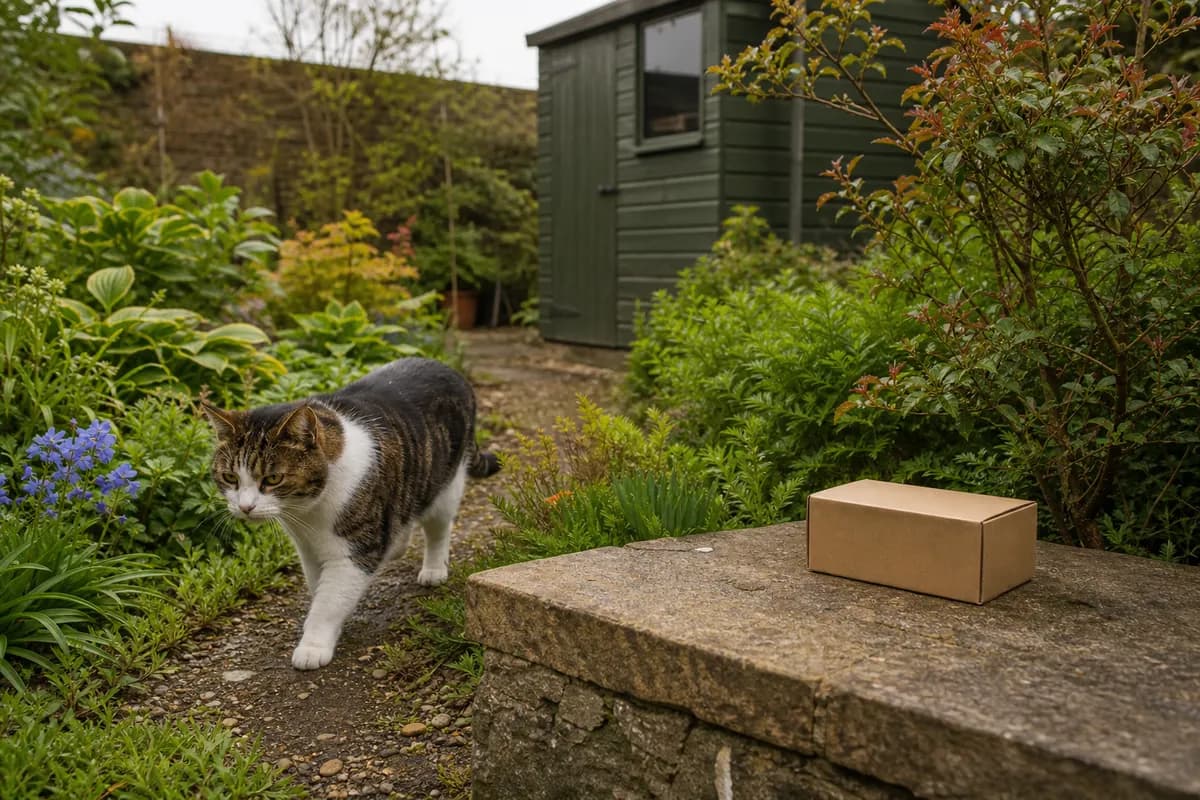
Apps and folklore misidentify fungi constantly. If ingestion is possible, collect a sample in paper (not plastic) if it is safe to do so, photograph the site, and call your vet. Do not wait for liver-failure signs that can take many hours to appear.
Why autumn lawns become a buffet
Mushrooms are the fruiting bodies of fungi living in soil, mulch, and dead wood. After rain they appear overnight on lawns, in gravel, around tree roots, in wood-chip play areas, and on forgotten bags of compost. Indoor cats still meet them: a pot plant left in the garden, a tray of damp soil in the porch, or a mushroom bought for risotto left on the counter. Outdoor cats hunt in the same long grass where fungi fruit.
Shop mushrooms (cultivated button, chestnut, portobello) are a different question from wild ones. A stolen piece of cooked supermarket mushroom is usually a tummy-upset problem, not a named toxin — though garlic butter, onions, and stock cubes on those mushrooms are not harmless. Wild garden fungi are the ones that belong in the emergency bucket. For leftover human food more generally, see human foods cats should never eat.
What mushroom poisoning can look like
Different fungi damage different organs. Some mainly irritate the gut: vomiting, diarrhoea, drooling, abdominal pain. Some affect the nervous system: wobbliness, tremors, odd behaviour. A smaller group can injure the liver, with a deceptive quiet period before jaundice, collapse, or bleeding problems. You will not know which group you are in from a photo of a beige cap. That is why clinics treat unknown mushroom ingestion seriously even when the cat still looks bright.
- Gut signs: vomiting, diarrhoea, drooling, refusing food
- Neurological signs: wobbliness, disorientation, tremors, unusual vocalising
- Later, more severe signs: jaundice, extreme lethargy, collapse — these can lag many hours behind the chew
Cross-check what you see with the symptoms timeline so you can describe onset clearly. Note whether other animals or children had access to the same patch.
Garden chemicals sitting next to fungi
Autumn lawns also collect slug pellets, lawn feed, and leftover weed killer. A cat that was “nosing mushrooms” may have licked a pellet or a treated patch as well. Mention every product used on that grass in the last fortnight. Our guides to slug pellets and garden chemicals explain why those exposures are their own emergencies.
What to do if you catch them in the act
Take the remaining mushroom away. If you can bag a sample without touching it with bare hands, do — paper bag, cool, not sealed sweaty plastic. Wipe paws if they are muddy with obvious fungal debris. Then call the clinic. Do not give milk, salt, or charcoal from the barbecue. Do not post the photo in a Facebook group and wait for consensus. Use the emergency checklist so you arrive with time, amount, and a sample.
Making the garden less interesting
You will not sterilise a British autumn. You can knock fruiting bodies down daily when they appear in a cat run, keep compost bins closed, and stop putting food scraps on an open heap. Supervise outdoor time after heavy rain. Indoor cats should not have access to balcony planters that sit wet for a week. If mushrooms keep erupting in one bed, improve drainage rather than spraying mystery fungicides your cat will walk through.
Are shop mushrooms toxic to cats?
Plain cooked cultivated mushrooms are not in the same category as wild garden fungi. The danger is usually the recipe — onion, garlic, butter, salt — and the choking size of a raw cap. Still tell the vet if a large amount disappeared.
Compost, wood chip and balcony pots
Open compost heaps are mushroom factories. So are decorative wood-chip beds and the saucer under a neglected outdoor pot. If you keep an indoor cat, do not store damp potting compost in the porch where they can dig. If you keep an outdoor cat, shut the compost lid and pick fruiting bodies from the run every wet morning for a week after rain, not once a month.
Foraging culture online makes people confident they can name a cap. That confidence does not transfer to a 4 kg cat. Even mycologists use more than a phone photo. Your job is sample, time, and transport — not a species essay. If the cat is already wobbly or having diarrhoea with blood, skip the sample hunt and go.
Indoor “grow your own” kits
Mushroom grow kits on kitchen counters are cultivated species, but they still produce a moist block a cat will scratch. Spores plus substrate look like litter. Keep kits in a closed room. Shop mushrooms left to fruit in the veg drawer are a smell problem more than a toxin, until garlic butter joins them.