
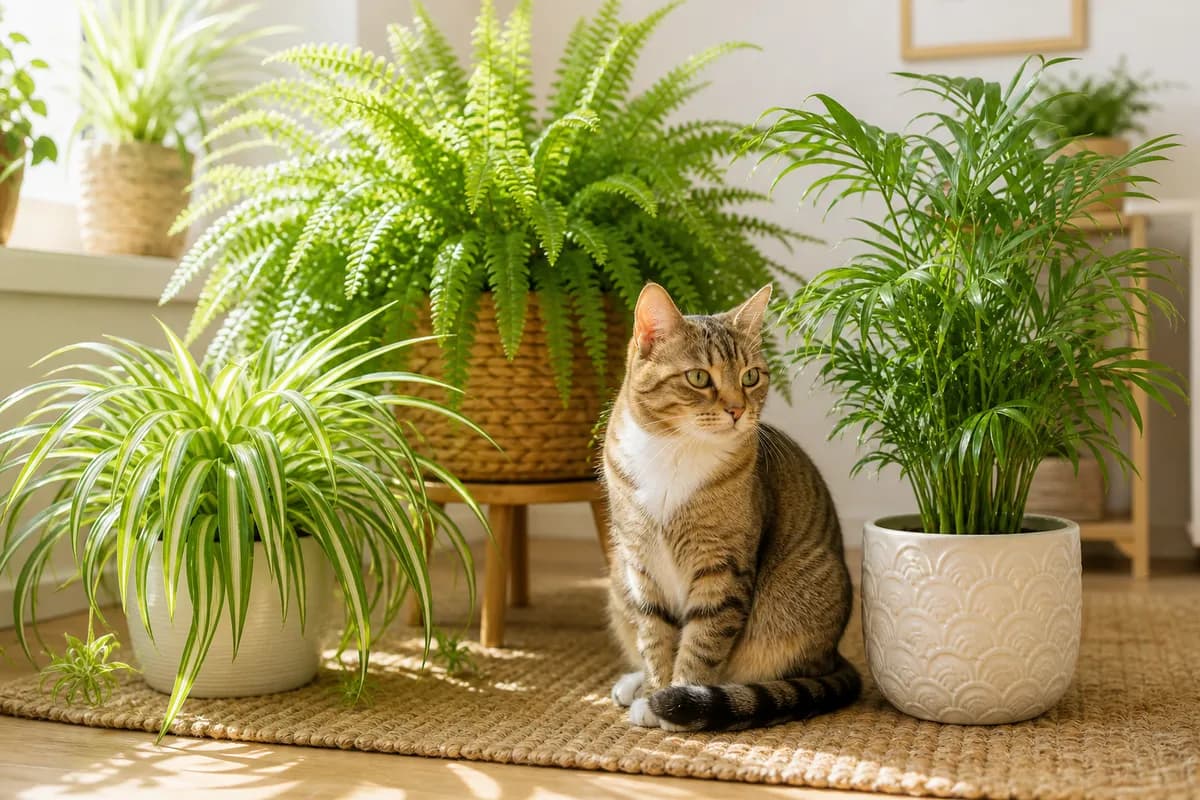
Is areca palm toxic to cats? No. The ASPCA lists Dypsis lutescens as non-toxic to cats. Animal PoisonLine's VPIS pet-safe list includes areca palm, bamboo palm and butterfly palm under Chrysalidocarpus lutescens, an older name for the same plant. Sago palm is not this plant. Here is how to tell them apart, and when a chewed palm is still a vet call.
Confirm it is not a sago palm
If the plant might be a cycad or sago palm, stop and treat it as an emergency. See the sago palm guide. If you are sure it is an areca, cane or butterfly palm and your cat ate a lot or looks unwell, still call a vet. Do not make them vomit at home.
What the sources say
The ASPCA areca palm listing marks Dypsis lutescens as non-toxic to cats, dogs and horses. Extra common names there are golden butterfly palm, cane palm, golden feather palm and yellow palm. The cane-palm listing on the same database repeats those names and the non-toxic mark. Animal PoisonLine lists areca palm, bamboo palm and butterfly palm as Chrysalidocarpus lutescens (older name Areca lutescens) on the pet-safe plant list, and notes that ingestion of any plant material may still cause mild gastrointestinal upset.
Cats Protection does not name areca palm on its short web list. It does name parlour palm (Chamaedorea elegans) and kentia palm as indoor options in the safer column, and it names sago palm and fishtail palm (Caryota mitis) as problem plants. We do not stretch those names into an areca verdict. The UK confirmation we use is Animal PoisonLine. Shop stickers that only say palm are not enough.
Sago palm (Cycas revoluta) is one of the deadliest houseplants we cover. It is a cycad, not a true palm. Use sago palm and cats if the trunk is stout and the leaves are stiff and feathered from a central crown. Areca has clustered golden canes and softer fronds. When you cannot tell, take the pot and treat it as urgent. This page sits in the toxic plants for cats hub next to safe indoor plants for cat owners.
How cats still get into trouble
Areca palms are large floor plants. Cats climb the canes, shred fronds, and dig the pot. Dry leaf tips become toys. Slow-release fertiliser sits in the soil. A kitten can swallow a long fibre of frond. None of that is a named areca toxin. It is still a reason to watch the pot.
- Frond fibres: stringy leaf that can irritate a gut or, rarely, act like a linear foreign body if a lot is swallowed
- Soil and fertiliser: pellets and damp compost that smell like a litter tray
- Pesticides: shop palms may have been sprayed. Wipe new fronds with plain water
- Wrong palm: sago, yucca or an unnamed office palm sold as the same thing
Yucca is a different toxic houseplant on Cats Protection's indoor problem list. Dracaena is sometimes sold as an 'office palm' and is not safe: see is dracaena toxic to cats. Parlour palm is a smaller true palm on the safer lists. If you already own a spider plant as easy greenery, see is a spider plant toxic to cats for the same non-toxic-but-not-a-salad rule.
When to call a vet
Call if they ate a large amount, keep vomiting, might have swallowed a long fibre, you cannot confirm the species, or they look unwell. Animal PoisonLine says that if a pet repeatedly chews plants and has gut upset, it is better to remove the plant. PDSA says contact a vet if you think a pet ate something they should not, even when the plant is not on a poison list. The ASPCA notes that any plant material may cause vomiting and gut upset.
Say areca, cane palm, butterfly palm or Dypsis lutescens if you have the sticker. If it might be a sago, say that. Do not induce vomiting. Use what to do if your cat ate poison and cat poisoning symptoms when identity is shaky. In the UK, Animal PoisonLine can help you judge urgency when the surgery is closed.
Keeping a true palm
Check the Latin name before the pot comes home. Dypsis lutescens, Chrysalidocarpus lutescens and the ASPCA common names above are the plant this page covers. Cycas revoluta is not. Give climbing cats something else to shred. Keep fertiliser off the soil surface. Scan a shop palm with the cat toxin checker app in the queue, not after it is already a climbing frame.
People search is areca palm toxic to cats because every 'palm' looks like the deadly sago in a phone photo. For Dypsis lutescens, ASPCA and Animal PoisonLine say no. The jobs are naming the plant, watching the fronds, and never guessing from the word palm alone.
Rented-flat 'statement palms' are often unnamed. Ask the landlord or the previous tenant for the sticker. If nobody knows, treat it as unknown and keep the cat off it until you have a name. A photo of the whole plant, including the base of the canes, helps a clinic more than the word palm. Sago has a stout, rough trunk. Areca has several thinner golden stems.
After a known areca chew, the watch is a messy tray or a cat that hides. Call back if vomiting continues, if a long fibre is missing, or if they strain in the litter tray. Do not put the same pot back as a climbing frame. Offer a scratch post and cat grass so the fronds are less interesting.
Related guides
Frequently asked questions
- Is areca palm the same as sago palm?
- No. Sago palm is a cycad and one of the deadliest houseplants we cover. Areca is a true palm with clustered golden canes. If you cannot tell them apart, take the pot and treat it as urgent.
- Does Cats Protection list areca palm?
- Not on its short web list. It does list parlour palm and kentia among safer indoor palms, and sago and fishtail palm as problems. The UK confirmation we use for areca is Animal PoisonLine.
- Can the fronds still cause trouble?
- Yes. Animal PoisonLine notes that any plant material may cause mild gut upset. Long fibres, fertiliser and a mislabelled sago are the extra risks.
- What name should I say on the phone?
- Areca, cane palm, butterfly palm or Dypsis lutescens if you have the sticker. If it might be a sago, say that first.
Sources
Authoritative organisations that cover this topic. These links open their public poison-control or toxicology pages, not a specific diagnosis for your cat.