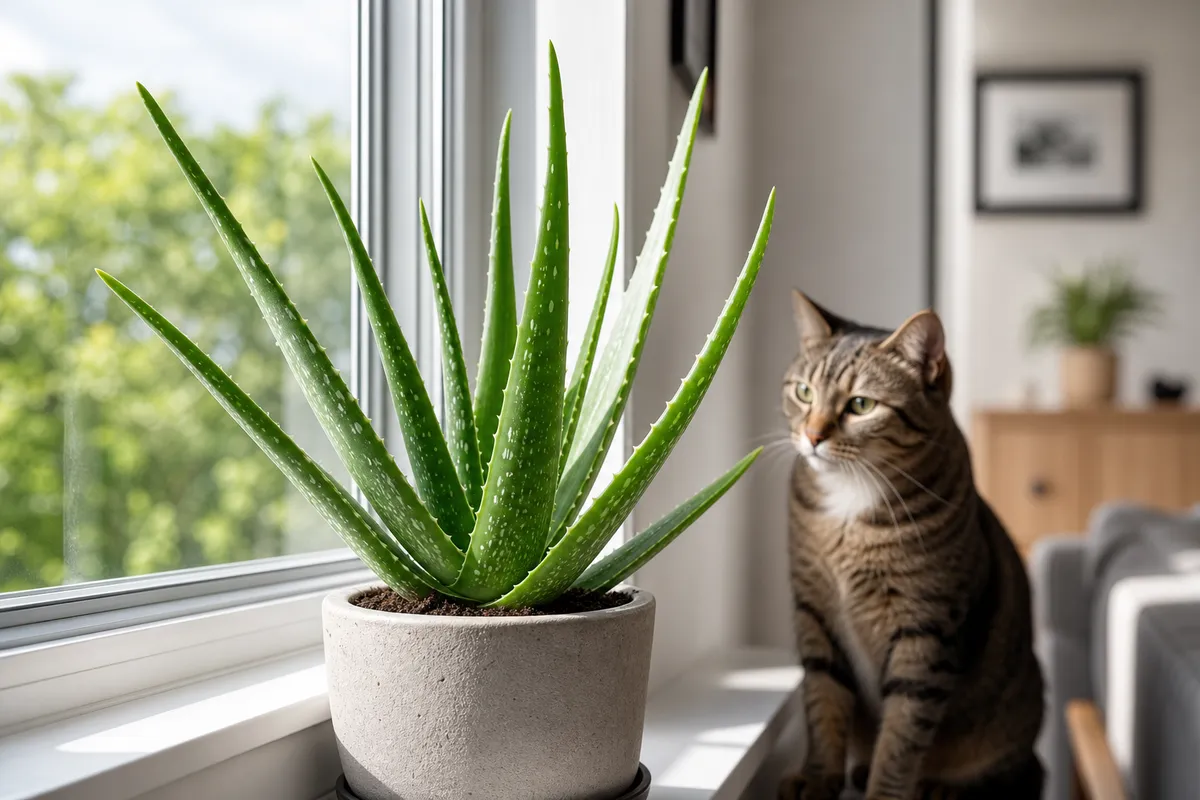
Is dracaena toxic to cats? Yes, mildly. The ASPCA lists Dracaena species as toxic to cats because of saponins, with signs that include vomiting (occasionally with blood), depression, anorexia, hypersalivation and dilated pupils. Here is how corn plants, dragon trees and lucky bamboo usually reach a cat, what the named sources actually say, and what to do if a leaf is already chewed.
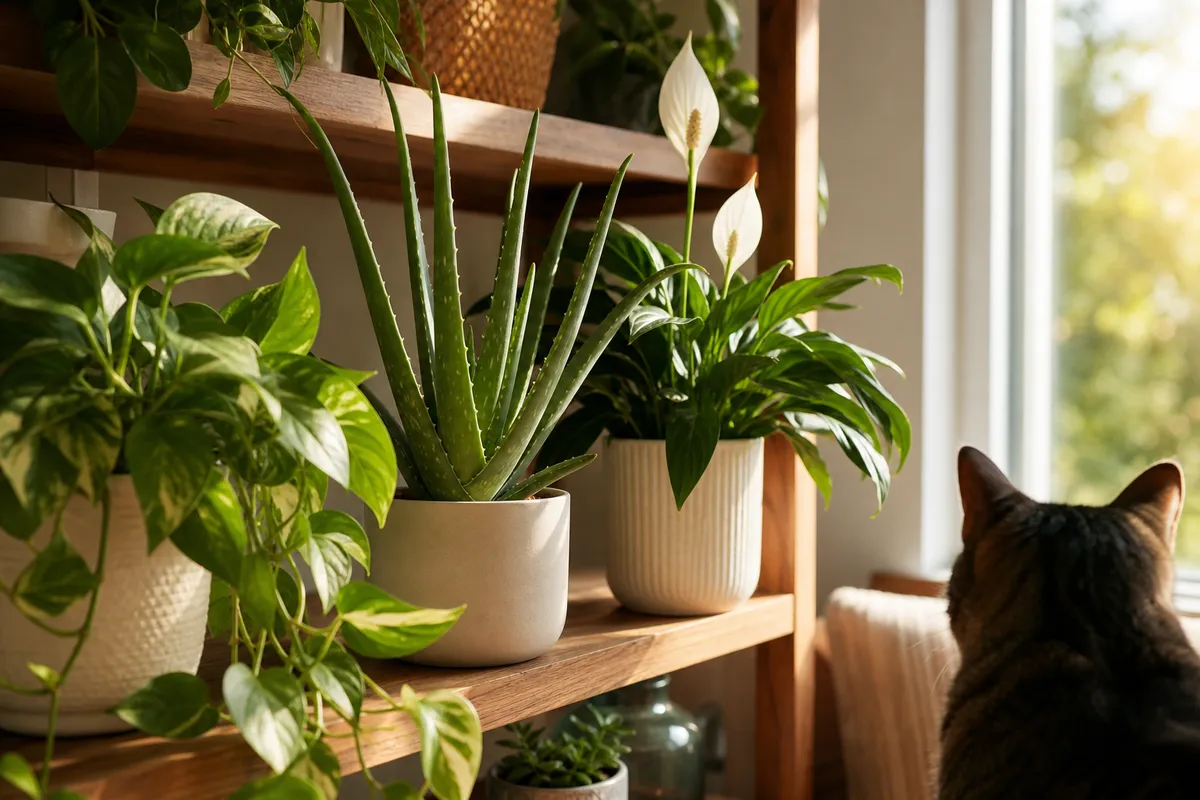
Treat a chewed dracaena as a vet question
Remove the pot, keep a leaf or the nursery label, and phone your vet. Do not wait to see if they seem fine. Do not make them vomit at home. Most listed signs are gut and energy changes, but PDSA still groups dracaena with plants that can cause more than a mild tummy upset.
What the sources say about dracaena
The ASPCA toxic and non-toxic plants list names corn plant, cornstalk plant, dragon tree and ribbon plant as Dracaena species. The toxic principle given is saponins. The clinical signs listed are vomiting (occasionally with blood), depression, anorexia, hypersalivation and dilated pupils in cats. That is the picture we use on this page. We do not add organ-failure claims the listing does not make.
PDSA's poisonous plants guide lists Dracaena fragrans and related species among houseplants to avoid, and groups Cordyline and Dracaena with plants that can cause more serious symptoms than a simple upset stomach. Blue Cross lists dragon tree (Dracaena species) among plants that are less toxic than true lilies and that usually cause mild symptoms, such as stomach upsets, unless a large amount is eaten. Cats Protection's indoor plant guide lists Dracaena, including corn plant, dragon tree and lucky bamboo, among problem houseplants. Those UK pages agree it is not a cat-safe windowsill plant. They do not all use the same severity wording, so we keep both: call the vet, and do not treat it as a true lily emergency unless you cannot name the plant.
Lucky bamboo sold in pebbles is usually Dracaena sanderiana, not a true bamboo. Ribbon plant is an awkward nickname: the ASPCA also uses it for dracaena, and spider plant is sometimes sold under the same name. If you cannot tell them apart, take the pot. This guide sits in our toxic plants for cats hub.
How cats meet corn plants and dragon trees
Dracaena is sold as easy indoor greenery: a tall corn plant in a sitting-room corner, a compact dragon tree on a desk, or a twist of lucky bamboo in a bathroom glass. Cats bat the long leaves, climb the cane, and drink the pebble-tray water. Fallen leaves stay interesting on the carpet. A bored indoor cat will shred a ribbon-like leaf the way they shred grass.
- Houseplants: corn plants, dragon trees and lucky bamboo on sills, desks and pebble trays
- Broken leaves: chewed tips on the floor, then a second course while you are out
- Tray water: stale water around lucky bamboo, sometimes with fertiliser tablets
- Lookalikes: yucca, cordyline and unnamed 'office plants' that share the same strap leaves
Garden-centre mixed pots sometimes pair a dracaena with a safer fern. If two plants share a bowl, identify both. Compare the chewed leaf with our 30 toxic houseplants guide and with snake plants. If the plant might be a true lily, treat it as an emergency: see why lilies are so dangerous.
Signs the sources name
ASPCA's listed signs after dracaena are vomiting (occasionally with blood), depression, anorexia, hypersalivation and dilated pupils in cats. Blue Cross's general plant-poisoning signs include drooling, not eating, low energy, vomiting or diarrhoea, and mouth ulcers. Watch from the first chew. Phone if you saw them eat it.
- After chewing: drooling, lip licking, or walking away from a shredded leaf
- Later the same day: vomiting, a quiet cat, a skipped meal, or wide pupils
- Call sooner if: vomiting will not stop, there is blood in vomit, a kitten is involved, or you cannot confirm it was dracaena
Cross-check wording with cat poisoning symptoms so the phone call is specific. Stopping weeing, collapse, or a supermarket bouquet you cannot name is a different urgency. When in doubt, describe the plant honestly and travel as if it might be worse.
What to do immediately
Move the pot. Pick up broken leaves. If sap is on the coat and you can wipe it calmly, do that so they stop grooming it. Do not induce vomiting unless a vet tells you to. Do not offer milk, salt or peroxide. Keep a leaf and the Latin name if the sticker is still on.
Phone your vet or an out-of-hours clinic. In the UK, Animal PoisonLine can help you judge urgency if the usual surgery is closed. Say dracaena, corn plant, dragon tree or lucky bamboo. Use what to do if your cat ate poison while you get the carrier. Take the leaf with you.
What the vet does, and how to live without this plant
There is no owner-bought antidote named on the ASPCA dracaena listing. Care is supportive. The team may check hydration, look in the mouth, and decide whether anti-sickness medicine, fluids or a period of observation are enough. Blood tests are more likely if vomiting persists, if the plant identity is shaky, or if your cat has other health problems. Ask what to watch at home. Our overview of how vets treat cat poisoning covers the shape of that visit.
Prevention is a house rule, not a taller shelf. Cats jump. Swap the corn plant for greenery on our safe indoor plants for cat owners list, and still check the Latin name. Yucca and cordyline are not safe stand-ins. If you want a photo check before the next office-plant gift comes home, use the cat toxin checker app to scan any plant. It does not replace a vet after a known chew.
People search is dracaena toxic to cats hoping the answer is no because the plant is everywhere in rented flats. The ASPCA listing is the better answer: the species is toxic to cats because of saponins. PDSA and Blue Cross still want it kept away from cats. Keep the leaf for the clinic.
Related guides
Frequently asked questions
- Is lucky bamboo the same as dracaena?
- Usually yes. Lucky bamboo sold in pebbles is typically Dracaena sanderiana, not a true bamboo. Cats Protection lists lucky bamboo with corn plant and dragon tree. Treat it as dracaena until a Latin name says otherwise.
- Is this as serious as a true lily?
- No. True lilies can cause kidney failure. ASPCA's dracaena signs are gut upset, low energy, drooling and dilated pupils. PDSA still groups dracaena with plants that can cause more than a mild tummy upset, so phone rather than waiting.
- What should I take to the vet?
- A leaf and the nursery label. Say dracaena, corn plant, dragon tree or lucky bamboo, roughly how much is missing, and when they chewed it.
- Can I keep it on a high shelf?
- Cats jump. The safer option in a cat home is to replace it with a named non-toxic plant. If you keep it, it must be in a room the cat never enters.
Sources
Authoritative organisations that cover this topic. These links open their public poison-control or toxicology pages, not a specific diagnosis for your cat.
Scan the office plant before it sits on the sill
Check dracaena, lucky bamboo and lookalike strap-leaf plants with Toxic Kitty. Part of our toxic plants for cats guides.