Can Cats Eat Peanut Butter?
A lick of peanut butter from a spoon looks like a harmless treat — but for cats it is rarely a good idea. If you are asking can cats eat peanut butter, the honest answer is: plain peanut butter is not ideal, and sugar-free versions can be dangerous. Here is how to check labels, avoid choking risks, and rethink hiding pills in sticky pastes.
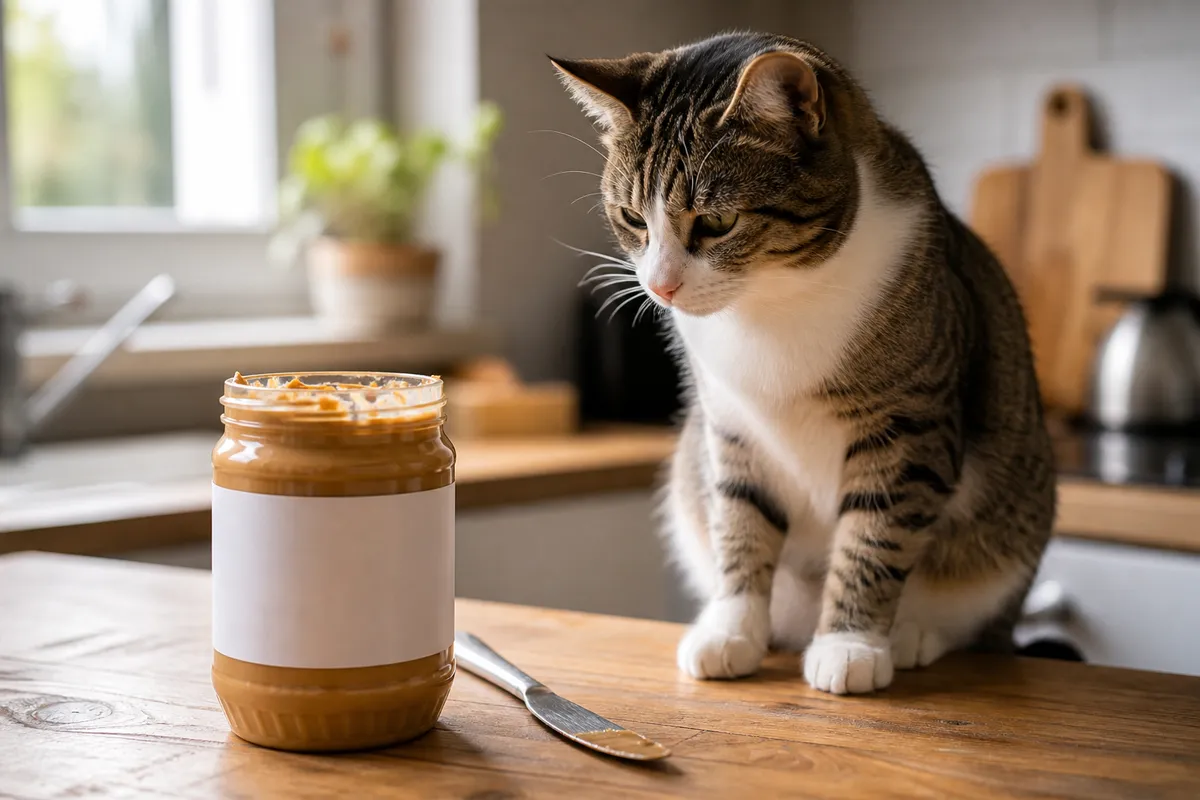
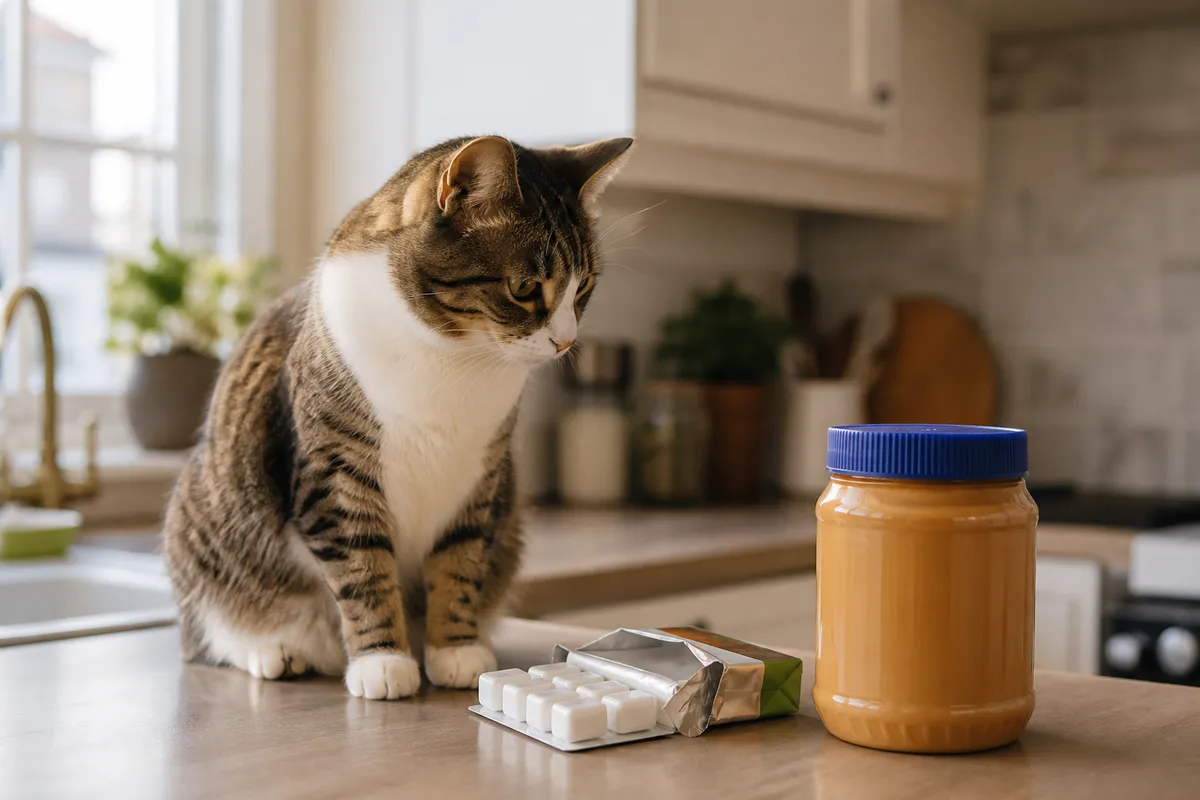
Check the label for xylitol first
Some sugar-free peanut butters use xylitol (also listed as birch sugar or E967). If your cat may have eaten a xylitol product, call your vet or an emergency clinic straight away — do not wait for symptoms.
Is peanut butter toxic to cats?
Plain peanut butter made from peanuts and a little salt is not typically classed as a classic cat toxin in the same way as chocolate or lilies. The bigger problems are ingredients, texture, and how people use it. Cats are obligate carnivores — they do not need peanut butter for nutrition, and many struggle to digest rich, fatty, sugary pastes. What feels like a shared moment on the sofa can become vomiting, diarrhoea, or a greasy tummy ache that puts them off proper food.
A tiny smear of a xylitol-free brand might not send every cat to intensive care, but it can still cause tummy upset, and it is a poor habit to encourage. Treats should stay cat-appropriate; peanut butter belongs in the human cupboard, not as a daily snack. If your cat already scavenges toast crusts and sandwich leftovers, tightening kitchen habits matters more than debating whether one lick is "allowed".
Xylitol in peanut butter brands
Xylitol is a sugar substitute found in some sugar-free gums, sweets, toothpastes, and — critically — certain peanut butters and nut spreads. Dogs are famously sensitive; cats are less often discussed in the same breath, but xylitol products are still the wrong thing to leave within reach or use as a treat. Our guide on whether xylitol is toxic to cats explains why reading every label matters before anything sticky leaves the jar.
- Read the full ingredients list: Look for xylitol, birch sugar, or E967. "No added sugar" does not automatically mean xylitol-free.
- Watch "natural" and diet ranges: Reduced-sugar or keto-style jars are more likely to use alternative sweeteners. When in doubt, leave it.
- Do not assume UK supermarket brands are all the same: Formulas change. Check the jar in your hand every time, especially if you bought a new "light" version.
Choking and sticky texture risks
Peanut butter is thick and clingy. Cats do not chew sticky pastes the way people do, and a large blob can stick to the roof of the mouth, coat the tongue, or make swallowing awkward. That is uncomfortable at best and a choking or breathing concern at worst — especially for kittens and small cats. You may see frantic pawing at the mouth, drooling, or gagging after a stolen spoonful.
If you ever use a tiny amount under veterinary guidance (for example to help give medication), smear a rice-grain amount on a spoon or paw rather than offering a spoonful. Never leave an open jar where a cat can scoop a mouthful unsupervised. Wipe worktops after breakfast so residual smears do not become a midnight snack.
Hiding pills in peanut butter — why it backfires
Many owners try to hide tablets in peanut butter. Cats are often clever enough to lick the paste and spit the pill. Worse, you may be giving a medicine meant for humans or dogs, or a cat tablet that needs accurate timing and an empty stomach. Human painkillers and many other medicines are extremely dangerous — see our guide to human medicines that are toxic to cats.
- Ask your vet for a cat-friendly formulation — liquids, flavoured pastes, or smaller tablets.
- Use a proper pill giver or a technique your nurse demonstrates, not kitchen improvisation.
- Never crush or hide human tablets in peanut butter "just this once".
Other ingredients that cause trouble
Even without xylitol, many jars include sugar, palm oil, salt, chocolate swirls, or flavourings. High fat can trigger vomiting or, in susceptible cats, pancreatitis-type illness. Chocolate-peanut combinations add chocolate toxicity risk. If your cat raids the toast plate, note how much and what brand, then phone your practice for advice tailored to your cat's size.
Safer ways to reward your cat
Use a commercial cat treat, a lick of plain cooked chicken (no onion or garlic seasoning), or play as a reward. Scan unfamiliar foods in the Toxic Kitty app before sharing anything from your plate.
What to do if your cat ate peanut butter
Find the jar and photograph the ingredients. Estimate how much was eaten and when. If xylitol appears on the label, treat it as urgent. If the product is plain but your cat ate a large amount, vomits, drools, seems distressed, or struggles to swallow, call your vet. Follow the steps in our what to do if your cat ate poison guide while you prepare the packaging.
Frequently asked questions
Is a tiny lick of peanut butter okay for cats?
A rice-grain smear of a xylitol-free brand is unlikely to be a major toxin exposure for a healthy adult cat, but it is still unnecessary and can upset the stomach. It is not a recommended treat.
Can I use peanut butter to give my cat a pill?
Only if your vet specifically suggests it, and only with a xylitol-free product in a tiny amount. Many cats separate the pill from the paste. Ask for a better dosing method first.
What if the jar says sugar-free?
Treat sugar-free peanut butter as high suspicion until you have checked every ingredient for xylitol or similar sweeteners. When unsure, call your vet with the product name.