Can Cats Eat Cooked Chicken? Bones, Gravy and Sunday Roast Leftovers
Sunday roast season starts when the heating does. Chicken carcasses, gravy boats, and “just a bit of skin” become the most common kitchen hazard of the next four months. Cooked bones splinter. Gravy is often onion. This is not a raw-feeding debate — that lives on raw fish and raw meat. This is leftover roast physics, and it belongs next to BBQ hazards as the cold-weather version of the same mistake.
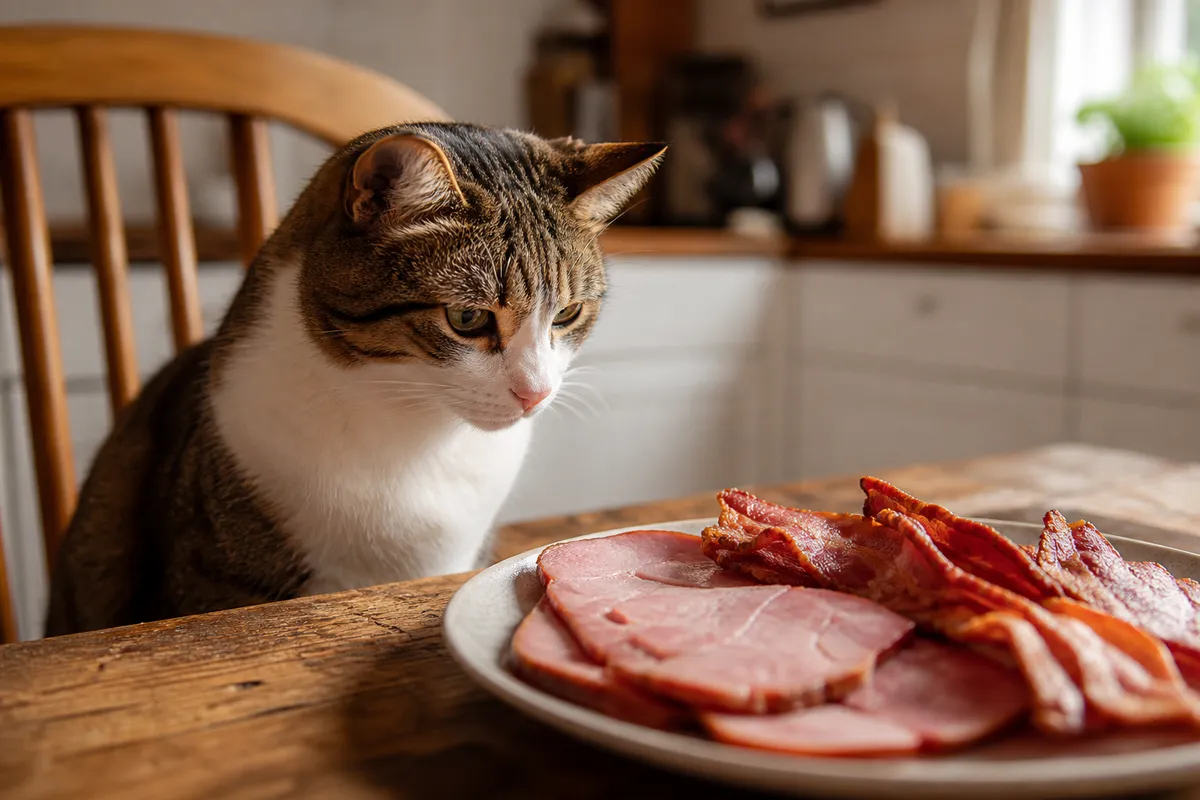
Cooked bones can perforate
If you know your cat ate cooked chicken, lamb, or turkey bone, call the vet even if they seem fine. Splinters do not always show in the first hour. Do not give bread “to wrap it”.
Why cooked bone is worse than raw bone in this context
Cooking dries and brittle-ises bone. It shatters into shards that can lodge in the mouth, throat, or gut, or punch through a wall of intestine. A cat bolting leftover roast does not chew like a dog with a supervised raw bone. They steal a rib, run, and crunch. Turkey carcasses at Christmas are the same geometry at a larger scale — start the habit now, in October, not on Boxing Day.
Plain cooked muscle meat without seasoning is not a toxin. It is also not a complete diet. The danger is almost always the extras: bones, skin in huge fatty amounts, stuffing, gravy, and the onion/garlic/stock-cube base. Those extras are why this page exists.
Gravy, stuffing and the onion problem
UK gravy is frequently onion, meat juices, and a stock cube. Stuffing often contains onion, sage, and sausage meat with salt. Alliums damage cat red blood cells. A cat that licked the roasting tin may have had more onion powder than meat. Read onions and garlic if that tin is still in the sink. For the wider leftover list, stay with human foods cats should never eat.
Signs of a bone problem versus a tummy upset
Immediate pawing at the mouth, gagging, or bleeding from the gums suggests a shard in the mouth. Later: vomiting, refusing food, hunched posture, straining, or a sudden cry when picked up. Those later signs can mean obstruction or perforation — that is not a wait-until-morning gastro case. Match behaviour to poisoning and emergency signs even though this is physical injury as much as toxin.
What to do
Remove remaining carcass. Do not put your fingers down the throat. Do not induce vomiting — that can drive shards the wrong way. Phone the clinic with an estimate of how much bone versus meat. Follow what to do for the call structure. If they are in obvious pain or collapsing, go to emergency care.
Roast-day kitchen rules
Bin carcasses in a lidded outdoor bin, not an open kitchen caddy. Cool trays go on the hob, not the table edge. Guests who “share a bit of chicken” need a script: no skin, no bone, no gravy, or nothing. The same rules we use in a cat-safe kitchen — height, lids, no overnight plates.
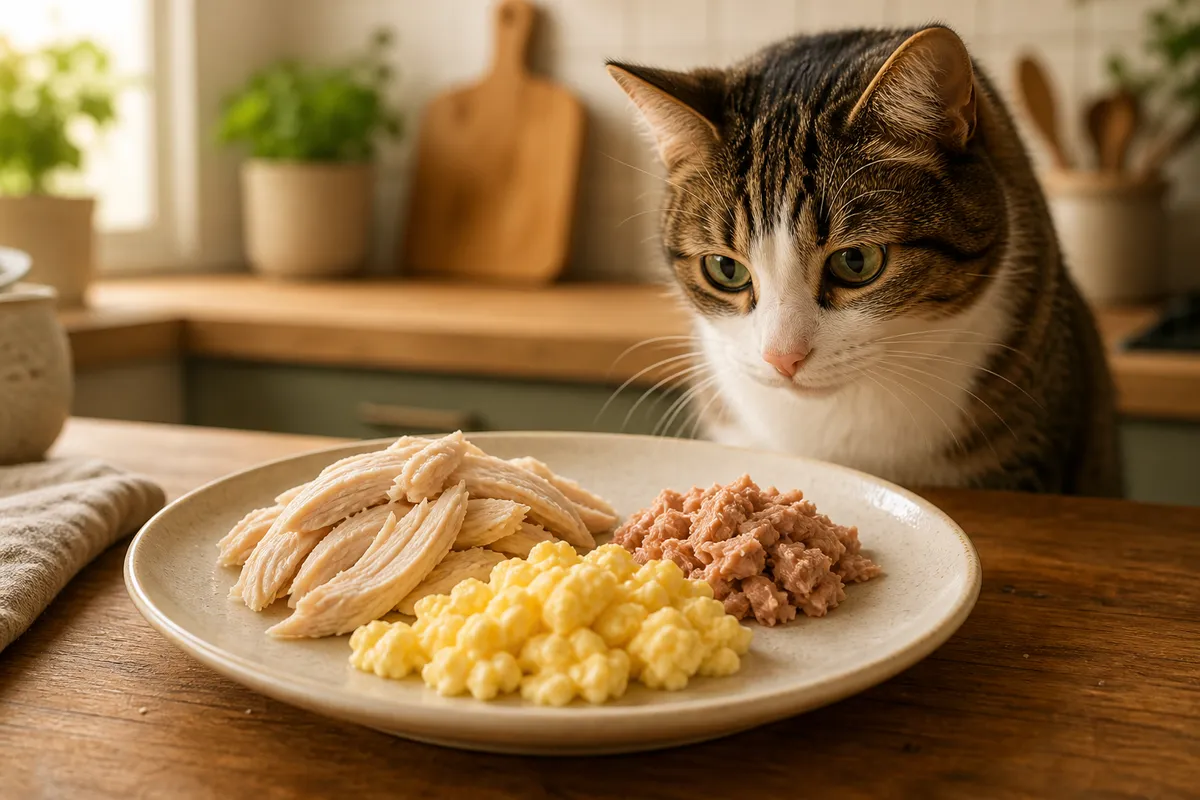
Can they have a piece of plain breast?
A small piece of unseasoned cooked white meat as a rare extra is not a poison. It must be boneless, unsauced, and not a replacement for cat food. If they have a sensitive gut or pancreatitis history, skip it.
Turkey, goose and the rest of roast season
The physics does not change with the bird. Turkey carcasses are larger, so the steal is larger. Goose fat is richer. Lamb bones splinter too. If you cook once a week from October to January, treat the carving board as a cat-exclusion zone every time, not only at Christmas. Bin liners go out the same night.
Air-fryer trays and roasting bags still hold gravy. Cats jump on worktops when the room is full of smell. If you cannot shut them out of the kitchen, you cannot “just watch them”. Someone will be distracted. For the allium half of the tin, stay with onions and garlic.
If they stole meat but you are not sure about bone
Say that uncertainty on the phone. A clinic would rather x-ray a maybe than send home a perforation. Watch for gagging, drooling, and a sudden stop in eating. Do not wait three days because “they seem interested in treats”.