Can Cats Eat Raw Dough? Yeast and Bread Dough Dangers
Bread dough rising on a warm worktop looks harmless until a cat steals a mouthful. Raw dough is toxic to cats in two overlapping ways: the dough can expand in the stomach, and yeast can ferment ethanol. Baked bread is a different conversation — raw dough is the emergency.
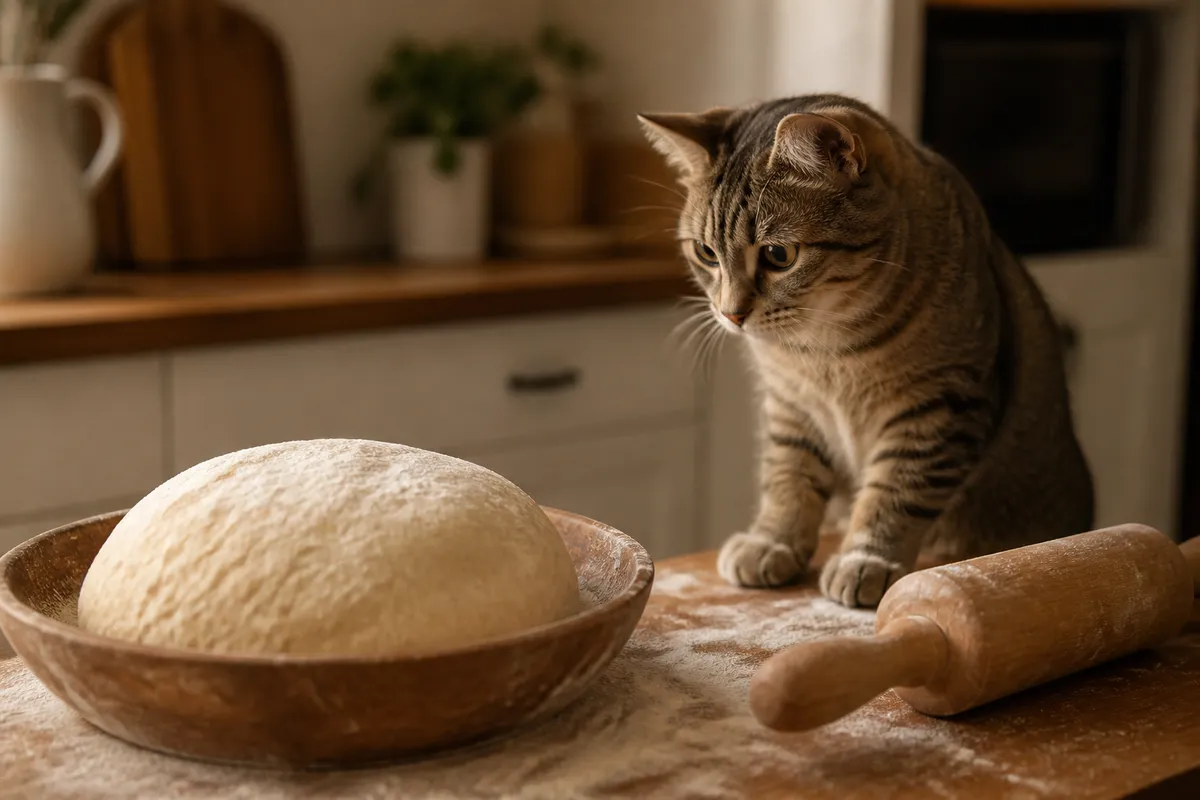
Raw yeast dough is an urgent vet call
If you know your cat ate raw bread, pizza, or pastry dough with live yeast, contact a vet straight away. Expansion and alcohol production can continue after swallowing, so waiting for “obvious” distress wastes valuable time.
Mechanism one: stomach expansion
Warm, moist conditions inside a cat’s stomach are ideal for yeast. Dough can continue to rise after it is eaten, stretching the stomach wall, causing pain, bloating, and in severe cases compromising blood flow to the stomach tissue. Cats may retch, drool, pace, or adopt a hunched posture. Unlike a piece of cooked bread that sits relatively inert, live dough is an active problem.
Mechanism two: ethanol fermentation
As yeast feeds on sugars in the dough, it produces ethanol and carbon dioxide. That ethanol is absorbed and can cause alcohol poisoning — wobbliness, sedation, low body temperature, and dangerous drops in blood sugar. This is why raw dough links closely to our can cats drink alcohol guidance: your cat may never have touched a wine glass and still face ethanol toxicity.
Dose and severity
A thumb-sized pinch stolen from a bowl is not the same as a cat finishing a ball of pizza dough left to prove. Rich, sugary doughs may ferment vigorously. Small cats and kittens have less room for expansion and less metabolic reserve. Because fermentation continues after ingestion, mild early signs can worsen over hours. Treat any known raw-dough meal as time-sensitive.
Symptoms to watch for
- Distended or tight-feeling abdomen
- Unproductive retching or vomiting
- Drooling, restlessness, or hiding
- Wobbly gait or unusual sleepiness from ethanol
- Low energy, cool ears or paws, or collapse
Gastrointestinal obstruction signs and alcohol signs can appear together. If breathing seems laboured or your cat cannot settle, go to emergency care. Cross-check progression with cat poisoning symptoms while you phone ahead.
What to do (and what not to do)
Remove remaining dough. Do not try to “soak it up” with milk or oil. Do not induce vomiting unless a vet directs you — a dough mass and sedated swallow reflex are a bad combination. Keep your cat warm and quiet. Call your vet with an estimate of how much dough, whether it contained yeast, and when it was eaten. Follow what to do if your cat ate poison for the practical checklist of packaging, timing, and transport.
Baked bread contrast
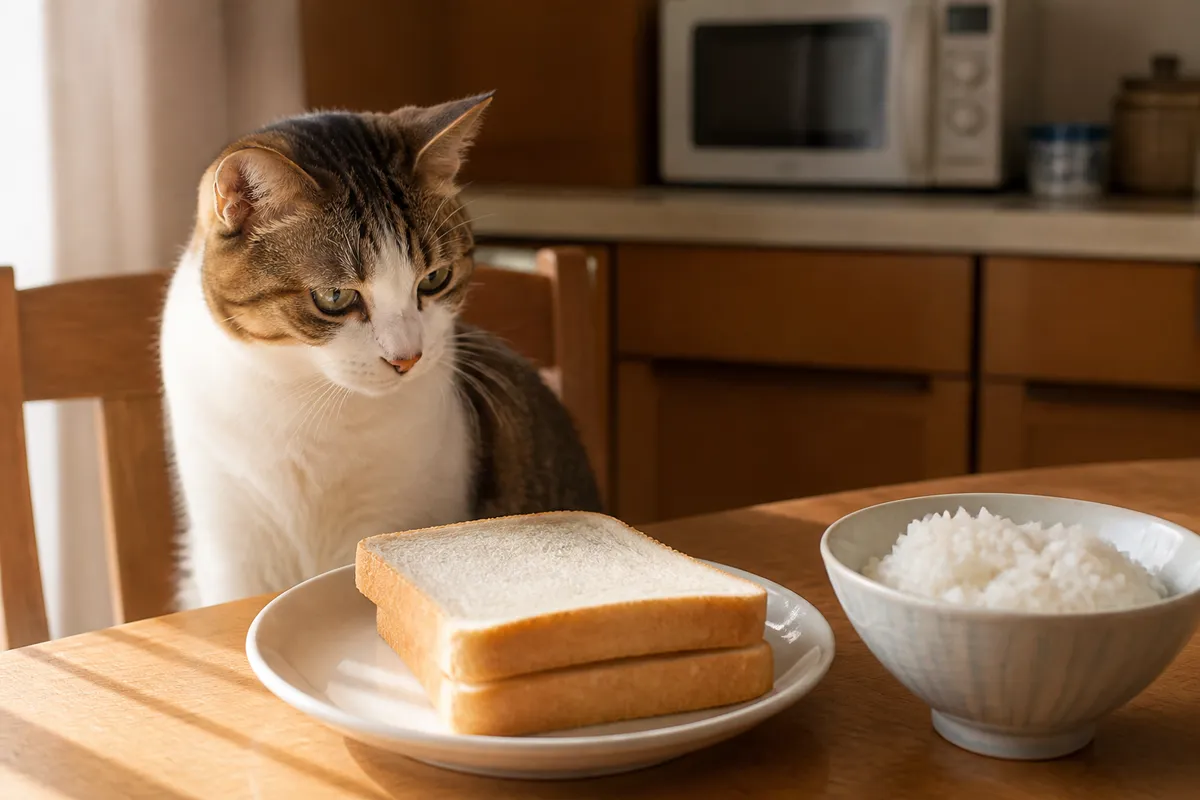
Fully baked plain bread no longer contains active rising yeast in the same way, so the expansion-and-ethanol emergency profile changes. That does not make bread a health food for cats: it offers little nutrition, can include onion or garlic in flavoured loaves, and large chunks are still a choking hazard. The critical owner takeaway is sequencing — raw dough on the counter is the crisis stage; the cooled loaf is a separate, lower-stakes scavenging issue.
Proving dough safely
Prove dough in a switched-off oven, microwave with the door shut, or a lidded proving box — never in an open bowl on a cat-accessible island. A cat-safe kitchen setup makes baking day far less stressful.
Prevention for bakers and pizza nights
Shut cats out of the kitchen while dough is out. Clean floury surfaces so residue does not invite licking. Bin scrap dough in a sealed bag — bins without lids are midnight buffets. Sourdough starters should live in sealed jars on high shelves; curious tongues and open crocks do not mix.
Baking day routines that actually work
Busy bakers often juggle timers, children, and doorbells — exactly when dough bowls get left mid-counter. Build a physical barrier into the routine: cats closed out before flour hits the worktop, dough covered whenever you step away, and scrapings sealed before the oven timer rings. Air fryers and bread makers with open lids during proving deserve the same discipline as a traditional bowl. If you host pizza-making parties, assign one person to clear stations the way you would assign someone to watch the grill.
Remember that ethanol from fermenting dough can leave a cat looking intoxicated even without a drink in sight. That crossover with alcohol poisoning is why clinics ask detailed questions about recent baking. Keep a note of yeast type and dough sugar content if you know it — enriched doughs behave differently from lean loaves — and share that context when you call.
Frequently asked questions
Is pizza dough worse than bread dough?
Both are risks when raw and yeasty. Oilier pizza dough may be more appealing to cats. Toppings add onion, garlic, or xylitol-sweetened sauces in some recipes — mention every ingredient to your vet.
What about cookie dough without yeast?
Yeast-free dough skips the fermentation-expansion pair, but raw eggs, chocolate chips, xylitol, macadamia nuts, or high sugar and fat still create problems. Treat any raw baking mix as not for cats.
My cat ate dough an hour ago and seems fine — can I wait?
Call anyway. Expansion and ethanol production can lag. A vet may want to examine your cat or schedule monitoring even if early signs are subtle.