Can Cats Eat Bread and Rice?
Toast crumbs and leftover rice vanish quickly when a cat is on patrol. Can cats eat bread and rice? Plain versions are not usually poisonous in small amounts, but cats do not need carbohydrates the way people do — and garlic bread, raw dough, and rich sides change the risk profile completely.
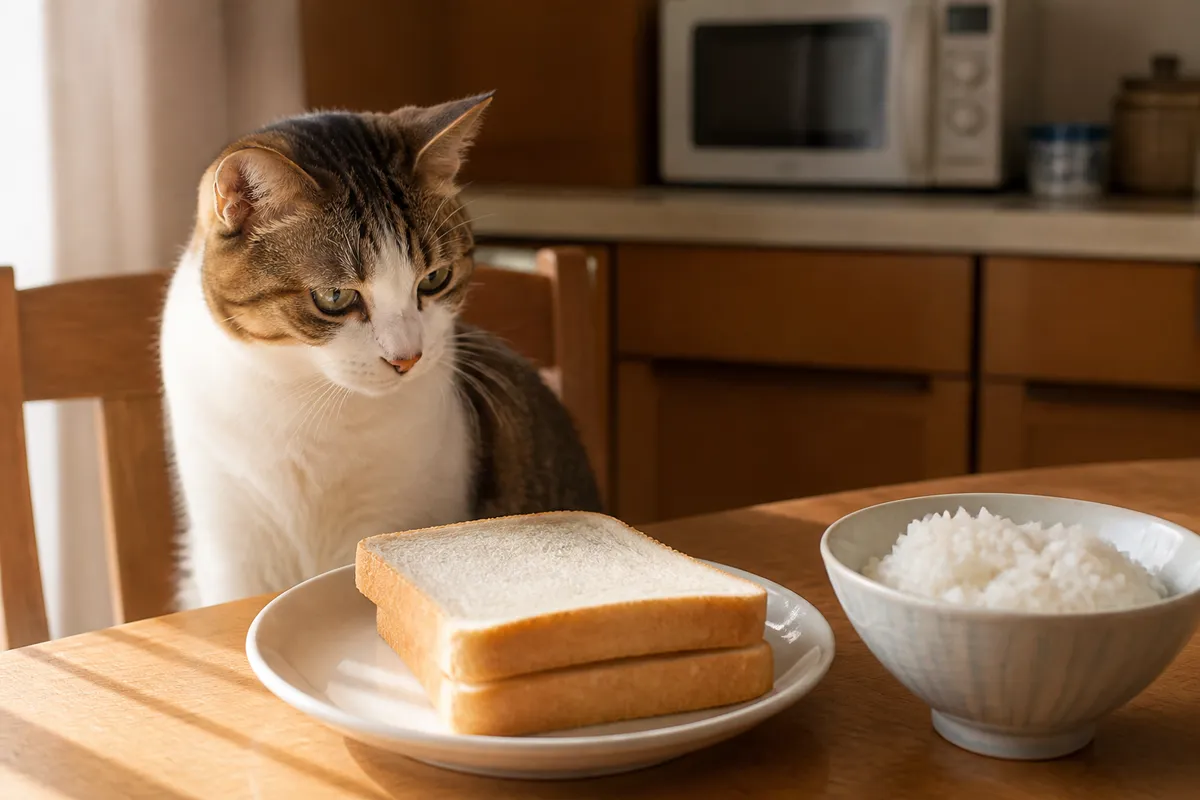
Plain bread and plain rice
A small piece of plain cooked white rice or a tiny morsel of plain bread (no raisins, no seeds your cat could choke on) is generally low toxicity for a healthy adult cat. These foods add starch and calories without useful feline nutrition. Many cats shrug and walk away; others beg for carbs out of habit. Neither bread nor rice should become a meal replacement.
Cats and carbohydrates
As obligate carnivores, cats are built to use protein and fat efficiently. They have little dietary requirement for starch. Occasional carbs are not automatically toxic, but routine toast-feeding can crowd out balanced cat food and contribute to weight gain. If your cat has diabetes or a prescription diet, ask your vet before offering any starchy extras.
Plain versus flavoured — garlic bread warning
Garlic bread, herb focaccia, onion seed rolls, and cheesy garlic flatbreads are a different story. Onion and garlic damage red blood cells in cats. Even buttery garlic spread licked from a plate matters. Read onions and garlic toxic to cats before sharing any savoury bakery item. Sweet breads may hide raisins or xylitol — both serious hazards.
Raw dough is an emergency risk
Unbaked yeast dough can expand in the stomach and produce alcohol as it ferments. That is far more dangerous than a baked crust. If your cat ate raw dough, seek veterinary help immediately and read raw dough toxicity in cats.
Rice dishes that are not “just rice”
- Egg-fried rice with onion, garlic, and seasoning
- Pilau and risotto with stock, wine, or alliums
- Sushi rice with vinegar mixes and raw fish extras
- Rice pudding with milk, sugar, or artificial sweeteners
Stick to unseasoned plain rice if you offer any — and keep portions tiny. Broader sharing rules live in can cats eat human food.
Symptoms after a carb raid
Too much bread or rice may cause vomiting, bloated discomfort, or constipation in some cats. Garlic or onion bread exposures need closer monitoring for weakness and pigment changes over the following days. Raw dough can cause distension, distress, and drunken-looking behaviour from alcohol. Check cat poisoning symptoms and call your vet when signs escalate or toxic ingredients were involved.
What to do
Identify whether the food was plain, garlic-heavy, raisin-studded, or raw. For raw dough, onion/garlic bread, or raisin bread, phone a vet promptly. For a modest plain crumb, monitor at home unless your cat seems unwell. Do not induce vomiting unless instructed.
Cooling racks and bin bags
Fresh loaves on counters and takeaway rice in open bins are classic theft targets. Cover dough while proving and dispose of leftovers in secured bins — part of a cat-safe kitchen routine.
Takeaways, chip-shop sides and restaurant doggy bags
Egg-fried rice, garlic naan, cheesy garlic bread sticks, and pilau from the local takeaway are flavoured for people. A “tiny taste” still delivers alliums and salt. Restaurant doggy bags left on low tables are prime theft targets when you walk the dog or answer the phone. Transfer leftovers into sealed containers as soon as you get home.
Baking day discipline
Proving dough on a warm counter is irresistible to curious noses. Yeast dough can look like playdough to a kitten. Cover bowls with fitted lids, prove dough inside an oven with the light on only if the door stays shut, and never leave enriched dough — brioche, cinnamon swirls, hot cross bun dough — unattended. Raisin dough combines two hazards at once.
Prevention
Teach the household that “just a bit of toast” adds up. Store bread in bins cats cannot open. When baking, keep cats out of the kitchen during the sticky dough stage. Offer species-appropriate treats when you want to include your cat in breakfast energy. If your cat begs at every crunch of toast, feed their meal first so the behaviour loses some urgency.
Frequently asked questions
Is brown rice better than white for cats?
Nutritionally for cats, the difference is minor compared with simply limiting portions. Plain cooked rice of either type should remain an occasional crumb, not a dietary staple.
Can bread help a cat with an upset stomach?
Do not self-prescribe toast as a remedy. Bland dietary advice should come from your vet, who may recommend a specific gastrointestinal diet rather than human bread.
What about gluten-free bread?
Gluten-free does not mean cat-optimised. Check for dried fruit, garlic blends, and sweeteners. Plainness matters more than the flour type.